Why Your Roof Makes Banging or Popping Noises at Night
Charlotte homeowners often wake up to loud banging or popping sounds coming from their ceilings. These noises usually happen at night when the temperature drops quickly after hot days. The sounds are typically caused by thermal expansion and contraction of building materials. Understanding what causes these noises can help you decide if they are normal or if your roof needs attention. Why More Huntersville Homeowners Are Switching to Standing Seam Metal Roofs.
Thermal expansion happens when materials heat up and expand, then contract when they cool down. In Charlotte’s climate, we see big temperature swings between day and night, especially during spring and fall. This constant expansion and contraction can make wood framing, metal fasteners, and roofing materials rub against each other, creating popping sounds. Getting Your Charlotte Roof Repaired After a Hail Storm — A Local Guide to Insurance Claims.
Most roof popping noises are harmless and just part of how buildings respond to temperature changes. However, some sounds can indicate structural problems that need professional inspection. Knowing the difference can save you from unnecessary worry or prevent costly damage.
The Science Behind the Sound: Thermal Expansion
Charlotte’s climate creates perfect conditions for thermal expansion in homes. During summer months, daytime temperatures often reach the 90s while nighttime temperatures drop to the 60s or 70s. This 20 to 30-degree swing causes building materials to expand and contract rapidly.
Wood trusses and rafters expand when heated by the sun during the day. As temperatures cool at night, these wooden members contract. The metal fasteners holding everything together don’t expand and contract at the same rate as wood. This difference creates stress points where materials rub against each other.
Roof sheathing panels, typically made from oriented strand board (OSB), also expand and contract. OSB panels are installed with small gaps between them to allow for this movement. When temperatures change quickly, these gaps can close, causing the panels to push against each other and create popping sounds.
The Piedmont region’s high humidity adds another factor. Moisture in the air can be absorbed by wood during humid days and released at night. This moisture cycling causes wood to swell and shrink, contributing to the expansion and contraction cycle.
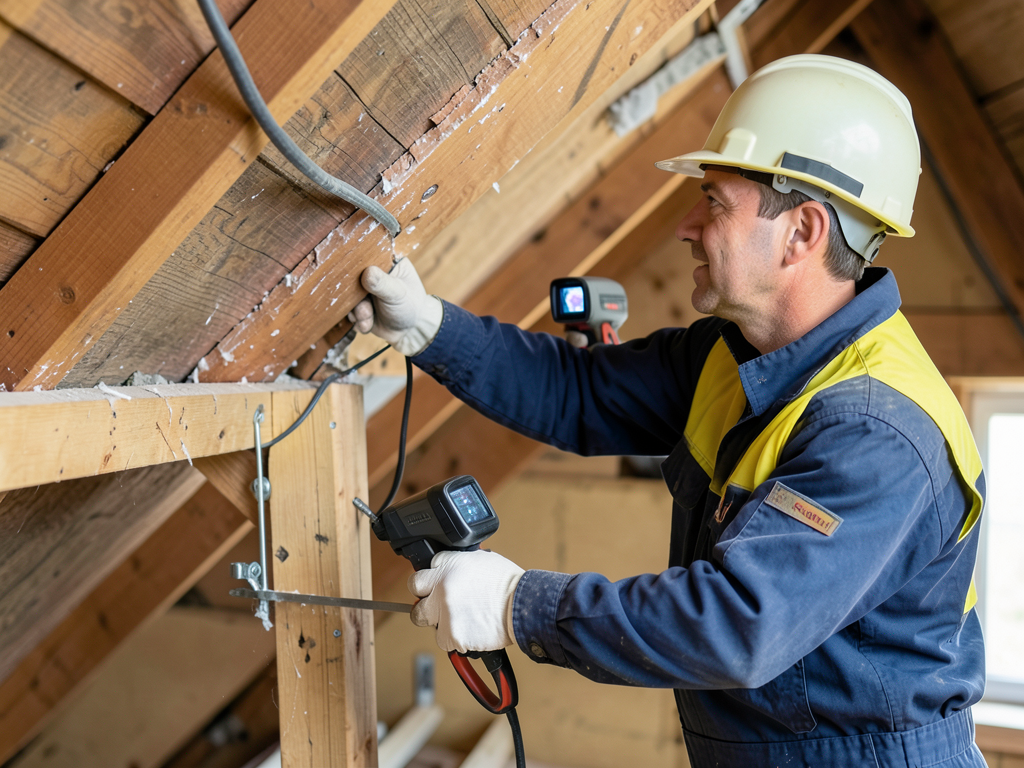
Diagram showing thermal expansion of roof trusses and sheathing with temperature changes from day to night.
Common Causes of Roof Popping in North Carolina Homes
Several factors specific to North Carolina homes contribute to roof popping noises. Understanding these causes can help you identify what you’re hearing. North Carolina State Building Code.
Attic bypasses and humidity levels play a major role. Many Charlotte homes have small gaps around light fixtures, plumbing vents, and attic access points. These gaps allow warm, moist air from living spaces to enter the attic. When this warm air hits cooler attic surfaces at night, condensation forms. The moisture then affects wood framing, causing it to expand and contract more dramatically.
Improperly spaced roof sheathing creates another common problem. Building codes require specific gaps between OSB panels to allow for expansion. If these gaps are too small or non-existent, panels press against each other when they expand, creating loud pops.
Truss uplift occurs when the bottom chords of roof trusses absorb moisture and expand while the top chords remain dry. This causes the truss to arch upward, creating gaps between interior walls and ceilings. The movement can cause loud popping sounds as drywall separates and reconnects.
Temperature fluctuations in the Piedmont region are more extreme than in coastal areas. Charlotte’s location means we experience both hot, humid summers and occasional cold snaps in winter. This creates more dramatic expansion and contraction cycles than homes in more moderate climates experience.
Material Expansion Coefficients
Different building materials expand at different rates. Understanding these rates helps explain why certain noises occur:
| Material | Expansion Coefficient (per °F) | Typical Movement in 10°F Change |
|---|---|---|
| Wood (Douglas Fir) | 0.0000045 | 0.045 inches per 10 feet |
| Steel | 0.0000065 | 0.065 inches per 10 feet |
| Aluminum | 0.0000129 | 0.129 inches per 10 feet |
| OSB Sheathing | 0.0000050 | 0.050 inches per 10 feet |
When Should You Be Worried?
Not all roof noises require immediate action. Learning to distinguish between normal settling sounds and warning signs can save you stress and money.
Normal roof popping sounds are usually random and occur during temperature changes. They might happen once or twice an hour during cooling evenings or warming mornings. These sounds are typically sharp but not extremely loud.
Dangerous noises have different characteristics. If you hear creaking that continues for several minutes without stopping, this could indicate structural stress. Sounds that happen during storms or high winds might signal loose components. Popping that occurs when walking in the attic suggests weakened structural members.
Red flags that require immediate professional inspection include:
- Interior drywall cracks appearing near ceiling corners or along wall joints
- Sagging rooflines visible from the ground
- Localized leaks that appear after temperature swings
- Doors or windows that suddenly become difficult to open or close
- Excessive nail pops in ceiling drywall
The Mecklenburg County Building Code requires that roof structures be designed to accommodate normal thermal movement. If your home shows signs of structural stress, it may not meet current code requirements.
According to the North Carolina Residential Code Chapter 9, roof trusses must be designed with specific deflection limits. Excessive popping could indicate that your roof system is exceeding these limits due to improper installation or design flaws.
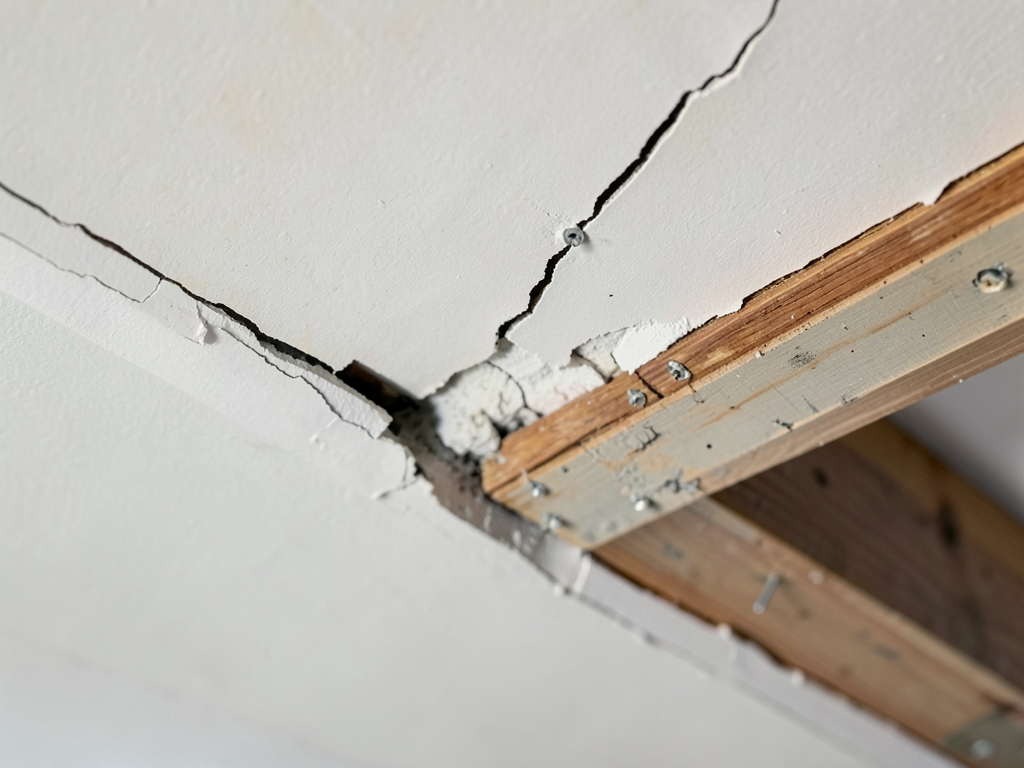
Photo showing typical signs of truss uplift including ceiling corner cracks and nail pops in drywall.
Solutions and Preventative Maintenance
Improving attic ventilation can significantly reduce roof popping noises. Proper ventilation helps maintain more consistent temperatures throughout the day and night, reducing the extreme expansion and contraction cycles that cause most popping sounds.
Soffit and ridge vents work together to create continuous airflow through the attic. Soffit vents allow cool air to enter at the eaves while ridge vents let hot air escape at the peak. This airflow helps prevent moisture buildup and maintains more stable temperatures.
Attic insulation also plays a crucial role. Proper insulation keeps living space heat from radiating into the attic during the day. This reduces the temperature differential between attic air and roof structures, minimizing expansion and contraction.
Humidity control is essential in Charlotte’s climate. Using bathroom exhaust fans, kitchen range hoods, and whole-house dehumidifiers can reduce the amount of moisture that enters attic spaces. Lower humidity means less moisture absorption by wood framing members.
Professional inspection can identify specific problem areas. A qualified roofer can check for:
- Proper spacing between OSB panels
- Secure fastening of trusses and rafters
- Adequate ventilation system installation
- Signs of moisture damage or wood rot
- Structural integrity of load-bearing members
Sometimes simple adjustments can eliminate problematic noises. Adding rubber washers to metal fasteners, installing expansion joints at strategic locations, or adjusting truss clips can reduce friction between moving parts.
Local Charlotte Case Study
A recent inspection in the Myers Park neighborhood revealed how Charlotte’s specific conditions affect roof noises. Many homes in this area were built in the 1950s and 1960s with different building standards than today.
The inspection found that older homes in Myers Park often lack adequate attic ventilation. Many have only gable vents or no ventilation at all. This creates extreme temperature differentials between the attic and living spaces, leading to more dramatic expansion and contraction.
Another common issue in older Charlotte neighborhoods is the use of balloon framing in interior walls. This construction method allows sound to travel more easily between floors, making roof noises seem louder inside the home than they actually are.
Newer construction in areas like Ballantyne often uses engineered wood products that have different expansion characteristics than traditional lumber. While these materials are more dimensionally stable, they can still create noises if not properly installed with adequate spacing.
The specific soil conditions in Charlotte also play a role. The region’s red clay soil expands when wet and contracts when dry. This seasonal movement can cause foundation shifts that affect the entire structure, including the roof system, creating additional stress points and noises.
Diagnostic Tools and Professional Assessment
Professional roofers use specific tools to diagnose the source of roof noises. A moisture meter can detect abnormal moisture levels in wood framing that might indicate ventilation problems. Thermal imaging cameras can reveal temperature differentials that show where expansion and contraction are most extreme.
The screwdriver test is a simple but effective diagnostic tool. By pressing a screwdriver into wood members, a professional can assess the density and moisture content of the material. Soft or spongy wood indicates moisture problems that could be causing excessive movement.
Sound level meters can help quantify the intensity of roof noises. While some popping is normal, sounds above 60 decibels during quiet nighttime hours might indicate excessive movement that warrants investigation.
Professional assessment should include checking the attic space during both hot and cool periods. This allows the inspector to observe materials as they expand and contract, identifying specific problem areas that might not be visible during a single visit.
According to the International Building Code, roof structures must be designed to accommodate thermal movement without creating structural hazards. A professional inspection can determine if your roof meets these requirements.
Preventing Future Problems
Regular maintenance can prevent many roof noise issues from developing. Annual inspections can catch problems like loose fasteners, inadequate ventilation, or moisture damage before they cause significant noises or structural issues. Expert Roof Inspections for Waterfront Homes in Cornelius and Davidson.
Keeping gutters clean and ensuring proper drainage away from the foundation helps prevent soil movement that can affect the entire structure. This is particularly important in Charlotte’s clay soil conditions.
Addressing small issues promptly prevents them from becoming major problems. A loose truss clip or missing fastener might seem minor but can create stress points that lead to more significant structural issues over time.
Understanding your home’s specific construction methods and materials helps in addressing noise issues. Homes built before the 1980s often have different framing techniques and material specifications than modern construction.
Climate-specific solutions work best in Charlotte. What works in Arizona or Minnesota might not be appropriate for our humidity levels and temperature swings. Local experience matters when addressing roof noise issues.
Peace of Mind Through Professional Inspection
Most roof popping noises are normal and harmless, but peace of mind comes from knowing for certain. A professional inspection can distinguish between normal settling sounds and warning signs of structural problems.
During an inspection, a qualified roofer will check all visible structural components, assess ventilation systems, and look for signs of moisture damage or pest infestation. They can provide specific recommendations based on your home’s age, construction type, and the severity of the noises.
Documentation from a professional inspection can be valuable for insurance purposes or if you plan to sell your home. It provides evidence that you’ve addressed potential concerns proactively.
Professional roofers in Charlotte understand the specific challenges our climate creates. They know how to identify problems that might be unique to our region and can recommend solutions that work in our specific conditions.
Don’t let roof noises keep you awake at night. Most are harmless, but professional assessment provides certainty and can prevent small issues from becoming expensive problems.
Frequently Asked Questions
Why do my roof noises only happen at night?
Roof noises typically occur at night because that’s when temperatures drop most rapidly after hot days. The sudden cooling causes materials to contract quickly, creating the popping sounds you hear. During the day, materials are already expanded and moving more slowly.
Are roof popping noises covered by homeowners insurance?
Normal thermal expansion and contraction noises are not covered by insurance as they are considered normal building behavior. However, if the noises are caused by a covered peril like storm damage or if they indicate a structural problem that leads to damage, related repairs might be covered.
How much does a professional roof noise inspection cost?
Professional roof inspections typically range from $150 to $300 in the Charlotte area. This includes attic access, visual inspection of structural components, and assessment of ventilation systems. Some companies offer free inspections with repair services.
Can I fix roof popping noises myself?
Some minor issues like adding rubber washers to visible fasteners can be DIY projects. However, most roof noise problems require professional diagnosis and repair. Working in attics can be dangerous, and improper repairs might void warranties or create safety hazards.
How long do roof popping noises usually last?
Individual popping sounds typically last only a few seconds as materials adjust to temperature changes. The overall period of increased noise often occurs during spring and fall when temperature swings are most extreme, lasting several weeks during seasonal transitions.
Get Professional Help Today
Don’t let mysterious roof noises keep you up at night. While most popping sounds are harmless, professional inspection provides peace of mind and can catch potential problems before they become expensive repairs. Five Star Roofing Charlotte has been serving the Charlotte metro area for years, understanding the specific challenges our climate creates. Built-Up Roofing.
Our experienced technicians use professional diagnostic tools to identify the source of your roof noises and recommend appropriate solutions. Whether you need simple maintenance, ventilation improvements, or structural repairs, we provide honest assessments and quality workmanship.
Call (980) 352-5899 today to schedule your roof noise inspection. Don’t wait until small problems become major repairs. Our team serves homeowners throughout Charlotte, Matthews, Monroe, and surrounding areas with prompt, professional service.
Pick up the phone and call (980) 352-5899 before the next temperature swing hits. Your peace of mind is worth a quick phone call, and early detection can save you thousands in potential repairs.
- Document the Noises
Record when and where you hear the popping sounds, including time of day and weather conditions. This information helps professionals diagnose the problem.
- Check for Visible Signs
Look for interior signs like drywall cracks, nail pops, or sagging areas that might indicate structural movement beyond normal expansion.
- Schedule Professional Inspection
Contact a licensed roofing contractor to assess your specific situation. They can determine if noises are normal or indicate problems requiring repair.
- Improve Ventilation
Based on inspection results, consider adding soffit and ridge vents or improving existing ventilation to reduce temperature differentials.
- Monitor Changes
After any recommended repairs or improvements, monitor whether the noise levels decrease and watch for any new signs of structural movement. For more information, visit ASHRAE ventilation standards.
{
“@context”: “https://schema.org”,
“@type”: “BlogPosting”,
“headline”: “Why Your Roof Makes Banging or Popping Noises at Night”,
“description”: “Charlotte homeowners hear roof popping noises at night? Learn the science behind thermal expansion, when to worry, and how Five Star Roofing can help. Call (980) 352-5899.”,
“wordCount”: 2410,
“datePublished”: “2026-03-30T10:24:00.000Z”,
“dateModified”: “2026-03-30T10:24:00.000Z”,
“inLanguage”: “en-US”,
“mainEntityOfPage”: {
“@type”: “WebPage”,
“@id”: “https://fivestarroofingcharlotte.com”
},
“publisher”: {
“@type”: “LocalBusiness”,
“name”: “Five Star Roofing Charlotte”,
“url”: “https://fivestarroofingcharlotte.com”
},
“author”: {
“@type”: “Organization”,
“name”: “Five Star Roofing Charlotte”,
“url”: “https://fivestarroofingcharlotte.com”
},
“image”: {
“@type”: “ImageObject”,
“url”: “https://fivestarroofingcharlotte.com/wp-content/uploads/2026/03/why-your-roof-makes-banging-or-popping-noises-at-n-1.png”
}
}
{
“@context”: “https://schema.org”,
“@type”: “RoofingContractor”,
“name”: “Five Star Roofing Charlotte”,
“url”: “https://fivestarroofingcharlotte.com”,
“address”: {
“@type”: “PostalAddress”,
“addressLocality”: “Charlotte”
},
“areaServed”: {
“@type”: “City”,
“name”: “Charlotte”
}
}
{
“@context”: “https://schema.org”,
“@type”: “FAQPage”,
“mainEntity”: [
{
“@type”: “Question”,
“name”: “When Should You Be Worried?”,
“acceptedAnswer”: {
“@type”: “Answer”,
“text”: “Not all roof noises require immediate action. Learning to distinguish between normal settling sounds and warning signs can save you stress and money.”
}
},
{
“@type”: “Question”,
“name”: “Why do my roof noises only happen at night?”,
“acceptedAnswer”: {
“@type”: “Answer”,
“text”: “Roof noises typically occur at night because that’s when temperatures drop most rapidly after hot days. The sudden cooling causes materials to contract quickly, creating the popping sounds you hear. During the day, materials are already expanded and moving more slowly.”
}
},
{
“@type”: “Question”,
“name”: “Are roof popping noises covered by homeowners insurance?”,
“acceptedAnswer”: {
“@type”: “Answer”,
“text”: “Normal thermal expansion and contraction noises are not covered by insurance as they are considered normal building behavior. However, if the noises are caused by a covered peril like storm damage or if they indicate a structural problem that leads to damage, related repairs might be covered.”
}
},
{
“@type”: “Question”,
“name”: “How much does a professional roof noise inspection cost?”,
“acceptedAnswer”: {
“@type”: “Answer”,
“text”: “Professional roof inspections typically range from $150 to $300 in the Charlotte area. This includes attic access, visual inspection of structural components, and assessment of ventilation systems. Some companies offer free inspections with repair services.”
}
},
{
“@type”: “Question”,
“name”: “Can I fix roof popping noises myself?”,
“acceptedAnswer”: {
“@type”: “Answer”,
“text”: “Some minor issues like adding rubber washers to visible fasteners can be DIY projects. However, most roof noise problems require professional diagnosis and repair. Working in attics can be dangerous, and improper repairs might void warranties or create safety hazards.”
}
},
{
“@type”: “Question”,
“name”: “How long do roof popping noises usually last?”,
“acceptedAnswer”: {
“@type”: “Answer”,
“text”: “Individual popping sounds typically last only a few seconds as materials adjust to temperature changes. The overall period of increased noise often occurs during spring and fall when temperature swings are most extreme, lasting several weeks during seasonal transitions.”
}
}
]
}
{
“@context”: “https://schema.org”,
“@type”: “HowTo”,
“name”: “How to Address Roof Popping Noises”,
“step”: [
{
“@type”: “HowToStep”,
“position”: 1,
“name”: “Document the Noises”,
“text”: “Record when and where you hear the popping sounds, including time of day and weather conditions. This information helps professionals diagnose the problem.”
},
{
“@type”: “HowToStep”,
“position”: 2,
“name”: “Check for Visible Signs”,
“text”: “Look for interior signs like drywall cracks, nail pops, or sagging areas that might indicate structural movement beyond normal expansion.”
},
{
“@type”: “HowToStep”,
“position”: 3,
“name”: “Schedule Professional Inspection”,
“text”: “Contact a licensed roofing contractor to assess your specific situation. They can determine if noises are normal or indicate problems requiring repair.”
},
{
“@type”: “HowToStep”,
“position”: 4,
“name”: “Improve Ventilation”,
“text”: “Based on inspection results, consider adding soffit and ridge vents or improving existing ventilation to reduce temperature differentials.”
},
{
“@type”: “HowToStep”,
“position”: 5,
“name”: “Monitor Changes”,
“text”: “After any recommended repairs or improvements, monitor whether the noise levels decrease and watch for any new signs of structural movement. For more information, visit ASHRAE ventilation standards.”
}
],
“image”: “https://fivestarroofingcharlotte.com/wp-content/uploads/2026/03/why-your-roof-makes-banging-or-popping-noises-at-n-1.png”
}
{
“@context”: “https://schema.org”,
“@type”: “BreadcrumbList”,
“itemListElement”: [
{
“@type”: “ListItem”,
“position”: 1,
“name”: “Home”,
“item”: “https://fivestarroofingcharlotte.com”
},
{
“@type”: “ListItem”,
“position”: 2,
“name”: “Blog”,
“item”: “https://fivestarroofingcharlotte.com/blog”
},
{
“@type”: “ListItem”,
“position”: 3,
“name”: “Why Your Roof Makes Banging or Popping Noises at Night”
}
]
}
{
“@context”: “https://schema.org”,
“@type”: “Service”,
“serviceType”: “Roofing”,
“provider”: {
“@type”: “LocalBusiness”,
“name”: “Five Star Roofing Charlotte”,
“url”: “https://fivestarroofingcharlotte.com”
},
“areaServed”: {
“@type”: “City”,
“name”: “Charlotte”
},
“description”: “Charlotte homeowners hear roof popping noises at night? Learn the science behind thermal expansion, when to worry, and how Five Star Roofing can help. Call (980) 352-5899.”
}