Managing Heavy Rain Drainage for Sloped Lots and Walk-Out Basements in Lake Norman
Managing heavy rain on sloped lots near Lake Norman requires understanding how water moves across your property. The combination of steep grades and walk-out basements creates unique challenges where improper drainage can lead to foundation damage, basement flooding, and costly erosion. This guide covers proven solutions to protect your home from North Carolina’s intense rainfall patterns. North Carolina Residential Code.
Lake Norman’s hilly terrain means water naturally flows downhill toward your home’s foundation. When heavy rain hits, that water can overwhelm standard drainage systems and create pressure against basement walls. Understanding these dynamics helps you implement the right protection before problems start.
The Unique Challenges of Sloped Lots Near Lake Norman
Lake Norman’s topography creates specific drainage issues that generic solutions cannot address. The area’s red clay soil absorbs water slowly, causing rapid surface runoff during heavy storms. This combination of steep grades and poor absorption rates means water moves quickly across your property, potentially overwhelming even well-designed drainage systems.
Walk-out basements face particular risks because they sit partially below grade with direct exposure to groundwater. When heavy rain saturates the soil around your foundation, hydrostatic pressure builds against basement walls. This pressure can force water through even tiny cracks, leading to leaks and structural damage over time.
The Lake Norman area receives approximately 43 inches of rainfall annually, with summer thunderstorms delivering intense bursts that test drainage systems. These storms often drop several inches of rain in just hours, creating conditions where standard gutters and downspouts cannot handle the volume alone.
5 Professional Solutions for Roof Water Management
Effective drainage starts at your roof and extends through your entire property. Here are five proven solutions that work specifically for sloped lots near Lake Norman:
Seamless Gutter Systems and Oversized Downspouts
Standard 5-inch gutters often cannot handle the water volume from large roofs during North Carolina storms. Six-inch seamless gutters provide 40% more capacity, reducing overflow during heavy rain. Pair these with 3×4-inch downspouts instead of standard 2×3-inch versions to double water flow capacity.
Professional installation ensures proper slope toward downspouts, typically 1/4 inch per 10 feet. This prevents water pooling in gutters and reduces the risk of overflow during intense storms. Quality hangers spaced every 24 inches prevent sagging that can cause water to back up under roof edges.
French Drains and Underground Catch Basins
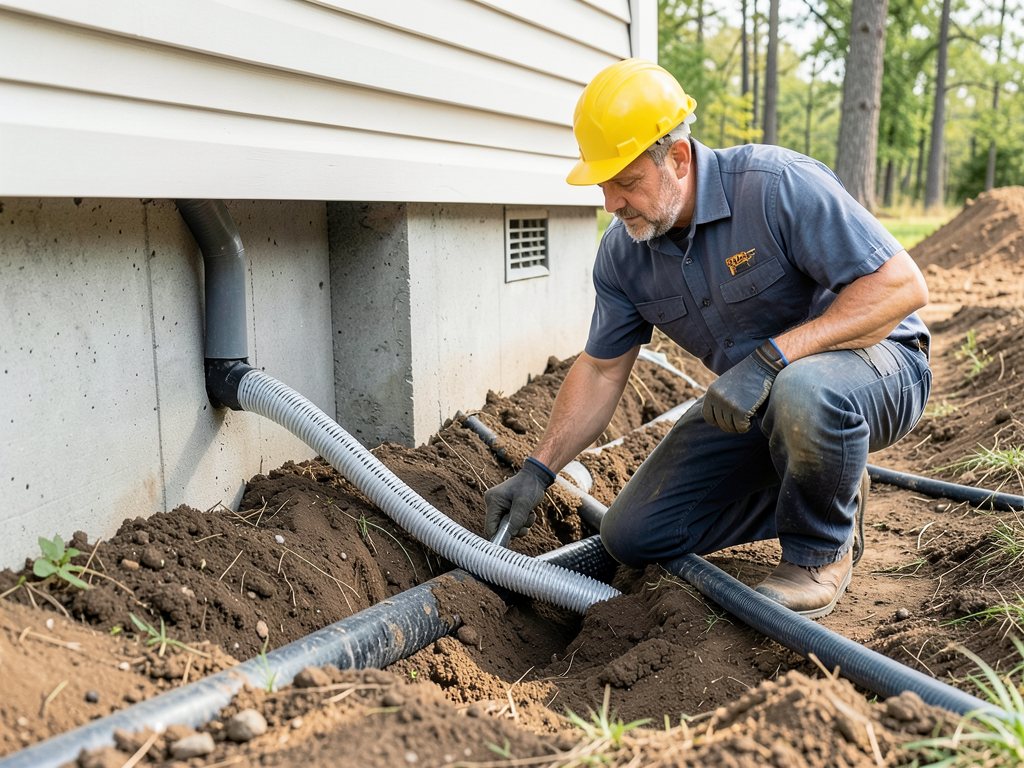
French drains collect water from saturated soil and channel it away from your foundation. A properly installed French drain consists of perforated pipe surrounded by gravel and filter fabric. The pipe sits in a trench sloped at least 1% away from your home, ensuring continuous water movement.
Catch basins installed at low points capture surface water before it can pool near your foundation. These grated boxes connect to underground drainage pipes that carry water to safe discharge points. For sloped lots, multiple catch basins may be necessary to handle water flowing from different directions.
Strategic Yard Grading and Swales
Proper grading directs water away from your home using the natural slope of your property. The ground should slope away from your foundation at a minimum 2% grade for at least 10 feet. This creates a gentle angle that moves water away without creating erosion problems.
Swales are shallow, grass-lined channels that guide water across your property. Unlike straight drainage pipes, swales slow water movement and allow some absorption into the soil. They work particularly well on sloped lots because they follow natural contours while protecting your foundation from direct water impact.
Dry Wells and Rain Gardens for Sustainable Runoff
Dry wells provide underground storage for excess water, allowing it to slowly percolate into surrounding soil. These perforated tanks work well when you cannot direct water to street drains or natural water features. A typical dry well holds 50-100 gallons and can handle significant runoff from roof areas.
Rain gardens create attractive landscape features that also manage water. These shallow depressions planted with water-tolerant vegetation capture runoff and allow natural filtration. The plants help absorb water while their root systems improve soil structure and drainage capacity over time.
Permeable Pavers and Hardscape Integration
Walk-out basements often feature patios and walkways that can contribute to drainage problems. Permeable pavers allow water to pass through joints into gravel layers below, reducing surface runoff. These systems can handle significant rainfall while maintaining usable outdoor living space.
Proper hardscape design includes slight grading away from your home and integration with underground drainage. This prevents water from pooling against basement walls while still providing functional outdoor areas for entertaining and relaxation.
Protecting Your Foundation: The Link Between Roof Runoff and Crawlspace Moisture
Foundation protection requires understanding hydrostatic pressure and how it affects your basement walls. When soil becomes saturated during heavy rain, water presses against foundation walls with significant force. This pressure can crack concrete and force water through even hairline fractures.
Professional foundation drainage systems relieve this pressure by providing escape routes for groundwater. Weep holes drilled at the base of basement walls allow water to enter drainage channels rather than building up against walls. These channels connect to sump pumps or gravity drains that carry water away from your foundation.
Regular maintenance of these systems proves crucial for long-term protection. Annual inspections should check for sediment buildup in French drains, proper pump operation, and any new foundation cracks that might need sealing. The red clay soil common in Lake Norman areas can clog drainage systems over time, requiring periodic cleaning. Expert Roof Inspections for Waterfront Homes in Cornelius and Davidson.
Charlotte Building Codes and Drainage Regulations
Mecklenburg County requires proper drainage design for all new construction and major renovations. The North Carolina Residential Code mandates that roof drainage systems direct water away from foundations and prevent discharge onto adjacent properties. Local regulations also address erosion control and sediment management during construction.
Specific requirements include minimum downspout extension lengths of six feet from foundations and proper connection to approved drainage systems. For properties near Lake Norman, additional considerations may apply regarding protection of water quality and prevention of sediment entering the lake.
Building permits for drainage improvements ensure compliance with local codes and proper installation methods. Professional contractors familiar with Mecklenburg County requirements can navigate permit processes and ensure your drainage system meets all regulatory standards.
Cost Analysis of Different Drainage Solutions
Drainage solution costs vary significantly based on property characteristics and chosen methods. French drain installation typically ranges from $20 to $30 per linear foot, while complete yard drainage systems can cost $3,000 to $8,000 depending on complexity and materials used.
Underground drainage systems require more initial investment but provide superior long-term protection compared to surface solutions. The higher upfront costs often prove economical when considering potential foundation repair expenses, which can exceed $10,000 for serious water damage. EPA Stormwater Management.
Maintenance costs should factor into your decision-making. Simple systems with fewer moving parts generally require less ongoing maintenance, while complex systems with pumps and filters need regular servicing to ensure continued operation during heavy storms.
Maintenance Schedules for Drainage Systems
Seasonal maintenance keeps your drainage system functioning properly throughout the year. Spring maintenance should clear winter debris from gutters and downspouts, check for damage from freeze-thaw cycles, and ensure all underground pipes flow freely.
Summer preparation involves testing sump pumps, clearing vegetation from drainage swales, and inspecting foundation walls for new cracks. Hurricane season preparation becomes critical in late summer, requiring gutter cleaning and verification that all drainage components function properly. Roof Cleaning & Maintenance.
Fall maintenance focuses on removing leaves that can clog gutters and drainage systems. Winter preparation includes checking for proper grading that prevents ice dam formation and ensuring drainage pipes remain clear of obstructions that could cause freezing.
Emergency Response to Drainage Failures
Recognizing early warning signs of drainage problems can prevent major damage. Water stains on basement walls, musty odors, or visible foundation cracks indicate drainage system issues requiring immediate attention. Standing water near your foundation after normal rainfall suggests your current system cannot handle typical conditions.
Emergency response involves immediate water removal and temporary protection measures. Portable pumps can remove standing water while professionals assess and repair the underlying drainage problems. Quick action prevents mold growth and further structural damage that can occur within 24-48 hours of water exposure. Chimney Leak Emergency Repair.
Professional assessment should include moisture meter readings throughout affected areas, inspection of all drainage components, and evaluation of soil conditions around your foundation. This comprehensive approach identifies both immediate problems and potential future issues.
Choosing the Right Drainage Professional
Selecting qualified drainage professionals requires evaluating experience with local conditions and specific property challenges. Look for contractors familiar with Lake Norman’s soil conditions, rainfall patterns, and building regulations. Experience with similar properties provides valuable insight into effective solutions for your specific situation.
Professional drainage contractors should provide detailed assessments including soil testing, property surveys, and recommendations based on your specific conditions. Avoid contractors offering one-size-fits-all solutions without evaluating your property’s unique characteristics and challenges.
Quality contractors provide written estimates, warranty information, and references from similar projects. They should explain their proposed solutions in terms you can understand and demonstrate knowledge of local building codes and environmental regulations.
Long-Term Benefits of Professional Drainage Solutions
Investing in proper drainage protection provides multiple long-term benefits beyond preventing water damage. Improved foundation stability increases your home’s value and reduces future repair costs. Better moisture control prevents mold growth and improves indoor air quality throughout your home.
Professional drainage systems can also enhance your property’s usability and appearance. Properly managed water creates opportunities for attractive landscaping features while eliminating problem areas where water collects. This can increase your outdoor living space and improve your home’s overall curb appeal.
Energy efficiency improves when moisture problems are eliminated. Wet basements require more heating and cooling to maintain comfortable temperatures, while proper drainage helps maintain consistent temperatures throughout your home year-round.
Frequently Asked Questions
How do I know if my sloped lot needs drainage improvements?
Warning signs include water stains on basement walls, musty odors in lower levels, standing water near your foundation after rain, or visible erosion patterns on slopes. If you experience any of these issues, professional assessment can identify necessary improvements.
What’s the best time of year to install drainage systems?
Spring and fall typically offer ideal conditions for drainage installation, with moderate temperatures and predictable rainfall patterns. However, drainage work can proceed year-round in North Carolina, with winter installations possible during dry periods.
How long do drainage systems typically last?
Properly installed drainage systems can last 20-30 years or more with regular maintenance. Components like sump pumps may need replacement every 5-7 years, while underground pipes and French drains often function for decades when properly maintained.
Can I install drainage improvements myself?
While some simple improvements like extending downspouts are DIY-friendly, comprehensive drainage systems require professional expertise to ensure proper function and code compliance. Improper installation can actually worsen drainage problems and create new issues.
How much does professional drainage assessment cost?
Professional drainage assessments typically range from $200 to $500, depending on property size and complexity. This investment often pays for itself by identifying the most cost-effective solutions and preventing unnecessary work.
Taking Action to Protect Your Property
Heavy rain drainage for sloped lots and walk-out basements near Lake Norman requires understanding local conditions and implementing proven solutions. The combination of steep grades, clay soil, and intense rainfall creates challenges that demand professional attention and proper system design.
Don’t wait for water damage to appear before taking action. Early intervention prevents costly repairs and protects your home’s value. Professional assessment can identify your specific drainage needs and recommend solutions tailored to your property’s unique characteristics.
Call (980) 352-5899 today to schedule your drainage assessment before the next storm hits. Our experienced team understands Lake Norman’s unique drainage challenges and can recommend solutions that protect your home for years to come.
Pick up the phone and call (980) 352-5899 before the next storm hits. Your home deserves professional protection from North Carolina’s heavy rainfall and the unique challenges of sloped lots near Lake Norman.
You may also find this helpful. Why the Fast-Growing Area of Mountain Island Needs Better Wind-Resistant Shingles.
{
“@context”: “https://schema.org”,
“@type”: “BlogPosting”,
“headline”: “Managing Heavy Rain Drainage for Sloped Lots and Walk-Out Basements in Lake Norman”,
“description”: “Expert drainage solutions for sloped Lake Norman properties. Learn how to protect your walk-out basement from heavy rain and erosion with proven techniques.”,
“wordCount”: 2019,
“datePublished”: “2026-05-13T10:00:00.000Z”,
“dateModified”: “2026-05-13T10:00:00.000Z”,
“inLanguage”: “en-US”,
“mainEntityOfPage”: {
“@type”: “WebPage”,
“@id”: “https://fivestarroofingcharlotte.com”
},
“publisher”: {
“@type”: “LocalBusiness”,
“name”: “Five Star Roofing Charlotte”,
“url”: “https://fivestarroofingcharlotte.com”
},
“author”: {
“@type”: “Organization”,
“name”: “Five Star Roofing Charlotte”,
“url”: “https://fivestarroofingcharlotte.com”
},
“image”: {
“@type”: “ImageObject”,
“url”: “https://fivestarroofingcharlotte.com/wp-content/uploads/2026/03/managing-heavy-rain-drainage-for-sloped-lots-and-w-1.png”
}
}
{
“@context”: “https://schema.org”,
“@type”: “RoofingContractor”,
“name”: “Five Star Roofing Charlotte”,
“url”: “https://fivestarroofingcharlotte.com”,
“address”: {
“@type”: “PostalAddress”,
“addressLocality”: “Charlotte”
},
“areaServed”: {
“@type”: “City”,
“name”: “Charlotte”
}
}
{
“@context”: “https://schema.org”,
“@type”: “FAQPage”,
“mainEntity”: [
{
“@type”: “Question”,
“name”: “How do I know if my sloped lot needs drainage improvements?”,
“acceptedAnswer”: {
“@type”: “Answer”,
“text”: “Warning signs include water stains on basement walls, musty odors in lower levels, standing water near your foundation after rain, or visible erosion patterns on slopes. If you experience any of these issues, professional assessment can identify necessary improvements.”
}
},
{
“@type”: “Question”,
“name”: “What’s the best time of year to install drainage systems?”,
“acceptedAnswer”: {
“@type”: “Answer”,
“text”: “Spring and fall typically offer ideal conditions for drainage installation, with moderate temperatures and predictable rainfall patterns. However, drainage work can proceed year-round in North Carolina, with winter installations possible during dry periods.”
}
},
{
“@type”: “Question”,
“name”: “How long do drainage systems typically last?”,
“acceptedAnswer”: {
“@type”: “Answer”,
“text”: “Properly installed drainage systems can last 20-30 years or more with regular maintenance. Components like sump pumps may need replacement every 5-7 years, while underground pipes and French drains often function for decades when properly maintained.”
}
},
{
“@type”: “Question”,
“name”: “Can I install drainage improvements myself?”,
“acceptedAnswer”: {
“@type”: “Answer”,
“text”: “While some simple improvements like extending downspouts are DIY-friendly, comprehensive drainage systems require professional expertise to ensure proper function and code compliance. Improper installation can actually worsen drainage problems and create new issues.”
}
},
{
“@type”: “Question”,
“name”: “How much does professional drainage assessment cost?”,
“acceptedAnswer”: {
“@type”: “Answer”,
“text”: “Professional drainage assessments typically range from $200 to $500, depending on property size and complexity. This investment often pays for itself by identifying the most cost-effective solutions and preventing unnecessary work.”
}
}
]
}
{
“@context”: “https://schema.org”,
“@type”: “BreadcrumbList”,
“itemListElement”: [
{
“@type”: “ListItem”,
“position”: 1,
“name”: “Home”,
“item”: “https://fivestarroofingcharlotte.com”
},
{
“@type”: “ListItem”,
“position”: 2,
“name”: “Blog”,
“item”: “https://fivestarroofingcharlotte.com/blog”
},
{
“@type”: “ListItem”,
“position”: 3,
“name”: “Managing Heavy Rain Drainage for Sloped Lots and Walk-Out Basements in Lake Norman”
}
]
}
{
“@context”: “https://schema.org”,
“@type”: “Service”,
“serviceType”: “Roofing”,
“provider”: {
“@type”: “LocalBusiness”,
“name”: “Five Star Roofing Charlotte”,
“url”: “https://fivestarroofingcharlotte.com”
},
“areaServed”: {
“@type”: “City”,
“name”: “Charlotte”
},
“description”: “Expert drainage solutions for sloped Lake Norman properties. Learn how to protect your walk-out basement from heavy rain and erosion with proven techniques.”
}