




menu

Apartment Complex Roofing in Charlotte – Minimize Downtime and Protect Your Investment

Specialized multi-unit roofing systems engineered for Charlotte's climate demands. Keep tenants safe, operations running, and avoid costly business interruptions with proven commercial apartment roofing solutions.

Slider Image 1
Slider Image 2
Slider Image 3
Slider Image 4
Slider Image 5
Slider Image 7
Slider Image 8
Slider Image 9
Slider Image 10
Slider Image 11

Charlotte's Climate Creates Unique Risks for Multi-Family Properties

Your apartment complex faces a specific combination of threats that accelerate roof deterioration. Charlotte's high humidity levels create an environment where organic growth takes hold quickly on multi-family housing roofing systems. Afternoon thunderstorms dump heavy rainfall that tests drainage capacity on sprawling apartment building roofing. The freeze-thaw cycles during unpredictable winter patterns cause expansion and contraction that compromise flashing and penetrations.

The Charlotte area's red clay soil shifts with moisture changes, creating settlement patterns that stress roof structures over time. This becomes particularly problematic for older multifamily roofing systems built before current building codes addressed these soil conditions. When you manage multiple buildings across a single property, coordinated failure points multiply your liability exposure.

Your tenants expect a watertight living environment. One leak creates maintenance calls, potential mold claims, and vacancy risk. Multiply that across 50 or 200 units and you face operational chaos. The rapid growth in neighborhoods like South End and University City means your property competes for quality tenants. Deferred roof maintenance signals neglect and drives occupancy rates down.

Commercial apartment roofing failure does not announce itself until water penetrates ceilings. By that point, insulation saturation and deck deterioration already exist. You need multi-unit roofing services that identify vulnerabilities before they cascade into emergency repairs that disrupt operations and drain capital budgets.

Charlotte's Climate Creates Unique Risks for Multi-Family Properties
Engineered Systems for Multi-Family Housing Roofing Performance

Engineered Systems for Multi-Family Housing Roofing Performance

We approach apartment complex roofing as an integrated building envelope system, not a simple re-cover project. Your property requires a roof assembly that addresses thermal performance, drainage capacity, and membrane compatibility with your specific deck substrate. We analyze your existing system to determine whether tear-off to deck or recover installation delivers better long-term value based on structural load capacity and code compliance.

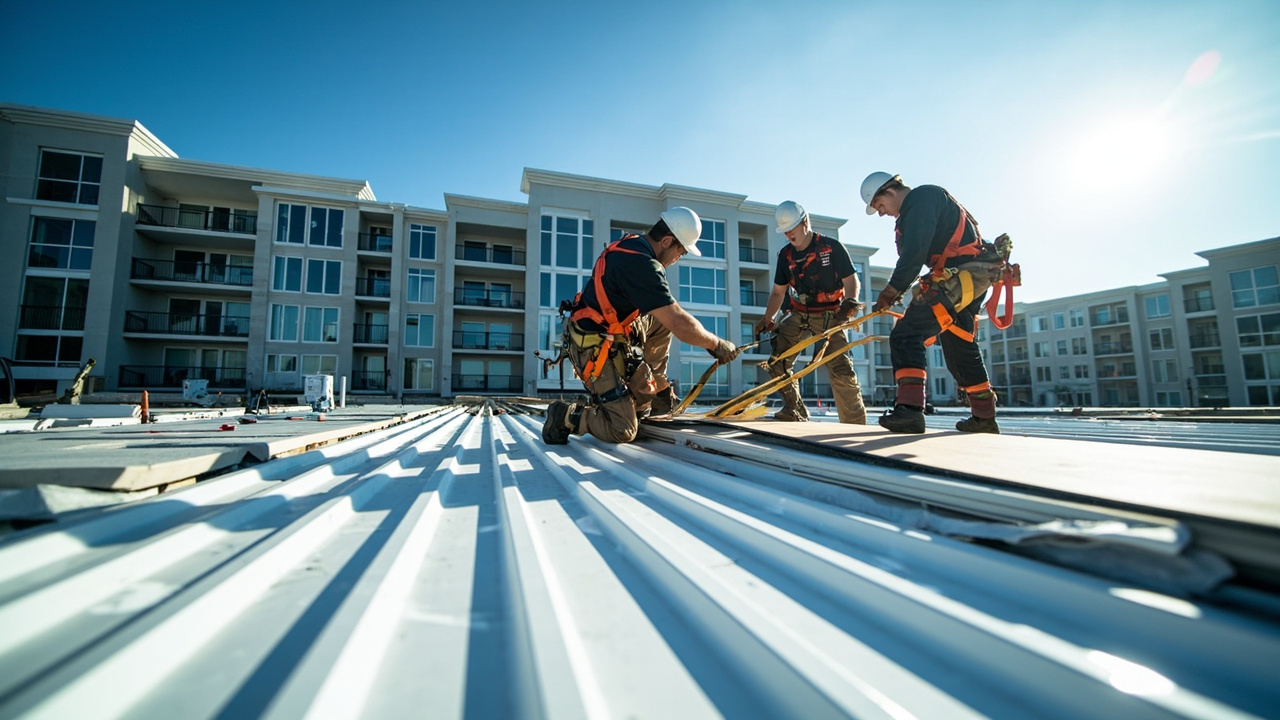
Our multifamily roofing installations prioritize phased work schedules that minimize tenant disruption. We isolate work zones, maintain access paths, and coordinate with property management to address resident concerns before they escalate. For occupied buildings, noise mitigation and debris containment are not optional considerations.

Material selection matters for apartment building roofing longevity. We specify membrane systems based on your roof slope, traffic patterns, and exposure conditions. TPO and EPDM single-ply systems offer proven performance for low-slope applications common in multi-family construction. Modified bitumen provides puncture resistance for roofs with HVAC equipment concentrations. We detail penetrations, transitions, and terminations to eliminate the weak points where most multi-unit roofing services fail.

Charlotte's building codes require specific fire ratings and wind uplift resistance for commercial structures. We pull permits and coordinate inspections to keep your project compliant. Our approach includes proper insulation installation to meet energy code requirements while preventing condensation issues that plague poorly ventilated apartment complex roofing assemblies. You get a roof system engineered for your building's specific demands.

How Multi-Family Housing Roofing Projects Progress

Apartment Complex Roofing in Charlotte – Minimize Downtime and Protect Your Investment
01

Comprehensive Property Assessment

We conduct a complete roof survey across all buildings in your apartment complex. Our team documents existing conditions, identifies active leaks, and tests membrane adhesion to determine remaining service life. You receive a detailed report with thermal imaging data showing moisture intrusion, structural load analysis for replacement material options, and a phased replacement strategy that aligns with your capital planning cycle and minimizes operational disruption.
02

Phased Installation Execution

We execute multifamily roofing installations in coordinated phases that keep buildings occupied and operational. Our crews work in defined sections with safety barriers and signage to protect residents. We schedule noisy tear-off work during mid-day hours and coordinate with property management on resident communications. Daily cleanup removes all debris before evening hours. Each phase undergoes inspection before we move to the next building section, ensuring quality control across the entire property.
03

Final Documentation and Handover

You receive complete as-built documentation including all inspection reports, material certifications, and warranty registration. We provide your maintenance team with a roof care protocol specific to your installed system, identifying recommended inspection intervals and minor repair procedures. Our handover includes a marked-up site plan showing all penetrations, drains, and access points. You get a maintenance roadmap that protects your investment and simplifies future budgeting for the property.

Local Expertise for Charlotte Multi-Unit Properties

We understand Charlotte's commercial real estate market because we work in it daily. Our crews navigate the permitting process with the City of Charlotte and Mecklenburg County efficiently. We know which inspectors cover different districts and what they prioritize during commercial roofing inspections. This local knowledge prevents delays that extend your project timeline and increase carrying costs.

The apartment building roofing we install must perform in Charlotte's specific weather patterns. We have installation data from properties across South End, Plaza Midwood, NoDa, and University City. This experience base informs our material specifications and installation details. When we recommend a specific membrane system or fastening pattern, that recommendation comes from documented performance in your exact climate conditions.

Your property insurance carrier evaluates roof condition during renewal underwriting. We provide documentation that satisfies insurance requirements and often helps negotiate better premium rates. Our commercial apartment roofing installations meet or exceed wind rating requirements for this region, giving underwriters confidence in your property's risk profile.

We maintain relationships with local suppliers and manufacturers' representatives. This means material availability when you need it and direct access to technical support if field conditions require engineering review. When a project encounters existing conditions that require design modifications, we coordinate solutions quickly without waiting for responses from distant decision-makers.

Charlotte's commercial property management community is tight-knit. Our reputation depends on performance at properties like yours. We show up when scheduled, complete work as specified, and stand behind our installations because your property managers talk to each other.

What Your Multi-Family Housing Roofing Project Delivers

Project Timeline and Scheduling

Your apartment complex roofing timeline depends on total square footage, number of buildings, and required system type. A typical 200-unit property with multiple buildings requires 4-8 weeks for complete roof replacement when phased appropriately. We provide a detailed schedule before work begins, identifying which buildings get addressed in which sequence. Weather delays happen in Charlotte's unpredictable climate. We build contingency time into schedules and communicate any adjustments immediately. You will know exactly when each phase starts, when inspections occur, and when buildings are completed. Our project managers coordinate with your leasing office to avoid conflicts with property tours or resident events.

Initial Roof System Evaluation

Our assessment process examines your entire multi-unit roofing system, not just visible surface conditions. We pull core samples to evaluate insulation and deck condition beneath the membrane. Infrared scanning identifies moisture intrusion that is not yet visible from below. We test existing drainage to ensure adequate capacity for Charlotte's heavy rainfall events. You receive a written evaluation that details remaining service life, repair versus replacement recommendations, and budget projections. This assessment gives you the data needed for capital planning discussions with ownership or lending institutions. We identify code compliance issues that must be addressed and optional upgrades that add value.

Installation Quality and Performance

Your completed multifamily roofing system will meet all manufacturer specifications for warranty eligibility and perform according to design criteria. We install to NRCA standards with quality control at each phase. Field seams on single-ply membrane get tested with electronic leak detection. Fastener patterns meet wind uplift requirements for Charlotte's exposure category. Flashing details at penetrations, walls, and roof edges follow best practices that prevent the common failure points. Your roof will shed water properly, resist wind loads, and maintain thermal performance. Most importantly, you get a system installed correctly the first time, eliminating callbacks and premature failures that plague improperly installed commercial apartment roofing.

Ongoing Maintenance Support

We provide a comprehensive maintenance plan specific to your installed apartment building roofing system. This includes recommended inspection intervals, seasonal maintenance tasks, and minor repair procedures your team can handle internally. We offer annual inspection services that document roof condition for your records and catch small issues before they become major problems. Our maintenance approach extends roof service life and protects your warranty coverage, which often requires documented maintenance to remain valid. You get access to our team for technical questions as building modifications or equipment installations affect the roof system. We maintain detailed records of your property for future reference.

Frequently Asked Questions

You Have Questions,
We Have Answers

What type of roof do apartment buildings have? +

Apartment buildings in Charlotte most often have flat or low-slope roofing systems. TPO (thermoplastic polyolefin) and EPDM (rubber membrane) dominate the commercial market due to cost efficiency and durability. Built-up roofing (BUR) with gravel ballast is common on older properties. Modified bitumen appears on mid-rise structures. The choice depends on building age, budget, and roof access needs. Charlotte's humid subtropical climate and occasional severe weather make membrane integrity critical. Proper drainage is essential because flat roofs collect water, and standing water accelerates deterioration. Your roofing decision should balance upfront cost against lifecycle performance and maintenance requirements for your specific property.

How much should a 2000 sq ft roof cost? +

This question targets residential pricing, which does not apply to apartment complex roofing. Commercial flat roofing operates on different pricing models than pitched residential roofs. Apartment building roof replacement costs depend on membrane type, number of units, roof access complexity, existing damage, code compliance upgrades, and warranty level. A 2,000 square foot section on a commercial building costs differently than a standalone residential roof due to equipment access, liability insurance, and commercial-grade materials. Charlotte market rates fluctuate based on material availability and contractor demand. Request itemized proposals from commercial roofing contractors experienced with multifamily properties to understand true project costs.

How often do apartment roofs need to be replaced? +

Apartment roofs in Charlotte need replacement every 15 to 30 years depending on membrane type and maintenance quality. TPO systems last 20 to 25 years with proper care. EPDM performs for 25 to 30 years. Modified bitumen requires replacement after 15 to 20 years. Built-up roofing survives 20 to 25 years. Charlotte's heat, UV exposure, and storm activity accelerate aging. Deferred maintenance shortens lifespan dramatically. Annual inspections catch small problems before they become expensive failures. Budget for replacement proactively to avoid emergency situations that disrupt tenants and cost more. Track your roof age and inspection findings to plan capital expenditures intelligently.

How to tell if a roofer is lying? +

A dishonest roofer avoids written estimates, pressures immediate decisions, requests large upfront deposits, or lacks proper commercial licensing and insurance documentation. Red flags include vague scope descriptions, reluctance to provide references from other apartment complexes, and inability to explain membrane specifications or warranties. In Charlotte, verify North Carolina licensing through the state board and confirm commercial general liability coverage. A qualified contractor provides detailed proposals, explains code compliance requirements, and offers manufacturer certifications. Ask about previous multifamily projects, request site-specific assessments, and compare multiple bids. Trust your instincts if answers seem evasive or too good to be true.

Which is better, EPDM or TPO? +

TPO offers better heat reflectivity and energy efficiency, which matters in Charlotte's hot summers. It resists UV degradation and typically costs less upfront. EPDM provides superior puncture resistance and performs well in temperature extremes. For apartment complexes, TPO wins on lifecycle cost due to lower cooling expenses and longer warranty options. EPDM works better for roofs with heavy mechanical equipment or frequent maintenance traffic. Charlotte's climate favors reflective membranes to reduce cooling loads. Your decision should factor in roof traffic patterns, adjacent HVAC units, and energy cost priorities. Both systems perform well when installed correctly, but TPO edges ahead for cost-conscious property managers.

What are the three types of roofing? +

The three primary commercial roofing categories are single-ply membranes (TPO, EPDM, PVC), modified bitumen systems, and built-up roofing (BUR). Single-ply membranes dominate modern apartment construction due to installation speed and performance. Modified bitumen offers multiple layers with torch-down or cold-applied installation. Built-up roofing uses alternating layers of bitumen and reinforcing fabric, topped with gravel. Each system has specific applications. Charlotte apartment complexes increasingly choose single-ply membranes for energy efficiency and warranty coverage. The right choice depends on your building design, budget constraints, and maintenance capabilities. Consult with commercial roofing professionals to evaluate which system fits your property requirements.

What is the most expensive part of replacing a roof? +

Labor represents the most expensive component of apartment roof replacement. Tear-off and disposal of existing materials add significant cost, especially with multiple layers or asbestos-containing materials common in older Charlotte buildings. Roof deck repairs increase expenses when water damage has compromised structural elements. Necessary code upgrades for insulation, drainage, or fire rating drive costs higher. Complex roof layouts with multiple penetrations, parapets, or equipment require more labor hours. Material costs fluctuate but remain secondary to skilled labor expenses. Emergency replacements cost more than planned projects. Minimize replacement costs through proactive maintenance that extends roof life and prevents structural damage requiring expensive repairs.

Will roofing prices go down in 2025? +

Commercial roofing prices are unlikely to decrease in 2025. Material costs remain elevated due to petroleum-based membrane production expenses and supply chain factors. Labor shortages in skilled trades continue pushing wages higher. Charlotte's construction demand keeps contractors busy, maintaining current pricing. Tariffs on imported materials may increase costs further. Inflation affects all construction sectors. Property managers should not delay necessary roof replacements hoping for price drops. Waiting often results in additional damage that increases total project cost. Budget current market rates for planning purposes. Focus on value rather than hoping for future savings that may never materialize while your roof continues deteriorating.

How long does it take to replace a 2000 sq ft roof? +

A 2,000 square foot section on an apartment complex takes one to three days for membrane replacement, depending on system type and crew size. This question applies more to residential projects than commercial multifamily work. Commercial roofing crews work faster due to equipment and experience. Weather delays extend timelines in Charlotte's unpredictable climate. Tear-off requirements, deck repairs, and complexity add days. A full apartment building roof takes significantly longer than a single residential roof due to scale, safety protocols, and tenant coordination needs. Your contractor should provide a realistic schedule based on building-specific factors, weather contingencies, and crew availability during your proposal process.

How old may a roof be before insurance claims it's too old? +

Most insurance carriers in Charlotte consider roofs over 15 to 20 years old problematic for coverage. Policies often exclude wind and hail damage claims on roofs exceeding specific age thresholds. Some carriers require roof inspections or certifications for buildings with roofs over ten years old. Coverage may shift to actual cash value rather than replacement cost for older systems. Documentation of maintenance history and recent inspections helps maintain coverage. Property managers should track roof age and plan replacement before insurance complications arise. Losing wind coverage exposes you to significant liability in Charlotte's storm-prone region. Proactive replacement protects both your property value and insurance eligibility.

How Charlotte's Growth Boom Impacts Multi-Family Roofing Demands

Charlotte's rapid population growth and apartment construction surge create specific challenges for existing multifamily roofing systems. Older apartment complexes built in the 1980s and 1990s now compete with newer properties featuring modern amenities. Your roof system signals property condition to prospective tenants. Neighborhoods like South End, NoDa, and Plaza Midwood see constant development activity. This competitive pressure means your property cannot afford visible roof deterioration or leak issues that damage your reputation in online reviews. Charlotte's clay soil conditions also cause foundation settlement patterns that stress roof structures over time, particularly in areas with significant elevation changes.

Charlotte's commercial building codes have evolved significantly as the city has grown. Properties built before recent code updates may not meet current requirements for wind resistance, energy performance, or fire ratings. When you replace your apartment complex roofing, you must bring the system into compliance with current standards. We navigate these requirements regularly across Charlotte properties. Our familiarity with City of Charlotte permitting and inspection procedures keeps your project moving forward without unexpected delays. Local expertise matters when coordinating with inspectors who enforce specific interpretations of code requirements. We know what documentation they need and what installation details they prioritize during field inspections.

Roofing Services in The Charlotte Area

Five Star Roofing Charlotte is proud to serve the entire community and surrounding areas. We’re dedicated to providing fast, reliable service right to your doorstep, no matter where you are. View our location on the map to see our central hub, and rest assured that our dedicated teams are ready to dispatch and bring our exceptional services to your neighborhood.

Address:
Five Star Roofing Charlotte, 3117 Whiting Ave, Charlotte, NC, 28205

Additional Services We Offer

Our news updates

Latest Articles & News from The Blogs

Why Your Roof Actually Needs a Spring Cleaning After the Charlotte Pollen Season Yellow dust coats everything in Charlotte each…

Why Your Roof Actually Needs a Spring Cleaning After the Charlotte Pollen Season

Why Your Roof Actually Needs a Spring Cleaning After the Charlotte Pollen Season Yellow dust coats everything in Charlotte each…

What First-Time Homebuyers in South End Should Look for During a Roof Walkthrough

What First-Time Homebuyers in South End Should Look for During a Roof Walkthrough Buying your first home in Charlotte’s South…

Why the Valleys of Your Roof Are Most Likely to Leak (And How to Protect Them)

Why the Valleys of Your Roof Are Most Likely to Leak (And How to Protect Them) Your roof’s valleys are…

Contact Us

Your apartment complex deserves a roof system that performs reliably and protects your operational continuity. Call Five Star Roofing Charlotte at (980) 352-5899 for a comprehensive property assessment. We will evaluate your existing conditions and provide the data you need for informed capital planning decisions.