How to Tell the Difference Between Normal Roof Aging and Actual Hail Damage
After a storm rolls through Charlotte, every homeowner wonders the same thing: is that damage from hail or just my roof getting old? The difference matters because hail damage is covered by insurance while normal wear and tear is not. In the first 100 words, here’s what you need to know: hail damage creates specific patterns of bruising and granule loss that happen suddenly during a storm, while normal aging causes gradual deterioration like curling shingles and uniform granule loss over years. Understanding these differences can save you from filing a false claim or missing coverage you deserve. The Best Shingles to Withstand the Charlotte Summer Heat and Humidity.
Visual Identification Checklist
Learning to spot the difference starts with knowing what each type of damage looks like. Here’s a side-by-side comparison of hail damage versus normal aging:
| Damage Type | Hail Damage Appearance | Normal Aging Appearance |
|---|---|---|
| Shingle Surface | Random bruising with black dots where granules are knocked off | Uniform thinning and loss of granules across entire roof |
| Shingle Edges | May show impact marks but edges remain intact | Corners curling up or down gradually |
| Pattern | Random, scattered pattern following storm path | Consistent wear across all exposed surfaces |
| Underlying Material | May show fracture lines in fiberglass mat | No fractures, just brittleness from UV exposure |
The Core Difference: Sudden Peril vs. Gradual Aging
Hail damage in Charlotte occurs when ice pellets strike your roof with enough force to fracture the shingle’s protective layers. This creates what roofers call “functional damage” – harm that reduces the roof’s ability to protect your home. The North Carolina Department of Insurance recognizes hail as a “sudden peril” covered under most homeowner policies. North Carolina Department of Insurance.
Normal aging, on the other hand, is deterioration that happens over time from exposure to Charlotte’s intense UV rays, humidity, and temperature swings. This “wear and tear” is considered maintenance, not a covered loss. The key diagnostic difference is timing and pattern: hail creates sudden, random damage while aging creates gradual, uniform wear. Getting Your Charlotte Roof Repaired After a Hail Storm — A Local Guide to Insurance Claims.
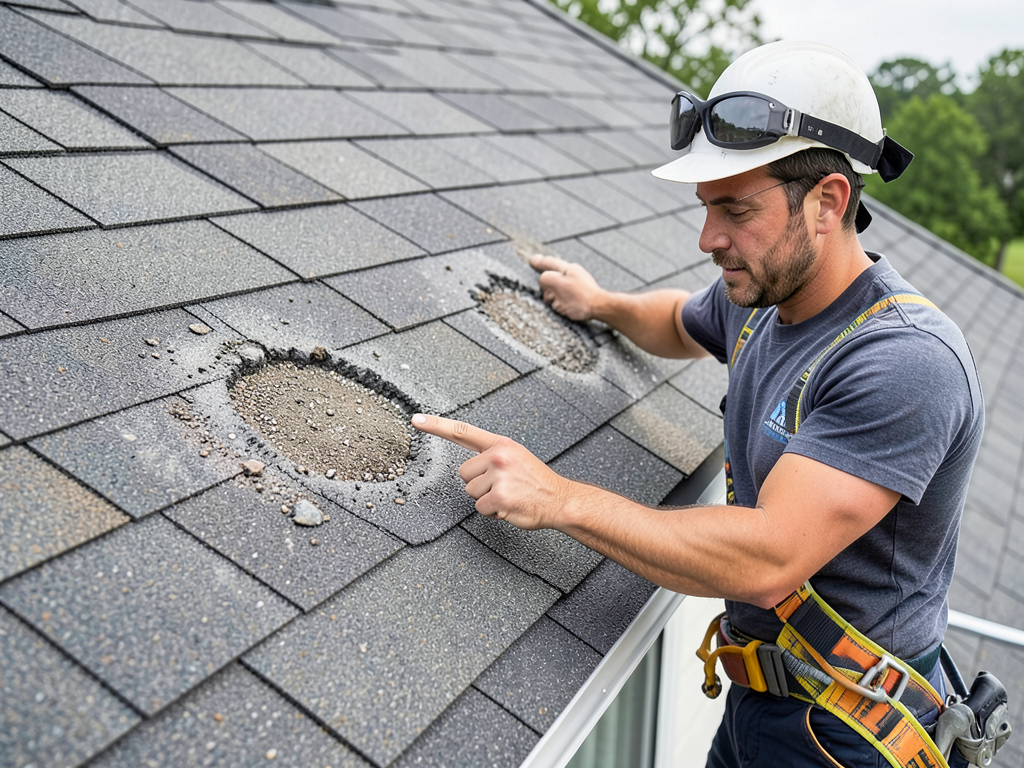
Image description: Close-up comparison showing hail bruise (black circular mark with fractured mat) versus normal granule loss (uniform thinning across shingle surface).
Understanding Charlotte’s Climate Impact
Charlotte’s location in the Piedmont region creates unique roofing challenges. Our humid subtropical climate means roofs face intense UV exposure during hot summers, followed by sudden temperature drops. This thermal cycling causes shingles to expand and contract, accelerating normal aging. Add in the severe thunderstorms that roll through from March through September, and you have a perfect storm of wear factors.
The April 2024 hail events across Mecklenburg County demonstrated how localized these storms can be. One neighborhood might see golf ball-sized hail while another a mile away sees nothing. This explains why your neighbor might have legitimate hail damage while your roof shows only age-related wear – you were outside the storm’s path.
Common Hail Damage Patterns in Charlotte
When hail strikes, it creates distinctive damage patterns that trained inspectors learn to recognize. The most obvious sign is shingle bruising – circular areas where granules have been knocked away, exposing the asphalt underneath. Under proper lighting, you can often see a shallow depression or “bruise” in the shingle mat.
Another telltale sign is fractured fiberglass mat. When hail impacts with enough force, it can crack the internal reinforcement of the shingle. This damage might not be visible from the ground but becomes apparent during a close inspection. In Charlotte, we often see this type of damage on south-facing slopes that receive the most direct sunlight and therefore the most thermal stress.
How Normal Aging Shows Up on Charlotte Roofs
Normal aging in our climate follows predictable patterns. After 15-20 years, asphalt shingles typically show uniform granule loss, especially on south-facing slopes where UV exposure is highest. The shingles become brittle and may start to curl at the edges – a process that happens gradually over several seasons.
Another aging indicator specific to Charlotte is algae growth. Our high humidity creates perfect conditions for Gloeocapsa magma, the black algae that causes those dark streaks on many local roofs. While this is cosmetic rather than structural damage, it can make older roofs appear worse than they are and complicate damage assessments.
The Role of the Insurance Adjuster in North Carolina
North Carolina insurance adjusters use specific criteria to distinguish hail damage from normal wear. They look for functional damage – harm that impairs the roof’s ability to keep water out. A few missing granules from aging won’t trigger coverage, but a fractured shingle mat from hail impact will.
Under North Carolina insurance law, you typically have three years from the date of loss to file a hail damage claim. This “statute of limitations” means if you suspect hail damage from a past storm, you need to act quickly. Many Charlotte homeowners miss this window, thinking their roof just needs replacement due to age when they actually had storm damage years ago. Why More Huntersville Homeowners Are Switching to Standing Seam Metal Roofs.
Collateral Damage Indicators
Sometimes the best way to tell if you had hail is to look for collateral damage elsewhere on your property. Hail that damages your roof typically impacts other surfaces too. Check your vinyl siding for random dents or chipped paint, your window screens for small holes, and your gutters for impact marks.
In Charlotte neighborhoods like Ballantyne or Myers Park, we often find that homes with roof hail damage also show damage to landscape lighting, patio furniture, and even cars left outside during the storm. If you see these patterns but your roof looks fine, it might be worth a professional inspection – hail can sometimes damage the underlayment without obvious shingle damage.
Should You File a Claim? Decision Matrix
Before calling your insurance company, use this decision matrix to determine if filing a claim makes sense:
- Document the Damage
Take clear photos of suspected damage, including close-ups and wider shots showing pattern. Note the date of the last major storm.
- Check Your Deductible
Most homeowners in Mecklenburg County have deductibles between $1,000 and $2,500. If repair costs are below this, filing a claim isn’t worthwhile. EPA Stormwater Management.
- Look for Collateral Damage
Check gutters, siding, and outdoor fixtures for hail impact marks. Multiple damage types strengthen your case.
- Consider Roof Age
Roofs under 10 years old with damage are stronger candidates for insurance coverage than 20-year-old roofs showing age-related wear.
- Get a Professional Opinion
A certified inspector can determine if damage is functional (covered) or cosmetic (not covered).
Impact of Hail on Different Roofing Materials
Not all roofing materials show hail damage the same way. Three-tab asphalt shingles often display the most obvious bruising, while architectural shingles might hide damage better due to their layered construction. Metal roofs can dent from hail but typically maintain their waterproofing – making the damage primarily cosmetic.
In Charlotte, we’re seeing more homeowners install impact-resistant shingles rated for Class 3 or 4 hail resistance. These shingles have reinforced mats and can withstand impacts from 1.5-inch to 2-inch hail. While they cost more upfront, they can prevent damage from the smaller hail storms common in our area.
Common Reasons for Claim Denials in Charlotte
Insurance companies in North Carolina frequently deny hail damage claims for several reasons. The most common is insufficient evidence of functional damage – they’ll argue the roof still keeps water out despite cosmetic issues. Another frequent denial reason is pre-existing conditions; if your roof was already near the end of its lifespan, they might attribute all damage to normal aging.
Many Charlotte homeowners also face denials because they waited too long to file. Insurance adjusters can argue that additional weathering over months or years makes it impossible to determine if damage was from the claimed storm or subsequent weather events.
DIY Inspection Techniques
While a professional inspection is always best, you can perform some basic checks yourself. The “penny test” involves running a penny over the shingle surface – if it catches in indentations, you might have hail bruising. Another method is checking for fractured mat by gently bending suspect shingles in shaded areas where glare doesn’t interfere.
However, safety comes first. Never walk on your roof to inspect for damage. From the ground, use binoculars to look for the random patterns typical of hail versus the uniform wear of aging. Pay special attention to areas around roof penetrations like vents and chimneys where damage often concentrates. Chimney Leak Emergency Repair.
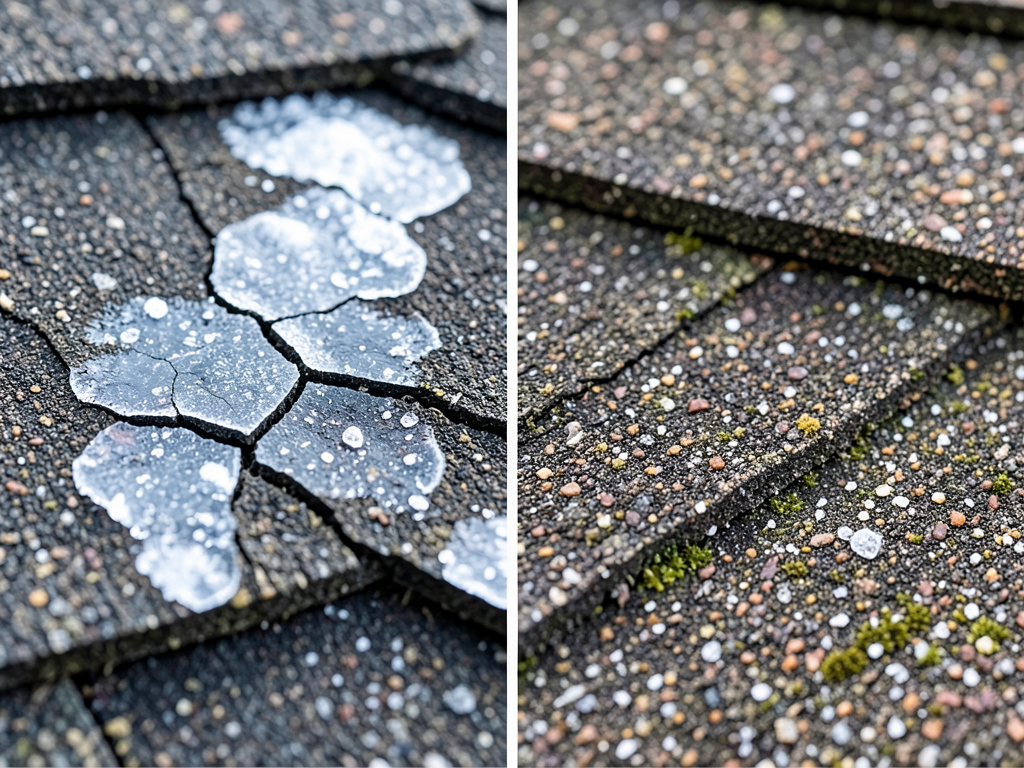
Image description: Technician using moisture meter on roof deck to detect water infiltration from potential hail damage beneath shingles.
When to Call a Professional
Call a professional if you notice any of these signs: random patterns of granule loss, dented gutters or downspouts after a storm, neighbors reporting damage from the same weather event, or visible fractures in shingle mats. A certified inspector can also check for damage to the underlayment that isn’t visible from the surface.
In Charlotte, look for inspectors with HAAG certification or those who regularly work with local insurance companies. They understand the specific requirements of North Carolina insurers and can provide the detailed documentation needed for a successful claim.
Protecting Your Investment
Whether you have hail damage or just normal aging, taking proactive steps can extend your roof’s life. Keep gutters clean to prevent water backup, trim overhanging branches that can damage shingles, and ensure proper attic ventilation to prevent heat buildup that accelerates aging.
For Charlotte homeowners, scheduling annual inspections becomes especially important after severe weather seasons. A professional can catch minor issues before they become major problems and help you plan for eventual replacement rather than facing emergency repairs. Expert Roof Inspections for Waterfront Homes in Cornelius and Davidson.
Image description: Side-by-side comparison of impact-resistant shingles (showing minimal hail damage) versus standard shingles (showing significant bruising and granule loss).
Frequently Asked Questions
How soon after a hailstorm should I inspect my roof?
Wait at least 24-48 hours after the storm for safety, then perform a ground-level inspection. For a thorough assessment, schedule a professional inspection within 30 days while damage evidence is fresh.
Can hail damage be hidden under new shingles?
Yes, hail can damage the underlayment or roof deck without obvious shingle damage. This is why professional inspection using moisture meters and sometimes removing sample shingles is important for accurate assessment.
Will my insurance rates increase if I file a hail damage claim?
In North Carolina, hail damage is typically considered an act of God and shouldn’t affect your rates. However, multiple claims within a short period might raise concerns with your insurer.
Take Action Before the Next Storm
Understanding the difference between hail damage and normal aging puts you in control of your roofing decisions. If you’re seeing random patterns of damage after a storm, or if your neighbors are getting inspections, don’t wait. The three-year claim window in North Carolina passes quickly, and what looks like minor damage today could lead to leaks tomorrow.
Call (980) 352-5899 today to schedule your inspection. Our certified technicians will provide a honest assessment of your roof’s condition and help you understand your options. Whether you need a simple repair or are considering insurance options, we’re here to help Charlotte homeowners make informed decisions about their most important investment.
Don’t let uncertainty about your roof’s condition keep you up at night. Pick up the phone and call (980) 352-5899 before the next storm hits. Your home deserves the protection of a properly maintained roof, and you deserve to know the truth about its condition.
{
“@context”: “https://schema.org”,
“@type”: “BlogPosting”,
“headline”: “How to Tell the Difference Between Normal Roof Aging and Actual Hail Damage”,
“description”: “Confused about hail damage vs wear and tear on your Charlotte roof? Learn to spot the differences with our local expert guide and protect your home investment.”,
“wordCount”: 1949,
“datePublished”: “2026-03-22T11:38:00.000Z”,
“dateModified”: “2026-03-22T11:38:00.000Z”,
“inLanguage”: “en-US”,
“mainEntityOfPage”: {
“@type”: “WebPage”,
“@id”: “https://fivestarroofingcharlotte.com”
},
“publisher”: {
“@type”: “LocalBusiness”,
“name”: “Five Star Roofing Charlotte”,
“url”: “https://fivestarroofingcharlotte.com”
},
“author”: {
“@type”: “Organization”,
“name”: “Five Star Roofing Charlotte”,
“url”: “https://fivestarroofingcharlotte.com”
},
“image”: {
“@type”: “ImageObject”,
“url”: “https://fivestarroofingcharlotte.com/wp-content/uploads/2026/03/how-to-tell-the-difference-between-normal-roof-agi-1.png”
}
}
{
“@context”: “https://schema.org”,
“@type”: “RoofingContractor”,
“name”: “Five Star Roofing Charlotte”,
“url”: “https://fivestarroofingcharlotte.com”,
“address”: {
“@type”: “PostalAddress”,
“addressLocality”: “Charlotte”
},
“areaServed”: {
“@type”: “City”,
“name”: “Charlotte”
}
}
{
“@context”: “https://schema.org”,
“@type”: “FAQPage”,
“mainEntity”: [
{
“@type”: “Question”,
“name”: “How soon after a hailstorm should I inspect my roof?”,
“acceptedAnswer”: {
“@type”: “Answer”,
“text”: “Wait at least 24-48 hours after the storm for safety, then perform a ground-level inspection. For a thorough assessment, schedule a professional inspection within 30 days while damage evidence is fresh.”
}
},
{
“@type”: “Question”,
“name”: “Can hail damage be hidden under new shingles?”,
“acceptedAnswer”: {
“@type”: “Answer”,
“text”: “Yes, hail can damage the underlayment or roof deck without obvious shingle damage. This is why professional inspection using moisture meters and sometimes removing sample shingles is important for accurate assessment.”
}
},
{
“@type”: “Question”,
“name”: “Will my insurance rates increase if I file a hail damage claim?”,
“acceptedAnswer”: {
“@type”: “Answer”,
“text”: “In North Carolina, hail damage is typically considered an act of God and shouldn’t affect your rates. However, multiple claims within a short period might raise concerns with your insurer.”
}
}
]
}
{
“@context”: “https://schema.org”,
“@type”: “HowTo”,
“name”: “Should I File a Hail Damage Claim”,
“step”: [
{
“@type”: “HowToStep”,
“position”: 1,
“name”: “Document the Damage”,
“text”: “Take clear photos of suspected damage, including close-ups and wider shots showing pattern. Note the date of the last major storm.”
},
{
“@type”: “HowToStep”,
“position”: 2,
“name”: “Check Your Deductible”,
“text”: “Most homeowners in Mecklenburg County have deductibles between $1,000 and $2,500. If repair costs are below this, filing a claim isn’t worthwhile. EPA Stormwater Management.”
},
{
“@type”: “HowToStep”,
“position”: 3,
“name”: “Look for Collateral Damage”,
“text”: “Check gutters, siding, and outdoor fixtures for hail impact marks. Multiple damage types strengthen your case.”
},
{
“@type”: “HowToStep”,
“position”: 4,
“name”: “Consider Roof Age”,
“text”: “Roofs under 10 years old with damage are stronger candidates for insurance coverage than 20-year-old roofs showing age-related wear.”
},
{
“@type”: “HowToStep”,
“position”: 5,
“name”: “Get a Professional Opinion”,
“text”: “A certified inspector can determine if damage is functional (covered) or cosmetic (not covered).”
}
],
“image”: “https://fivestarroofingcharlotte.com/wp-content/uploads/2026/03/how-to-tell-the-difference-between-normal-roof-agi-1.png”
}
{
“@context”: “https://schema.org”,
“@type”: “BreadcrumbList”,
“itemListElement”: [
{
“@type”: “ListItem”,
“position”: 1,
“name”: “Home”,
“item”: “https://fivestarroofingcharlotte.com”
},
{
“@type”: “ListItem”,
“position”: 2,
“name”: “Blog”,
“item”: “https://fivestarroofingcharlotte.com/blog”
},
{
“@type”: “ListItem”,
“position”: 3,
“name”: “How to Tell the Difference Between Normal Roof Aging and Actual Hail Damage”
}
]
}
{
“@context”: “https://schema.org”,
“@type”: “Service”,
“serviceType”: “Roofing”,
“provider”: {
“@type”: “LocalBusiness”,
“name”: “Five Star Roofing Charlotte”,
“url”: “https://fivestarroofingcharlotte.com”
},
“areaServed”: {
“@type”: “City”,
“name”: “Charlotte”
},
“description”: “Confused about hail damage vs wear and tear on your Charlotte roof? Learn to spot the differences with our local expert guide and protect your home investment.”
}