Why Pine Needles Are a Silent Killer for Roofs in the University City Area
Those innocent-looking pine needles blanketing your University City roof are actually a ticking time bomb. While they might seem harmless, these acidic needles create the perfect storm for roof damage in Charlotte’s humid climate. The combination of moisture retention, chemical breakdown of shingles, and hidden water channels can cut your roof’s lifespan by years. The Best Shingles to Withstand the Charlotte Summer Heat and Humidity.
In University City’s wooded neighborhoods, where Loblolly pines dominate the landscape, this seasonal debris problem hits harder than most homeowners realize. The real danger isn’t just the needles themselves, but how they work together to trap moisture against your roof deck and create ideal conditions for rot, mold, and structural damage. Why More Huntersville Homeowners Are Switching to Standing Seam Metal Roofs.
The Hidden Dangers of Pine Needle Accumulation
Pine needles are nature’s perfect moisture trap. Unlike broad leaves that dry quickly, these thin, waxy needles form dense mats that hold water against your shingles for days after a rain. In University City’s humid Piedmont climate, this creates a persistent wet environment that never fully dries.
The acidity factor makes things worse. Pine needles contain tannic acid, which slowly breaks down asphalt shingle granules. These protective granules shield your roof from UV rays and weather damage. Once they deteriorate, your shingles become vulnerable to accelerated aging and cracking. Asphalt Roofing Manufacturers Association.
The damming effect is perhaps the most destructive mechanism. As needles accumulate in roof valleys and along the edges, they create miniature dams that redirect water under shingles and flashing. This water intrusion can travel along the roof deck, causing damage far from where you see the needle buildup.
Moisture Traps: How Needles Create a ‘Sponge’ Effect
When pine needles settle on your roof, they interlock like a woven mat. This structure creates countless tiny pockets that trap water. In University City’s average 43 inches of annual rainfall, these pockets stay saturated for extended periods.
The problem compounds in shaded areas where sunlight can’t evaporate the trapped moisture. Under large pine trees, these shaded zones can remain damp for weeks, creating ideal conditions for algae growth and wood rot.
Acidity and Shingle Decay: The Chemical Breakdown of Asphalt Granules
Pine needles release tannic acid as they decompose. This natural compound has a pH around 3.5 to 4.0, making it mildly acidic. When this acid solution sits on asphalt shingles, it gradually dissolves the protective mineral granules.
According to the Asphalt Roofing Manufacturers Association, granule loss is one of the primary indicators of shingle deterioration. Once 20% or more of granules are lost, the underlying asphalt becomes vulnerable to UV damage and thermal cracking.
The ‘Damming’ Effect: Redirecting Water Under Shingles and Flashing
Needles don’t just sit on your roof; they migrate to the lowest points and valleys where water naturally flows. Here, they form dense barriers that water cannot easily penetrate. Instead of flowing off your roof, water pools behind these needle dams.
This pooled water finds the path of least resistance, often working its way under shingle edges and flashing. Once water penetrates these protective barriers, it can travel along the roof deck, causing damage to the underlying structure before you notice any signs inside your home.
Secondary Damage: Beyond the Shingles
The damage from pine needles extends far beyond your shingles. As water backs up and overflows, it affects multiple components of your roofing system, creating a cascade of problems that can lead to expensive repairs.
Gutter systems bear the brunt of this secondary damage. Pine needles are particularly problematic because they’re small enough to slip through standard gutter screens yet dense enough to create stubborn clogs. When gutters overflow, water cascades down your home’s exterior, saturating the ground around your foundation.
The pest attraction factor is often overlooked. Pine needles create perfect nesting material for rodents, birds, and insects. These pests can then find their way into your attic through small gaps in the roof structure, leading to additional damage and potential health hazards.
Gutter Clogs: Why Pine Needles Are Harder to Manage Than Leaves
Unlike large leaves that can be easily blown away or caught by standard gutter guards, pine needles slip through most conventional protection systems. Their small size and waxy coating allow them to pack tightly into gutter channels and downspouts.
In University City’s typical 15-20 mph spring winds, pine needles become airborne projectiles that find their way into even the most carefully maintained gutter systems. Once inside, they form dense mats that water cannot penetrate, causing overflow and potential foundation damage.
Pest Infestations: Pine Needles as Nesting Material for Rodents and Insects
Pine needles provide excellent insulation and nesting material for various pests. Their dry, fibrous nature makes them ideal for rodent nests, while their acidic properties can actually deter some insects, creating a false sense of security.
However, the real danger comes when these needle piles create sheltered areas near your roof’s edge. Rodents use these protected zones to gnaw on fascia boards and soffits, creating entry points into your attic. Once inside, they can chew through wiring, insulation, and even structural components.
Wood Rot: Impact on Soffits and Fascia
Continuous moisture exposure from backed-up water causes wood components to deteriorate rapidly. University City’s high humidity, averaging 70% in summer months, accelerates this process significantly.
Fascia boards and soffits are particularly vulnerable because they’re often made from less expensive materials than the main roof structure. When water consistently contacts these surfaces, it causes the wood to swell, crack, and eventually rot. This deterioration can compromise the entire roof edge, leading to widespread damage.
Charlotte Specific Maintenance Tips
University City’s unique climate and tree composition require a specialized approach to pine needle management. The key is timing your maintenance to match the local needle drop cycles and weather patterns. Specialized Slate and Tile Roofing Services for Historic Homes in Myers Park.
Late spring and early fall are the critical periods for pine needle accumulation. Loblolly pines in Mecklenburg County typically drop their needles in two major cycles: a lighter drop in late May as new growth emerges, and a heavier drop in October as trees prepare for winter.
Professional cleaning methods matter significantly. Pressure washing might seem like an efficient solution, but it can actually damage shingles by stripping away protective granules. Soft washing with appropriate cleaning solutions preserves your roof’s integrity while effectively removing debris.
Best Times of Year to Clean (Post-fall and Spring)
Schedule your major cleanings around the peak needle drop periods. Late October through November is ideal for the fall cleanup, as most needles will have dropped but before winter weather arrives.
Spring cleaning in late April or early May catches the secondary drop and removes any debris that accumulated over winter. This timing also allows you to inspect for any winter damage before the heavy summer storm season.
Professional Cleaning vs. Pressure Washing (Why You Should Never Pressure Wash)
Pressure washing might remove visible debris, but it creates long-term problems. The high-pressure water can strip away asphalt granules, void manufacturer warranties, and force water under shingles where it can cause hidden damage.
Professional soft washing uses specialized low-pressure equipment and cleaning solutions that kill algae and mold while gently removing debris. This method preserves your roof’s protective layers while achieving superior cleaning results.
When to Call a Charlotte Roofing Professional
Recognizing the warning signs of serious roof damage can save you thousands in repair costs. Some issues require professional attention to prevent further deterioration and ensure your family’s safety.
Visible sagging in your roof deck indicates structural problems that need immediate attention. This often occurs when moisture has compromised the roof decking, creating soft spots that can’t support the roof’s weight.
Water stains on interior ceilings or walls suggest that water has already penetrated your roof system. By the time these signs appear, the damage often extends beyond what’s visible, requiring professional assessment to determine the full extent of repairs needed.
Signs of Structural Compromise
Cracking sounds during high winds or when walking on the roof indicate potential structural weakness. These sounds often mean the decking has separated from the supporting structure due to moisture damage.
Visible daylight through roof boards in your attic suggests holes or gaps that allow water intrusion. Even small openings can let in significant amounts of water during heavy rains, leading to extensive damage over time.
Safety Risks of Steep-Slope Pine Needle Removal
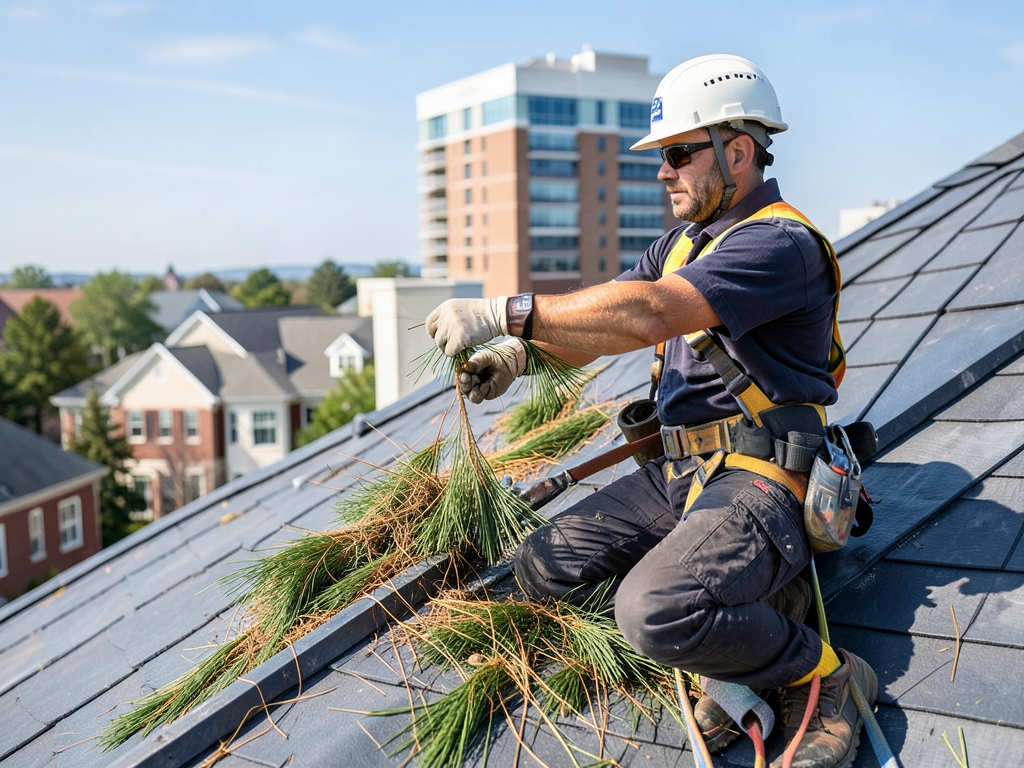
Attempting to clean a steep roof covered in pine needles creates serious safety hazards. The needles create a slippery surface similar to walking on ice, while the steep angle increases the risk of falls.
Professional roofers use specialized safety equipment including harnesses, roof brackets, and non-slip footwear. They also understand how to navigate different roof pitches and identify potential weak spots that could give way under weight.
University City Pine Needle Damage Prevention Guide
Prevention is always more cost-effective than repair. Understanding the specific challenges University City homeowners face with pine needles allows you to implement targeted solutions that protect your investment.
The University City area’s combination of mature pine trees, humid climate, and varied roof pitches creates unique challenges. Homes near the University Research Park or along Prosperity Church Road often deal with heavier needle accumulation due to the concentration of Loblolly pines in these areas.
Effective prevention requires a multi-layered approach. Start with proper tree maintenance, including selective pruning to reduce needle fall on your roof. Install appropriate gutter protection systems designed specifically for pine needle management. Schedule regular professional inspections to catch problems early. Expert Roof Inspections for Waterfront Homes in Cornelius and Davidson.
Tree Management Strategies
Strategic tree pruning can significantly reduce needle fall on your roof. Focus on removing branches that overhang your roofline, particularly those within 10 feet of your roof edge. This creates a buffer zone that catches many falling needles before they reach your roof.
Consider the tree’s health and your property’s aesthetics when pruning. Removing too many branches can stress the tree and make it more susceptible to disease. A certified arborist can help you develop a pruning plan that balances needle reduction with tree health.
Gutter Protection Solutions
Standard mesh gutter guards often fail with pine needles because the small needles slip through the openings. Micro-mesh systems with openings smaller than 50 microns provide better protection but may require more frequent cleaning.
Reverse curve gutter guards work well for pine needles because they use surface tension to direct water into the gutter while allowing debris to fall to the ground. These systems require professional installation but provide excellent long-term protection.
Professional Inspection Schedule
Establish a regular inspection schedule with a local roofing professional who understands University City’s specific challenges. Quarterly inspections catch problems before they escalate into major repairs.
During inspections, professionals check for granule loss, shingle deterioration, flashing integrity, and signs of moisture damage. They also assess your attic ventilation, which plays a crucial role in preventing moisture buildup that accelerates needle-related damage.
Cost Comparison: Prevention vs. Full Roof Replacement
Understanding the financial implications of pine needle damage helps justify preventive maintenance. A complete roof replacement for an average University City home can cost $8,000 to $15,000, while regular maintenance typically costs $300 to $600 annually.
Consider this breakdown: One year of professional pine needle management costs about the same as one month of a typical mortgage payment. Yet it can extend your roof’s life by 5 to 10 years, potentially saving you $5,000 to $10,000 in premature replacement costs.
The math becomes even more compelling when you factor in the cost of water damage repairs. A single major leak can cause $2,000 to $5,000 in interior damage, not including the roof repairs themselves.
Maintenance Cost Breakdown
Professional cleaning services typically charge $150 to $300 per cleaning, depending on your roof’s size and pitch. Most homes need two to three cleanings annually in University City’s pine-heavy environment.
Gutter protection systems range from $1,500 to $3,000 for professional installation, but they eliminate the need for frequent cleaning and prevent many of the secondary damage issues associated with clogged gutters.
Replacement Cost Factors
Several factors influence roof replacement costs in University City. Roof pitch affects labor costs, with steeper roofs requiring more safety equipment and time. The presence of multiple valleys and penetrations increases material and labor costs.
Local building codes in Mecklenburg County may require specific underlayment or ventilation upgrades when replacing a roof. These code requirements add to the overall cost but ensure your new roof meets current safety standards.
Local Climate Impact on Pine Needle Damage
University City’s specific climate conditions accelerate pine needle-related roof damage. The area’s high humidity, frequent afternoon thunderstorms, and temperature fluctuations create an environment where moisture-related problems develop rapidly.
Summer humidity levels often exceed 80%, providing ideal conditions for algae and moss growth on moisture-retaining needle mats. These organisms further trap moisture and accelerate the breakdown of roofing materials.
Winter temperature swings cause materials to expand and contract. When moisture is trapped by pine needles, this freeze-thaw cycle can cause shingles to crack and separate from the roof deck.
Humidity and Moisture Retention
Charlotte’s humid subtropical climate means moisture stays in the air rather than evaporating quickly. When pine needles trap this moisture against your roof, it creates a constantly damp environment that promotes biological growth and material degradation. Getting Your Charlotte Roof Repaired After a Hail Storm — A Local Guide to Insurance Claims.
University City’s proximity to Lake Norman and the Catawba River watershed contributes to higher local humidity levels. Homes in these areas may experience more severe moisture-related issues than properties in slightly drier parts of Mecklenburg County.
Storm Frequency and Wind Patterns
University City experiences approximately 40 to 50 thunderstorm days annually. These storms often bring high winds that can redistribute pine needles across your roof, concentrating them in valleys and against roof structures.
Spring and summer storms are particularly problematic because they coincide with pine trees’ active growth periods. New needles are more flexible and likely to accumulate in problematic areas than older, more brittle needles.
University City Building Code Considerations
Mecklenburg County building codes include specific requirements for roof ventilation and underlayment that affect how pine needle damage manifests. Understanding these requirements helps you make informed decisions about repairs and replacements.
Current codes require minimum ventilation ratios to prevent moisture buildup in attic spaces. When pine needles block proper ventilation, they create conditions that violate these codes and accelerate roof deterioration.
Underlayment requirements have evolved to address moisture management. Modern synthetic underlayments provide better protection against water intrusion than older felt paper products, but they still require proper installation and maintenance to function effectively.
Ventilation Requirements
Mecklenburg County follows the International Residential Code for ventilation requirements. Homes must have 1 square foot of net free ventilation area for every 150 square feet of attic floor space, or 1:300 if certain conditions are met. International Code Council.
Pine needles can block soffit vents, preventing proper air intake. This blockage violates building codes and creates conditions that trap moisture in your attic, leading to accelerated roof deck deterioration.
Underlayment Standards
Current building codes require specific underlayment types based on roof pitch and local climate conditions. In University City’s climate, synthetic underlayments are often required for their superior moisture resistance.
However, even the best underlayment cannot compensate for poor maintenance. Pine needles that trap moisture against the underlayment can cause it to degrade prematurely, compromising your roof’s primary moisture barrier.
DIY vs. Professional Pine Needle Management
Many homeowners attempt to handle pine needle removal themselves to save money. While DIY approaches can work for single-story homes with gentle roof pitches, they come with significant risks and limitations.
Professional roofers bring specialized equipment, safety training, and experience that most homeowners lack. They can identify early signs of damage that DIY inspections often miss, potentially saving you from costly repairs down the road.
The cost-benefit analysis often favors professional service. While DIY might save $100 to $200 per cleaning, the risk of personal injury or undetected damage can far exceed these savings.
Safety Equipment Requirements
Professional roofers use fall protection systems including harnesses, roof anchors, and safety lines. They also wear specialized footwear with non-slip soles designed for roof work.
Homeowners typically lack this equipment and may not understand proper safety procedures. Falls from roofs cause thousands of injuries annually, with ladder-related accidents being particularly common among DIY homeowners.
Damage Detection Capabilities
Professional roofers can identify subtle signs of damage that homeowners often miss. They understand how different roofing materials age and what specific problems to look for based on your roof’s age and the local climate conditions.
During a professional inspection, they check for granule loss, shingle cracking, flashing deterioration, and signs of moisture damage in the roof deck. They also assess the condition of your attic ventilation and insulation.
University City Pine Needle Timeline
Understanding the seasonal patterns of pine needle accumulation in University City helps you plan your maintenance schedule effectively. The area’s Loblolly pines follow predictable cycles that you can use to your advantage.
Early spring brings the first major drop as trees shed older needles to make room for new growth. This typically occurs in March or April and creates the initial layer of debris that subsequent drops build upon.
Summer thunderstorms redistribute needles across your roof, often concentrating them in valleys and against roof structures. The high winds associated with these storms can move needles from areas where they might have naturally blown off.
Fall brings the heaviest needle drop, usually in October and November. This coincides with leaf fall from deciduous trees, creating a double challenge for roof maintenance during this period.
Seasonal Maintenance Calendar
March-April: Schedule your first professional cleaning to remove winter accumulation and address any damage from freeze-thaw cycles.
June-July: Inspect after spring storms and schedule cleaning if needed. This timing catches problems before summer’s heaviest rainfall.
September-October: Prepare for fall needle drop with a thorough cleaning and inspection. Address any issues before winter weather arrives.
November-December: Final cleaning of the season to remove fall accumulation and prepare for winter.
Emergency Response Planning
University City’s severe weather patterns require emergency planning for pine needle-related issues. Heavy storms can quickly overwhelm even well-maintained roofs, particularly if debris has accumulated in critical areas.
Establish a relationship with a local roofing professional before emergencies occur. Having a trusted contractor’s contact information readily available can save valuable time when quick response is needed.
Environmental Considerations
Pine needle management doesn’t have to conflict with environmental responsibility. Many homeowners in University City are concerned about the ecological impact of roof maintenance and seek sustainable solutions.
Pine needles collected from your roof can be composted or used as garden mulch. Their acidic properties make them excellent for acid-loving plants like azaleas and rhododendrons, which are common in University City landscapes.
Some homeowners choose to leave certain areas of their roof slightly covered to provide habitat for beneficial insects. This approach requires careful balance to prevent moisture damage while supporting local ecology.
Sustainable Disposal Options
Many municipalities in Mecklenburg County offer yard waste collection programs that accept pine needles. Check with University City’s waste management services for specific guidelines and collection schedules.
Composting pine needles requires patience, as they decompose slowly due to their waxy coating. However, once broken down, they create excellent acidic compost for specific garden applications.
Native Plant Integration
Some University City homeowners are integrating native plants that thrive in pine needle mulch conditions. These plants are adapted to the local acidic soil conditions and can help create a more sustainable landscape around your home.
Consider incorporating native azaleas, mountain laurel, or blueberry bushes in areas where pine needles naturally accumulate. These plants benefit from the acidic conditions while helping to manage needle debris.
University City Neighborhood Specific Challenges
Different areas within University City face varying levels of pine needle challenges based on tree density, roof design, and local weather patterns. Understanding your specific neighborhood’s characteristics helps you develop targeted solutions.
Areas near the University Research Park often deal with higher pine needle concentrations due to the concentration of Loblolly pines in these newer developments. The combination of young, fast-growing trees and modern roof designs creates unique maintenance challenges.
Older neighborhoods along Prosperity Church Road feature mature pine trees with extensive root systems that can affect roof drainage patterns. These established trees often produce heavier needle drops than younger specimens.
Properties near the Catawba River experience slightly higher humidity levels, which can accelerate moisture-related damage from pine needles. The river’s influence creates microclimates that may require more frequent maintenance.
Research Park Area Considerations
The University Research Park area features many homes with complex roof designs, including multiple valleys and architectural features that trap pine needles. These designs, while aesthetically pleasing, create additional maintenance challenges.
Newer construction in this area often includes improved ventilation systems, but these can be compromised by pine needle accumulation. Regular maintenance is crucial to ensure these systems function as intended.
Prosperity Church Road Corridor
This established area features many homes with mature landscaping, including large pine trees that produce substantial needle drops. The combination of older homes and mature trees often requires more intensive maintenance programs.
Many homes in this corridor were built before current building codes, potentially lacking the ventilation and underlayment requirements that help prevent moisture damage. Professional inspections are particularly important in these older properties.
Future-Proofing Your Roof Against Pine Needle Damage
As University City continues to develop, understanding future trends in roofing technology and pine needle management can help you make informed decisions about your home’s protection.
Emerging roofing materials offer improved resistance to moisture and biological growth. Some manufacturers are developing shingles with enhanced granule adhesion and algae-resistant properties specifically designed for humid climates like Charlotte’s.
Smart home technology is beginning to integrate with roof maintenance. Some systems now include moisture sensors that can alert homeowners to potential problems before visible damage occurs.
Advanced Roofing Materials
Polymer-modified asphalt shingles offer improved flexibility and moisture resistance compared to traditional materials. These advanced materials can better withstand the expansion and contraction caused by moisture trapped by pine needles.
Some manufacturers are developing shingles with textured surfaces that prevent pine needles from adhering as effectively. While these products are still emerging, they represent potential future solutions for needle management.
Smart Monitoring Systems
Emerging smart home technology includes roof monitoring systems that track moisture levels, temperature, and other factors that indicate potential problems. These systems can provide early warning of issues before they become visible from the ground.
While still relatively new, these monitoring systems represent the future of proactive roof maintenance. They can help University City homeowners stay ahead of pine needle-related damage through early detection and intervention.
Conclusion: Taking Action Against Pine Needle Damage
Pine needles don’t have to be a silent killer for your University City roof. With proper understanding, maintenance, and professional support, you can protect your home from the hidden dangers these seemingly harmless needles create.
The key is recognizing that pine needle damage is a year-round concern in Charlotte’s climate. It’s not just about cleaning your roof; it’s about understanding the complex interactions between moisture, acidity, and your roofing materials that create the conditions for long-term damage.
By implementing a comprehensive maintenance strategy that includes regular professional cleaning, proper gutter protection, and timely inspections, you can extend your roof’s life by years and avoid the costly repairs that come from neglecting this common but serious problem.
Don’t wait until you see water stains on your ceiling or notice missing shingles. The damage from pine needles often occurs long before visible signs appear. Take action now to protect your investment and ensure your home remains safe and dry through University City’s challenging climate conditions.
Ready to protect your roof from pine needle damage? Call (980) 352-5899 today to schedule your professional inspection. Our University City roofing experts understand the specific challenges your home faces and can develop a customized maintenance plan that keeps your roof in top condition year-round.
Pick up the phone and call (980) 352-5899 before the next storm hits. Don’t let pine needles silently destroy your roof and compromise your home’s protection. Our team is standing by to help University City homeowners like you maintain safe, durable roofs that last for decades.
Frequently Asked Questions
How often should I have my roof cleaned of pine needles in University City?
Most University City homes need professional cleaning two to three times per year, typically in late spring, mid-summer, and fall. Homes with heavy tree coverage or complex roof designs may require quarterly cleaning to prevent moisture damage and pest infestations.
Can I use a leaf blower to remove pine needles from my roof?
While leaf blowers might seem convenient, they can actually force pine needles into roof valleys and crevices where they become more difficult to remove. Professional soft washing methods are more effective and won’t damage your shingles or void manufacturer warranties.
How do I know if pine needles have already damaged my roof?
Signs of pine needle damage include visible granule loss on shingles, water stains on interior ceilings, sagging roof sections, and excessive algae or moss growth. If you notice any of these signs, call (980) 352-5899 for a professional inspection before the damage worsens.
Are gutter guards effective against pine needles?
Standard mesh gutter guards often fail with pine needles because the small needles slip through. Micro-mesh systems with openings smaller than 50 microns or reverse curve designs work better for pine needle management in University City’s climate.
What’s the cost difference between prevention and full roof replacement?
Annual pine needle maintenance typically costs $300 to $600, while a full roof replacement for an average University City home ranges from $8,000 to $15,000. Regular maintenance can extend your roof’s life by 5 to 10 years, potentially saving you thousands in premature replacement costs.
Does homeowners insurance cover pine needle damage?
Most standard homeowners insurance policies don’t cover damage from lack of maintenance, including pine needle accumulation. However, if a storm event causes sudden damage that’s worsened by existing needle buildup, some coverage may apply. Check your specific policy details or call (980) 352-5899 for guidance on documentation requirements.
How do pine needles affect my roof’s warranty?
Neglecting regular maintenance, including pine needle removal, can void many roofing material warranties. Manufacturers typically require proper maintenance to honor warranty claims. Professional cleaning and documentation of maintenance activities help protect your warranty coverage.
What time of year is worst for pine needle accumulation?
Fall is typically the worst season for pine needle accumulation in University City, with the heaviest drops occurring in October and November. However, spring also brings significant needle fall as trees shed older needles for new growth, making year-round vigilance necessary.
{
“@context”: “https://schema.org”,
“@type”: “BlogPosting”,
“headline”: “Why Pine Needles Are a Silent Killer for Roofs in the University City Area”,
“description”: “Discover how pine needles trap moisture and damage University City roofs. Learn local maintenance tips and when to call Charlotte’s roofing experts at (980) 352-5899.”,
“wordCount”: 4468,
“datePublished”: “2026-03-28T14:58:00.000Z”,
“dateModified”: “2026-03-28T14:58:00.000Z”,
“inLanguage”: “en-US”,
“mainEntityOfPage”: {
“@type”: “WebPage”,
“@id”: “https://fivestarroofingcharlotte.com”
},
“publisher”: {
“@type”: “LocalBusiness”,
“name”: “Five Star Roofing Charlotte”,
“url”: “https://fivestarroofingcharlotte.com”
},
“author”: {
“@type”: “Organization”,
“name”: “Five Star Roofing Charlotte”,
“url”: “https://fivestarroofingcharlotte.com”
},
“image”: {
“@type”: “ImageObject”,
“url”: “https://fivestarroofingcharlotte.com/wp-content/uploads/2026/03/why-pine-needles-are-a-silent-killer-for-roofs-in-1.png”
}
}
{
“@context”: “https://schema.org”,
“@type”: “RoofingContractor”,
“name”: “Five Star Roofing Charlotte”,
“url”: “https://fivestarroofingcharlotte.com”,
“address”: {
“@type”: “PostalAddress”,
“addressLocality”: “Charlotte”
},
“areaServed”: {
“@type”: “City”,
“name”: “Charlotte”
}
}
{
“@context”: “https://schema.org”,
“@type”: “FAQPage”,
“mainEntity”: [
{
“@type”: “Question”,
“name”: “How often should I have my roof cleaned of pine needles in University City?”,
“acceptedAnswer”: {
“@type”: “Answer”,
“text”: “Most University City homes need professional cleaning two to three times per year, typically in late spring, mid-summer, and fall. Homes with heavy tree coverage or complex roof designs may require quarterly cleaning to prevent moisture damage and pest infestations.”
}
},
{
“@type”: “Question”,
“name”: “Can I use a leaf blower to remove pine needles from my roof?”,
“acceptedAnswer”: {
“@type”: “Answer”,
“text”: “While leaf blowers might seem convenient, they can actually force pine needles into roof valleys and crevices where they become more difficult to remove. Professional soft washing methods are more effective and won’t damage your shingles or void manufacturer warranties.”
}
},
{
“@type”: “Question”,
“name”: “How do I know if pine needles have already damaged my roof?”,
“acceptedAnswer”: {
“@type”: “Answer”,
“text”: “Signs of pine needle damage include visible granule loss on shingles, water stains on interior ceilings, sagging roof sections, and excessive algae or moss growth. If you notice any of these signs, call (980) 352-5899 for a professional inspection before the damage worsens.”
}
},
{
“@type”: “Question”,
“name”: “Are gutter guards effective against pine needles?”,
“acceptedAnswer”: {
“@type”: “Answer”,
“text”: “Standard mesh gutter guards often fail with pine needles because the small needles slip through. Micro-mesh systems with openings smaller than 50 microns or reverse curve designs work better for pine needle management in University City’s climate.”
}
},
{
“@type”: “Question”,
“name”: “What’s the cost difference between prevention and full roof replacement?”,
“acceptedAnswer”: {
“@type”: “Answer”,
“text”: “Annual pine needle maintenance typically costs $300 to $600, while a full roof replacement for an average University City home ranges from $8,000 to $15,000. Regular maintenance can extend your roof’s life by 5 to 10 years, potentially saving you thousands in premature replacement costs.”
}
},
{
“@type”: “Question”,
“name”: “Does homeowners insurance cover pine needle damage?”,
“acceptedAnswer”: {
“@type”: “Answer”,
“text”: “Most standard homeowners insurance policies don’t cover damage from lack of maintenance, including pine needle accumulation. However, if a storm event causes sudden damage that’s worsened by existing needle buildup, some coverage may apply. Check your specific policy details or call (980) 352-5899 for guidance on documentation requirements.”
}
},
{
“@type”: “Question”,
“name”: “How do pine needles affect my roof’s warranty?”,
“acceptedAnswer”: {
“@type”: “Answer”,
“text”: “Neglecting regular maintenance, including pine needle removal, can void many roofing material warranties. Manufacturers typically require proper maintenance to honor warranty claims. Professional cleaning and documentation of maintenance activities help protect your warranty coverage.”
}
},
{
“@type”: “Question”,
“name”: “What time of year is worst for pine needle accumulation?”,
“acceptedAnswer”: {
“@type”: “Answer”,
“text”: “Fall is typically the worst season for pine needle accumulation in University City, with the heaviest drops occurring in October and November. However, spring also brings significant needle fall as trees shed older needles for new growth, making year-round vigilance necessary.”
}
}
]
}
{
“@context”: “https://schema.org”,
“@type”: “BreadcrumbList”,
“itemListElement”: [
{
“@type”: “ListItem”,
“position”: 1,
“name”: “Home”,
“item”: “https://fivestarroofingcharlotte.com”
},
{
“@type”: “ListItem”,
“position”: 2,
“name”: “Blog”,
“item”: “https://fivestarroofingcharlotte.com/blog”
},
{
“@type”: “ListItem”,
“position”: 3,
“name”: “Why Pine Needles Are a Silent Killer for Roofs in the University City Area”
}
]
}
{
“@context”: “https://schema.org”,
“@type”: “Service”,
“serviceType”: “Roofing”,
“provider”: {
“@type”: “LocalBusiness”,
“name”: “Five Star Roofing Charlotte”,
“url”: “https://fivestarroofingcharlotte.com”
},
“areaServed”: {
“@type”: “City”,
“name”: “Charlotte”
},
“description”: “Discover how pine needles trap moisture and damage University City roofs. Learn local maintenance tips and when to call Charlotte’s roofing experts at (980) 352-5899.”
}