
How to Properly Ventilate a Detached Garage or Workshop in the Charlotte Heat
The Charlotte heat can turn your detached garage or workshop into an oven by midday. With summer temperatures regularly climbing above 90 degrees and humidity levels that make the air feel thick, stagnant air builds up quickly in enclosed spaces. This creates more than just discomfort. It leads to warped tools, ruined paint cans, and in severe cases, mold growth on stored items. The right ventilation system can lower temperatures by up to 20 degrees and keep moisture levels in check, protecting your investment and making the space usable year-round. Getting Your Charlotte Roof Repaired After a Hail Storm — A Local Guide to Insurance Claims.
Why Your Charlotte Garage Needs Better Ventilation
Heat and humidity are the two biggest threats to your garage or workshop. When the sun beats down on the roof, temperatures inside can soar past 120 degrees. Add the region’s high humidity, and you have the perfect recipe for condensation on tools, vehicles, and stored materials. This moisture buildup leads to rust on metal parts, peeling paint on walls, and in some cases, structural damage to the roof decking from trapped water vapor.
The North Carolina Residential Code requires proper ventilation in enclosed spaces to prevent moisture damage. For detached structures, this means ensuring adequate airflow through both intake and exhaust vents. Without it, you are not just dealing with heat. You are creating conditions that can void warranties on stored equipment and even damage the building itself over time. North Carolina Department of Environmental Quality.
Types of Garage Roof Vents
Choosing the right vent depends on your garage size, roof pitch, and whether you use the space actively or just for storage. Here are the main options:. Read more about Choosing the Right Roof for a Detached ADU or Guest House in Your Backyard.
| Vent Type | Best For | Pros | Cons |
|---|---|---|---|
| Ridge Vents | Continuous exhaust along roof peak | Low profile, no moving parts | Requires soffit vents for intake |
| Turbine Vents (Whirlybirds) | Active ventilation with wind power | Works without electricity | Can be noisy in high winds |
| Solar Attic Fans | Electric-free active ventilation | Environmentally friendly | Higher upfront cost |
| Gable Vents | Cross-ventilation for simple designs | Easy to install | Less effective in dead air zones |
Most detached garages in Charlotte benefit from a combination of ridge vents and soffit vents. This passive system works with natural airflow to pull cool air in through the eaves and push hot air out through the roof peak. For larger workshops or those with high ceilings, adding a solar attic fan can boost airflow significantly without increasing your electric bill.
Passive vs. Active Ventilation
Passive ventilation relies on natural convection. Hot air rises and escapes through upper vents while cooler air enters through lower vents. This works well for unfinished garages used mainly for storage. The system is silent, requires no maintenance, and costs nothing to operate.
Active ventilation uses powered fans to move air. This is better for finished workshops where you spend time working, or for garages that store temperature-sensitive items like electronics or chemicals. Active systems can be set on thermostats to kick on automatically when temperatures hit a certain point.
The rule of thumb for ventilation is one square foot of net free area for every 300 square feet of floor space. For a typical two-car garage, that means at least 80 to 100 square inches of total vent area split between intake and exhaust. In Charlotte’s climate, leaning toward more exhaust capacity helps combat the intense summer heat.
The Installation Process
Upgrading your garage ventilation starts with assessing the current setup. Many older detached structures were built without proper vent pathways. The process usually follows these steps:
- Assessment
A technician measures the space, checks roof pitch, and evaluates existing vents. They also look for signs of moisture damage in the attic or roof decking.
- Planning
Based on the assessment, they calculate the required net free area and recommend vent types. For most Charlotte garages, ridge vents paired with soffit vents provide the best balance.
- Installation
Vents are cut into the roof or gables, flashed properly to prevent leaks, and sealed according to North Carolina building codes. Soffit vents are installed under the eaves to ensure continuous airflow. North Carolina Residential Code Chapter 9.
- Testing
After installation, the system is tested for proper airflow. In some cases, a smoke pencil or thermal camera helps verify that air moves as designed.
Installation typically takes one to two days depending on roof complexity. The process includes sealing all penetrations to prevent water intrusion, which is critical in Charlotte’s storm-prone climate.
Local Considerations for Charlotte Garages
Charlotte’s climate presents unique challenges. The Piedmont region’s high humidity means that even with good ventilation, moisture can still be an issue. That is why many local building codes now require vapor barriers in enclosed spaces, especially those attached to or near the main house.
Mecklenburg County building permits are required for any structural modifications, including cutting new vent holes in the roof. The North Carolina Residential Code Chapter 9 specifies that all enclosed attics and rafter spaces must have net free ventilation area of at least one square foot per 150 square feet of space, or one square foot per 300 square feet if a vapor barrier is present.
Charlotte’s occasional severe weather also means vents must be rated for high wind uplift. Most quality ridge vents and solar fans are tested to withstand winds up to 150 mph, which covers the region’s occasional hurricane-force gusts. The Best Shingles to Withstand the Charlotte Summer Heat and Humidity.
Benefits of Proper Ventilation
Beyond comfort, proper ventilation protects your stored items and extends the life of your garage. Lower temperatures mean less stress on vehicle batteries and tires. Reduced moisture prevents rust on tools and keeps wood from warping. In finished workshops, it also makes the space more comfortable for year-round use.
Energy savings are another benefit. A cooler garage means less heat radiating into attached living spaces, which can reduce cooling costs in the summer months. For workshops with climate control, proper ventilation can also extend the life of HVAC systems by reducing the cooling load.
Finally, good ventilation helps maintain indoor air quality. Fumes from paints, solvents, or vehicle exhaust dissipate more quickly, making the space safer for you and your family.
Common Ventilation Mistakes to Avoid
One of the biggest mistakes is installing vents without ensuring proper intake and exhaust balance. A ridge vent without soffit vents creates a vacuum effect that can actually pull conditioned air from your home if the garage is attached.
Another error is choosing vents that are too small for the space. Undersized systems cannot keep up with the heat load, especially in Charlotte’s brutal summers. Always size your system based on the actual square footage and local climate conditions.
Finally, poor installation can lead to leaks. Vents must be flashed correctly and sealed to prevent water intrusion during the heavy rains that are common in the region. This is where working with a licensed roofing contractor makes a difference. Built-Up Roofing.
Frequently Asked Questions
How much does garage ventilation cost in Charlotte?
Costs vary based on vent type and installation complexity. A basic passive system with ridge and soffit vents typically runs between $800 and $1,500. Active systems with solar fans can range from $1,500 to $3,000 installed.
Can I install garage vents myself?
While some homeowners attempt DIY installation, cutting into your roof carries risks of leaks and structural damage. Professional installation ensures proper sealing and code compliance, which is especially important in Mecklenburg County. Why More Huntersville Homeowners Are Switching to Standing Seam Metal Roofs.
How long do garage roof vents last?
Quality vents made from aluminum or galvanized steel typically last 15 to 20 years. Plastic vents may need replacement sooner, especially under the intense UV exposure common in Charlotte.
Will ventilation help with mold in my garage?
Yes. Proper ventilation reduces humidity levels, which is the primary factor in mold growth. Combined with a vapor barrier, it can significantly reduce or eliminate mold problems.
Do I need a permit for garage ventilation in Charlotte?
If you are cutting into the roof structure or modifying the building envelope, Mecklenburg County requires a permit. Your contractor should handle this as part of the installation process.
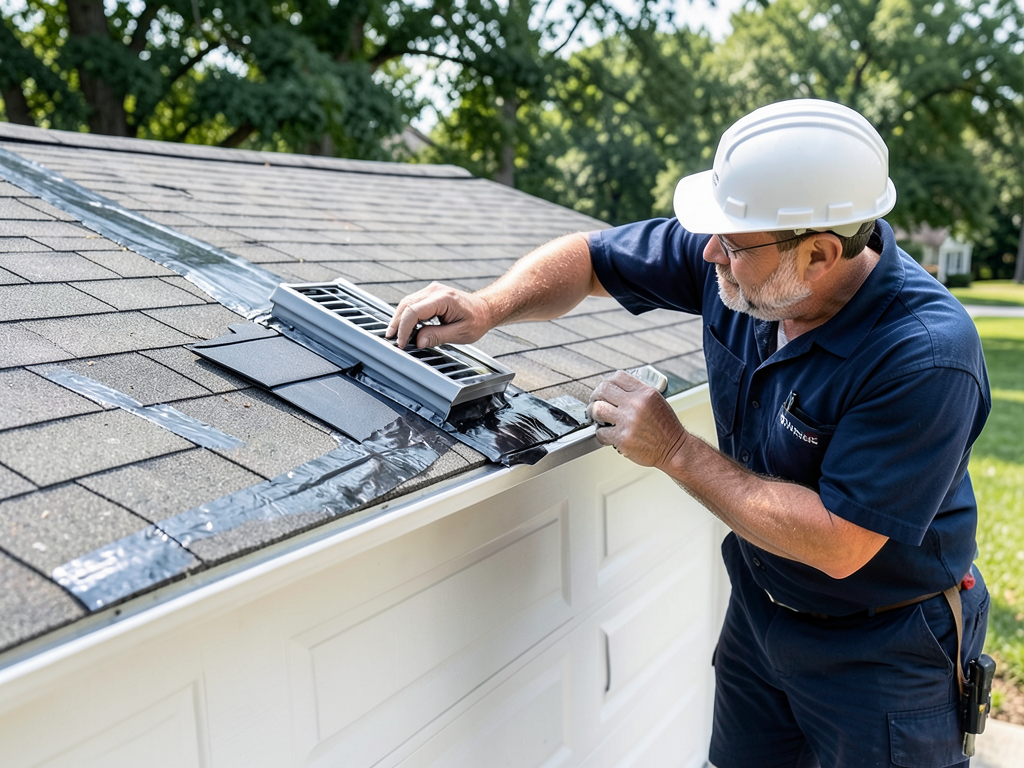
Diagram showing proper airflow patterns in a ventilated garage with ridge vents at the peak and soffit vents along the eaves, illustrating how hot air escapes and cool air enters.

Technician using a thermal imaging camera to check for heat buildup in a garage attic before and after ventilation installation, showing temperature differences.
Close-up of properly installed ridge vent with flashing and sealant on a sloped garage roof, demonstrating water-tight installation techniques.
Ready to Cool Down Your Garage?
Don’t let another summer turn your garage into an unusable space. The right ventilation system can make a dramatic difference in comfort, protect your stored items, and even lower your energy bills. Five Star Roofing Charlotte has been helping local homeowners solve ventilation problems for over 15 years. We understand the specific challenges of the Charlotte climate and know exactly what works for detached garages and workshops in this area.
Call (980) 352-5899 today to schedule your free roof and ventilation inspection. Our licensed technicians will assess your current setup, recommend the best solution for your space, and provide a clear, upfront quote with no hidden fees. Beat the heat before it beats you this summer.
Pick up the phone and call (980) 352-5899 before the next heat wave hits. Your tools, your vehicles, and your comfort are worth protecting.
{
“@context”: “https://schema.org”,
“@type”: “BlogPosting”,
“headline”: “How to Properly Ventilate a Detached Garage or Workshop in the Charlotte Heat”,
“description”: “Learn how to ventilate your Charlotte garage or workshop to reduce heat, control moisture, and protect stored items. Expert tips from Five Star Roofing Charlotte.”,
“wordCount”: 1598,
“datePublished”: “2026-06-01T15:29:00.000Z”,
“dateModified”: “2026-06-01T15:29:00.000Z”,
“inLanguage”: “en-US”,
“mainEntityOfPage”: {
“@type”: “WebPage”,
“@id”: “https://fivestarroofingcharlotte.com”
},
“publisher”: {
“@type”: “LocalBusiness”,
“name”: “Five Star Roofing Charlotte”,
“url”: “https://fivestarroofingcharlotte.com”
},
“author”: {
“@type”: “Organization”,
“name”: “Five Star Roofing Charlotte”,
“url”: “https://fivestarroofingcharlotte.com”
},
“image”: {
“@type”: “ImageObject”,
“url”: “https://fivestarroofingcharlotte.com/wp-content/uploads/2026/03/how-to-properly-ventilate-a-detached-garage-or-wor-1.png”
}
}
{
“@context”: “https://schema.org”,
“@type”: “RoofingContractor”,
“name”: “Five Star Roofing Charlotte”,
“url”: “https://fivestarroofingcharlotte.com”,
“address”: {
“@type”: “PostalAddress”,
“addressLocality”: “Charlotte”
},
“areaServed”: {
“@type”: “City”,
“name”: “Charlotte”
}
}
{
“@context”: “https://schema.org”,
“@type”: “FAQPage”,
“mainEntity”: [
{
“@type”: “Question”,
“name”: “How much does garage ventilation cost in Charlotte?”,
“acceptedAnswer”: {
“@type”: “Answer”,
“text”: “Costs vary based on vent type and installation complexity. A basic passive system with ridge and soffit vents typically runs between $800 and $1,500. Active systems with solar fans can range from $1,500 to $3,000 installed.”
}
},
{
“@type”: “Question”,
“name”: “Can I install garage vents myself?”,
“acceptedAnswer”: {
“@type”: “Answer”,
“text”: “While some homeowners attempt DIY installation, cutting into your roof carries risks of leaks and structural damage. Professional installation ensures proper sealing and code compliance, which is especially important in Mecklenburg County. Why More Huntersville Homeowners Are Switching to Standing Seam Metal Roofs.”
}
},
{
“@type”: “Question”,
“name”: “How long do garage roof vents last?”,
“acceptedAnswer”: {
“@type”: “Answer”,
“text”: “Quality vents made from aluminum or galvanized steel typically last 15 to 20 years. Plastic vents may need replacement sooner, especially under the intense UV exposure common in Charlotte.”
}
},
{
“@type”: “Question”,
“name”: “Will ventilation help with mold in my garage?”,
“acceptedAnswer”: {
“@type”: “Answer”,
“text”: “Yes. Proper ventilation reduces humidity levels, which is the primary factor in mold growth. Combined with a vapor barrier, it can significantly reduce or eliminate mold problems.”
}
},
{
“@type”: “Question”,
“name”: “Do I need a permit for garage ventilation in Charlotte?”,
“acceptedAnswer”: {
“@type”: “Answer”,
“text”: “If you are cutting into the roof structure or modifying the building envelope, Mecklenburg County requires a permit. Your contractor should handle this as part of the installation process.”
}
},
{
“@type”: “Question”,
“name”: “Ready to Cool Down Your Garage?”,
“acceptedAnswer”: {
“@type”: “Answer”,
“text”: “Don’t let another summer turn your garage into an unusable space. The right ventilation system can make a dramatic difference in comfort, protect your stored items, and even lower your energy bills. Five Star Roofing Charlotte has been helping local homeowners solve ventilation problems for over 15 years. We understand the specific challenges of the Charlotte climate and know exactly what works for detached garages and workshops in this area.”
}
}
]
}
{
“@context”: “https://schema.org”,
“@type”: “HowTo”,
“name”: “Garage Ventilation Installation”,
“step”: [
{
“@type”: “HowToStep”,
“position”: 1,
“name”: “Assessment”,
“text”: “A technician measures the space, checks roof pitch, and evaluates existing vents. They also look for signs of moisture damage in the attic or roof decking.”
},
{
“@type”: “HowToStep”,
“position”: 2,
“name”: “Planning”,
“text”: “Based on the assessment, they calculate the required net free area and recommend vent types. For most Charlotte garages, ridge vents paired with soffit vents provide the best balance.”
},
{
“@type”: “HowToStep”,
“position”: 3,
“name”: “Installation”,
“text”: “Vents are cut into the roof or gables, flashed properly to prevent leaks, and sealed according to North Carolina building codes. Soffit vents are installed under the eaves to ensure continuous airflow. North Carolina Residential Code Chapter 9.”
},
{
“@type”: “HowToStep”,
“position”: 4,
“name”: “Testing”,
“text”: “After installation, the system is tested for proper airflow. In some cases, a smoke pencil or thermal camera helps verify that air moves as designed.”
}
],
“image”: “https://fivestarroofingcharlotte.com/wp-content/uploads/2026/03/how-to-properly-ventilate-a-detached-garage-or-wor-1.png”
}
{
“@context”: “https://schema.org”,
“@type”: “BreadcrumbList”,
“itemListElement”: [
{
“@type”: “ListItem”,
“position”: 1,
“name”: “Home”,
“item”: “https://fivestarroofingcharlotte.com”
},
{
“@type”: “ListItem”,
“position”: 2,
“name”: “Blog”,
“item”: “https://fivestarroofingcharlotte.com/blog”
},
{
“@type”: “ListItem”,
“position”: 3,
“name”: “How to Properly Ventilate a Detached Garage or Workshop in the Charlotte Heat”
}
]
}
{
“@context”: “https://schema.org”,
“@type”: “Service”,
“serviceType”: “Roofing”,
“provider”: {
“@type”: “LocalBusiness”,
“name”: “Five Star Roofing Charlotte”,
“url”: “https://fivestarroofingcharlotte.com”
},
“areaServed”: {
“@type”: “City”,
“name”: “Charlotte”
},
“description”: “Learn how to ventilate your Charlotte garage or workshop to reduce heat, control moisture, and protect stored items. Expert tips from Five Star Roofing Charlotte.”
}