Specialized Roofing Solutions for Mid-Century Modern Homes in Lansdowne
Mid-Century Modern homes in Charlotte’s Lansdowne neighborhood demand specialized roofing solutions that preserve their iconic low-slope profiles while meeting modern performance standards. These architectural gems feature clean lines, large windows, and distinctive rooflines that standard asphalt shingles simply cannot honor. Charlotte’s humid subtropical climate adds another layer of complexity, requiring materials that resist algae growth and handle heavy summer rainfall without compromising the home’s aesthetic integrity. Specialized Slate and Tile Roofing Services for Historic Homes in Myers Park.
Homeowners in Lansdowne face unique challenges when their MCM roof reaches the end of its service life. The original tar and gravel systems or thin-profile built-up roofing from the 1950s and 1960s have typically lasted 30-40 years, but modern alternatives must balance thermal performance with maintaining the home’s characteristic silhouette. This article explores the specialized materials, installation techniques, and local considerations that make successful MCM roof replacements possible in Charlotte’s climate. Why More Huntersville Homeowners Are Switching to Standing Seam Metal Roofs.
Essential Roofing Materials for MCM Homes (Flat & Low-Slope)
Selecting the right material for a Mid-Century Modern roof requires understanding both the architectural requirements and Charlotte’s climate demands. The thin roof profiles characteristic of MCM homes leave little room for traditional insulation methods, making material selection critical for both performance and preservation. Getting Your Charlotte Roof Repaired After a Hail Storm — A Local Guide to Insurance Claims.
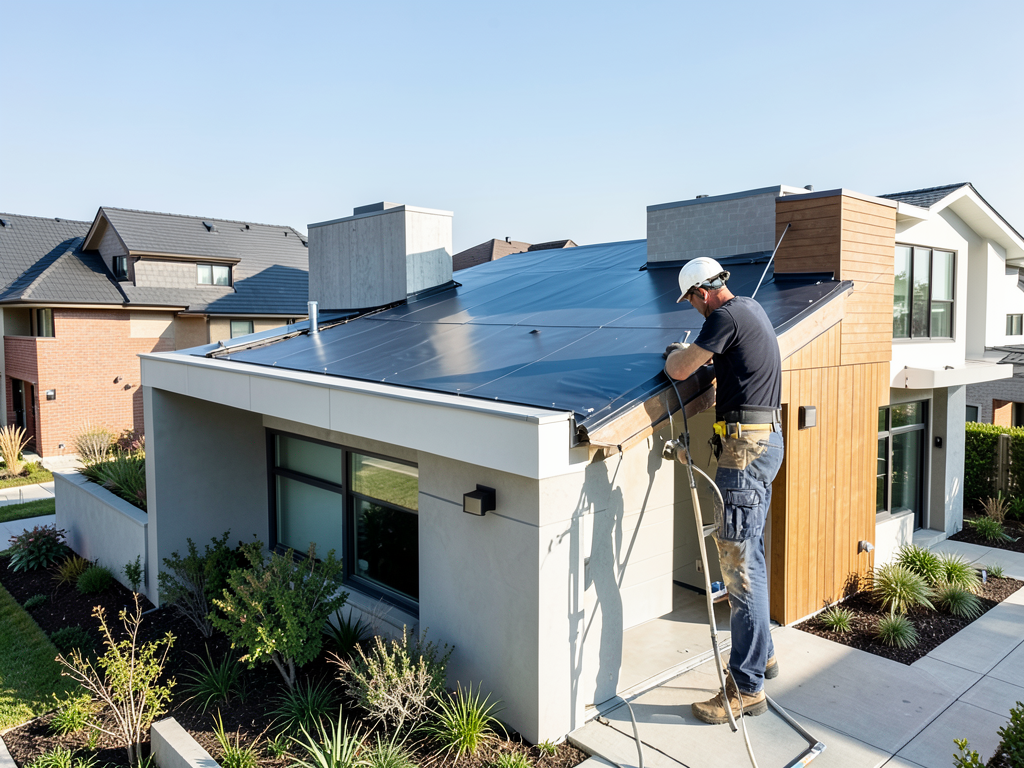
TPO (Thermoplastic Polyolefin) membranes have become the preferred choice for many Lansdowne homeowners seeking to maintain their home’s original aesthetic. These single-ply membranes offer excellent UV reflectivity, crucial for Charlotte’s intense summer sun, and can be installed in white or light gray to enhance energy efficiency. Modern TPO systems can achieve R-values of 20-30 when properly installed with rigid polyiso insulation, providing significant energy savings without adding bulk to the roof profile.
EPDM (Ethylene Propylene Diene Monomer) rubber roofing offers another viable option, particularly for homes where the original system featured darker tones. While less reflective than TPO, EPDM provides superior flexibility in temperature extremes and excellent resistance to hail damage. The material’s black surface can actually help melt snow in rare Charlotte winter events, though this comes at the cost of higher summer heat absorption.
Standing seam metal roofing represents a premium upgrade that some MCM homeowners choose when they want to modernize while maintaining architectural integrity. Modern standing seam systems can be installed at minimal slopes (as low as 1:12) and offer 40-50 year lifespans. The clean vertical lines complement MCM aesthetics, and the material’s durability makes it ideal for Charlotte’s severe weather patterns. However, proper installation requires experienced contractors familiar with low-slope metal applications to prevent oil canning and ensure watertight seams.
For homes with original tongue-and-groove decking, the choice becomes more complex. These beautiful wood ceilings visible from the interior cannot be covered with traditional roofing materials. In these cases, spray foam roofing systems provide an excellent solution, creating a seamless, highly insulated barrier that maintains the home’s thermal envelope without adding significant weight or thickness to the roof assembly.
Challenges of Modernizing a Mid-Century Roof in the Charlotte Climate
Charlotte’s climate presents specific challenges that generic roofing solutions cannot adequately address. The combination of high humidity, intense UV exposure, and severe summer thunderstorms creates a perfect storm for roof degradation if materials and installation methods aren’t properly matched to local conditions.
Humidity and algae growth represent the primary concern for MCM roofs in the Charlotte area. Gloeocapsa magma, the black algae that creates those unsightly streaks on roofs, thrives in our warm, humid conditions. This organism not only affects appearance but can degrade roofing materials over time. Modern roofing systems for MCM homes must incorporate algae-resistant technology, whether through specialized coatings on TPO membranes or embedded copper granules in modified bitumen systems.
Charlotte’s summer thunderstorms bring another set of challenges. These systems often produce wind gusts exceeding 60 mph and can dump several inches of rain in a single hour. Low-slope MCM roofs are particularly vulnerable to wind uplift and ponding water. Proper installation requires enhanced fastening patterns, wind-rated edge metal, and positive drainage systems that prevent water accumulation. The Charlotte-Mecklenburg Storm Water Services has specific requirements for commercial properties that often apply to large MCM homes, particularly those with extensive roof areas. Mecklenburg County building codes.
Thermal cycling presents a unique challenge in the Piedmont region. Charlotte experiences temperature swings of 30-40 degrees between day and night during spring and fall. These cycles cause roofing materials to expand and contract, potentially leading to seam separation or fastener backout if the system isn’t designed for local conditions. Modern MCM roofing solutions must incorporate expansion joints and flexible flashings that accommodate these movements without compromising watertight integrity. EPA cool roof guidelines.
The issue of energy efficiency cannot be overlooked. Charlotte’s cooling season extends from April through October, with July and August temperatures regularly exceeding 90 degrees. The original MCM roofs provided minimal insulation by today’s standards. Modern replacements must achieve R-values of 30 or higher to meet current energy codes while maintaining the home’s original profile. This often requires innovative solutions like tapered insulation systems that provide both drainage and thermal performance without adding significant height.
Call (980) 352-5899 today to schedule your inspection.
Design Considerations: Maintaining the Iconic Profile
Preserving the distinctive silhouette of a Mid-Century Modern home requires careful planning and execution during the roofing process. The clean, horizontal lines that define MCM architecture can be easily disrupted by improper material selection or installation techniques.
One of the most critical design considerations is maintaining the original roof-to-wall transition. Many MCM homes feature dramatic overhangs and minimal eaves, creating a floating effect that’s central to the style’s appeal. Traditional roofing materials often require additional height for proper installation, which can destroy this delicate balance. Modern low-profile systems like TPO and EPDM can maintain these transitions, but only when installed by contractors experienced in MCM specifications.
The integration of modern HVAC equipment presents another challenge. Original MCM homes often lack attic spaces, meaning all mechanical equipment must be accommodated within the roof structure or mounted on the roof surface. This requires careful coordination between the roofing contractor and HVAC specialists to ensure equipment pads, curbs, and penetrations don’t disrupt the roof’s clean lines. Custom-fabricated flashings and low-profile equipment mounts can maintain the aesthetic while providing necessary functionality.
Scuppers and internal drainage systems, common in original MCM construction, require special attention during replacement. These elements not only serve a functional purpose but also contribute to the home’s architectural character. Modern replacements must match the original sizing and placement while incorporating updated materials that resist corrosion and clogging. The Charlotte building code requires specific overflow provisions for scupper systems, particularly in areas prone to heavy rainfall.
Color selection plays a crucial role in maintaining MCM authenticity. While white TPO offers maximum energy efficiency, it may not suit every home’s original palette. Many MCM homes featured warm earth tones or subtle grays that complemented their natural surroundings. Modern roofing systems offer a range of colors that can match these original schemes while still providing high reflectivity. The key is balancing historical accuracy with modern performance requirements.
Integration with existing architectural features requires careful consideration. Many MCM homes feature dramatic entryways, carports, or breezeways with distinct rooflines that must be maintained. This often means using different materials or installation techniques for various sections of the home while ensuring a cohesive overall appearance. The transition between materials must be seamless, both visually and functionally.
Case Study: MCM Roof Restoration in Mountainbrook
A recent project in Charlotte’s Mountainbrook neighborhood demonstrates the complexity and rewards of properly executed MCM roof replacement. This 1962 home featured the classic low-slope design with a tongue-and-groove ceiling visible from the interior, presenting multiple challenges that required innovative solutions.
The original tar and gravel system had reached the end of its service life, with multiple leaks developing around the chimney and at various seams. The homeowners wanted to maintain the home’s original appearance while significantly improving energy efficiency and addressing persistent moisture issues. The project required complete removal of the existing roof down to the original decking, followed by installation of a modern system that would preserve the interior ceiling while providing superior protection.
The solution involved installing a 1.5-inch tapered polyiso insulation system to provide both positive drainage and increased R-value without adding significant height. A TPO membrane in a custom color matching the home’s original warm gray was then installed using a mechanically attached system that minimized penetrations through the tongue-and-groove decking. Special attention was paid to the chimney area, where custom-fabricated crickets and counterflashing were installed to ensure proper water diversion while maintaining the home’s clean lines.
The project also included upgrading the home’s drainage system. Original scuppers were replaced with larger, code-compliant units featuring overflow provisions as required by Mecklenburg County regulations. The new system incorporated debris screens and cleanouts that make maintenance easier while preventing the clogging issues that plagued the original design.
Energy efficiency improvements were dramatic. Pre-project thermal imaging showed significant heat loss through the original roof assembly. Post-installation testing revealed that the new system reduced heat transfer by over 70%, leading to estimated annual cooling cost savings of $800-1,000. The homeowners also reported improved interior comfort, with the home maintaining more consistent temperatures throughout the day.
The project’s success hinged on several factors: the contractor’s experience with MCM architecture, careful material selection that balanced performance with aesthetics, and attention to detail during installation. The result is a roof that not only protects the home but enhances its architectural integrity while providing modern performance standards.
Choosing the Right Charlotte Roofer for Your Architectural Investment
Not all roofing contractors have the expertise required for Mid-Century Modern homes. These specialized projects demand a unique combination of architectural understanding, technical knowledge, and attention to detail that goes beyond standard residential roofing. Expert Roof Inspections for Waterfront Homes in Cornelius and Davidson.
When evaluating potential contractors for your MCM roof replacement, start by examining their experience with low-slope and flat roofing systems. Many Charlotte roofers specialize in traditional pitched roofs with asphalt shingles and may lack the expertise required for the complex waterproofing and drainage solutions that MCM homes demand. Look for contractors who specifically mention experience with TPO, EPDM, or standing seam metal installations on low-slope applications. The Best Shingles to Withstand the Charlotte Summer Heat and Humidity.
Ask potential contractors about their familiarity with local building codes and climate considerations. Mecklenburg County has specific requirements for roof assemblies, particularly regarding wind uplift resistance and drainage systems. A qualified MCM roofer should be able to discuss these requirements and explain how their proposed solution addresses them. They should also demonstrate understanding of Charlotte’s specific weather patterns and how they affect roofing material selection and installation techniques.
Request to see examples of previous MCM or similar architectural style projects they’ve completed. Quality contractors will have portfolios showing before-and-after photos that demonstrate their ability to maintain architectural integrity while upgrading performance. Pay attention to details like how they handled roof-to-wall transitions, integrated mechanical equipment, and maintained clean lines throughout the project.
Insurance and licensing verification is particularly important for MCM projects. These roofs often require specialized equipment and techniques that may not be covered under standard roofing policies. Ensure your contractor carries adequate liability insurance and workers’ compensation coverage. Ask about their warranty offerings as well; quality MCM roofing should come with at least a 20-year material warranty and a 5-year workmanship guarantee.
Communication and project management skills are crucial for successful MCM roof replacements. These projects often involve coordination with architects, structural engineers, and other specialists. Your contractor should be able to explain their proposed solution in terms you can understand, provide detailed timelines, and keep you informed throughout the process. They should also be willing to discuss how they’ll protect your home’s interior during the roofing process, particularly if you have exposed tongue-and-groove ceilings or other vulnerable architectural features.
Finally, consider the contractor’s approach to sustainability and energy efficiency. Modern MCM roofing should not only protect your home but also contribute to its overall energy performance. Look for contractors who discuss options like cool roof coatings, integrated solar solutions, or advanced insulation systems that can enhance your home’s efficiency while maintaining its architectural character.
Ready to preserve your MCM home’s beauty and performance? Call (980) 352-5899 before the next storm hits.
Frequently Asked Questions
How long does a Mid-Century Modern roof replacement typically take?
Most MCM roof replacements in Charlotte take 3-5 days for the actual installation, though the entire process from initial inspection to final inspection typically spans 2-3 weeks. Weather delays are common during Charlotte’s storm season, and specialized material ordering can add time to the project schedule.
Will a new roof change the appearance of my MCM home?
When properly executed, a new MCM roof should enhance rather than change your home’s appearance. Modern materials can actually improve the home’s profile by eliminating sagging, ponding, or other issues that may have developed over time. The key is working with a contractor who understands MCM aesthetics and can match or complement the original design.
Are permits required for MCM roof replacements in Charlotte?
Yes, permits are required for most roof replacements in Mecklenburg County. The specific requirements depend on the scope of work, but generally include building permits for structural changes and possibly electrical permits if new equipment is being installed. A qualified contractor will handle all permitting requirements as part of the project.
How much does a specialized MCM roof replacement cost in Charlotte?
Costs vary significantly based on material selection, roof complexity, and specific requirements. TPO systems typically range from $8-12 per square foot, while premium options like standing seam metal can exceed $15 per square foot. The specialized nature of MCM work often means costs are 15-25% higher than standard roofing, but this reflects the additional expertise and attention to detail required.
Can I install solar panels on my MCM roof?
Yes, solar integration is possible on MCM roofs, though it requires careful planning to maintain the home’s aesthetic. Low-profile mounting systems and strategic panel placement can minimize visual impact. Some homeowners choose to integrate solar during the roof replacement process to ensure proper waterproofing and structural support for the added weight.
{
“@context”: “https://schema.org”,
“@type”: “BlogPosting”,
“headline”: “Specialized Roofing Solutions for Mid-Century Modern Homes in Lansdowne”,
“description”: “Expert roofing for Mid-Century Modern homes in Lansdowne. TPO, EPDM, and standing seam metal solutions tailored for Charlotte’s climate and MCM aesthetics.”,
“wordCount”: 2387,
“datePublished”: “2026-03-19T10:39:00.000Z”,
“dateModified”: “2026-03-19T10:39:00.000Z”,
“inLanguage”: “en-US”,
“mainEntityOfPage”: {
“@type”: “WebPage”,
“@id”: “https://fivestarroofingcharlotte.com”
},
“publisher”: {
“@type”: “LocalBusiness”,
“name”: “Five Star Roofing Charlotte”,
“url”: “https://fivestarroofingcharlotte.com”
},
“author”: {
“@type”: “Organization”,
“name”: “Five Star Roofing Charlotte”,
“url”: “https://fivestarroofingcharlotte.com”
},
“image”: {
“@type”: “ImageObject”,
“url”: “https://fivestarroofingcharlotte.com/wp-content/uploads/2026/03/specialized-roofing-solutions-for-mid-century-mode-1.png”
}
}
{
“@context”: “https://schema.org”,
“@type”: “RoofingContractor”,
“name”: “Five Star Roofing Charlotte”,
“url”: “https://fivestarroofingcharlotte.com”,
“address”: {
“@type”: “PostalAddress”,
“addressLocality”: “Charlotte”
},
“areaServed”: {
“@type”: “City”,
“name”: “Charlotte”
}
}
{
“@context”: “https://schema.org”,
“@type”: “FAQPage”,
“mainEntity”: [
{
“@type”: “Question”,
“name”: “How long does a Mid-Century Modern roof replacement typically take?”,
“acceptedAnswer”: {
“@type”: “Answer”,
“text”: “Most MCM roof replacements in Charlotte take 3-5 days for the actual installation, though the entire process from initial inspection to final inspection typically spans 2-3 weeks. Weather delays are common during Charlotte’s storm season, and specialized material ordering can add time to the project schedule.”
}
},
{
“@type”: “Question”,
“name”: “Will a new roof change the appearance of my MCM home?”,
“acceptedAnswer”: {
“@type”: “Answer”,
“text”: “When properly executed, a new MCM roof should enhance rather than change your home’s appearance. Modern materials can actually improve the home’s profile by eliminating sagging, ponding, or other issues that may have developed over time. The key is working with a contractor who understands MCM aesthetics and can match or complement the original design.”
}
},
{
“@type”: “Question”,
“name”: “Are permits required for MCM roof replacements in Charlotte?”,
“acceptedAnswer”: {
“@type”: “Answer”,
“text”: “Yes, permits are required for most roof replacements in Mecklenburg County. The specific requirements depend on the scope of work, but generally include building permits for structural changes and possibly electrical permits if new equipment is being installed. A qualified contractor will handle all permitting requirements as part of the project.”
}
},
{
“@type”: “Question”,
“name”: “How much does a specialized MCM roof replacement cost in Charlotte?”,
“acceptedAnswer”: {
“@type”: “Answer”,
“text”: “Costs vary significantly based on material selection, roof complexity, and specific requirements. TPO systems typically range from $8-12 per square foot, while premium options like standing seam metal can exceed $15 per square foot. The specialized nature of MCM work often means costs are 15-25% higher than standard roofing, but this reflects the additional expertise and attention to detail required.”
}
},
{
“@type”: “Question”,
“name”: “Can I install solar panels on my MCM roof?”,
“acceptedAnswer”: {
“@type”: “Answer”,
“text”: “Yes, solar integration is possible on MCM roofs, though it requires careful planning to maintain the home’s aesthetic. Low-profile mounting systems and strategic panel placement can minimize visual impact. Some homeowners choose to integrate solar during the roof replacement process to ensure proper waterproofing and structural support for the added weight.”
}
}
]
}
{
“@context”: “https://schema.org”,
“@type”: “BreadcrumbList”,
“itemListElement”: [
{
“@type”: “ListItem”,
“position”: 1,
“name”: “Home”,
“item”: “https://fivestarroofingcharlotte.com”
},
{
“@type”: “ListItem”,
“position”: 2,
“name”: “Blog”,
“item”: “https://fivestarroofingcharlotte.com/blog”
},
{
“@type”: “ListItem”,
“position”: 3,
“name”: “Specialized Roofing Solutions for Mid-Century Modern Homes in Lansdowne”
}
]
}
{
“@context”: “https://schema.org”,
“@type”: “Service”,
“serviceType”: “Roofing”,
“provider”: {
“@type”: “LocalBusiness”,
“name”: “Five Star Roofing Charlotte”,
“url”: “https://fivestarroofingcharlotte.com”
},
“areaServed”: {
“@type”: “City”,
“name”: “Charlotte”
},
“description”: “Expert roofing for Mid-Century Modern homes in Lansdowne. TPO, EPDM, and standing seam metal solutions tailored for Charlotte’s climate and MCM aesthetics.”
}