The Hidden Signs Your Roof Decking Is Rotting (Even if Your Shingles Look Okay)
Your shingles might look fine from the street but the real damage could be hiding just beneath the surface. Roof decking forms the structural backbone of your home’s roofing system and when it starts to rot you face a serious safety hazard that most homeowners do not notice until it is too late. In Charlotte’s humid climate this problem accelerates faster than you might expect. Why More Huntersville Homeowners Are Switching to Standing Seam Metal Roofs.
The key to protecting your home is knowing what to look for before catastrophic failure occurs. From spongy spots that give way underfoot to mysterious attic stains that appear overnight these warning signs tell a story of moisture intrusion and structural compromise that demands immediate attention.
What Is Roof Decking and Why Does It Rot?
Roof decking serves as the foundation layer between your roof’s structural trusses and the outer roofing materials. Most Charlotte homes use either oriented strand board (OSB) or plywood sheathing both of which are vulnerable to moisture damage when their protective barriers fail. Getting Your Charlotte Roof Repaired After a Hail Storm — A Local Guide to Insurance Claims.
OSB the most common material in newer Charlotte homes consists of compressed wood strands bonded with resin. While cost-effective and strong when dry OSB absorbs water like a sponge once moisture penetrates its surface. Plywood offers slightly better moisture resistance but still deteriorates when exposed to prolonged humidity.. Read more about Why Synthetic Underlayment Is a Better Choice for Charlotte Weather Than Traditional Felt.
The North Carolina Residential Code requires minimum 7/16-inch sheathing for roof decks but thickness alone will not prevent rot if ventilation fails or water intrusion occurs. Once moisture levels exceed 20% in wood materials fungal growth begins breaking down the cellular structure.
Interior Warning Signs (The Attic View)
Your attic provides the first line of defense in spotting decking problems before they become visible from outside. During a routine inspection with a flashlight several telltale signs indicate moisture damage.. Read more about Dealing with Damage from Old Satellite Dishes and Antenna Mounts on Your Mooresville Roof.
Dark water stains or rings on the wood surface often appear as concentric circles where water has repeatedly entered and evaporated. These stains might look like simple discoloration but they signal active leaks that compromise structural integrity.
Visible mold or mildew growth appears as black green or white fuzzy patches on the wood surface. In Charlotte’s humid climate attic temperatures often exceed 120 degrees in summer creating perfect conditions for rapid mold colonization when moisture is present.
Light peeking through the boards indicates gaps where wood has delaminated or separated. This daylighting effect means the sheathing has lost its structural cohesion and requires immediate replacement. EPA mold remediation standards.
Sagging between rafters creates visible depressions in the attic ceiling. When you press on these areas the wood feels soft and may even flex under light pressure. This sagging indicates the wood has lost its structural strength.. Read more about The Real Difference Between an Actual Roof Leak and Simple Window Flashing Failure.
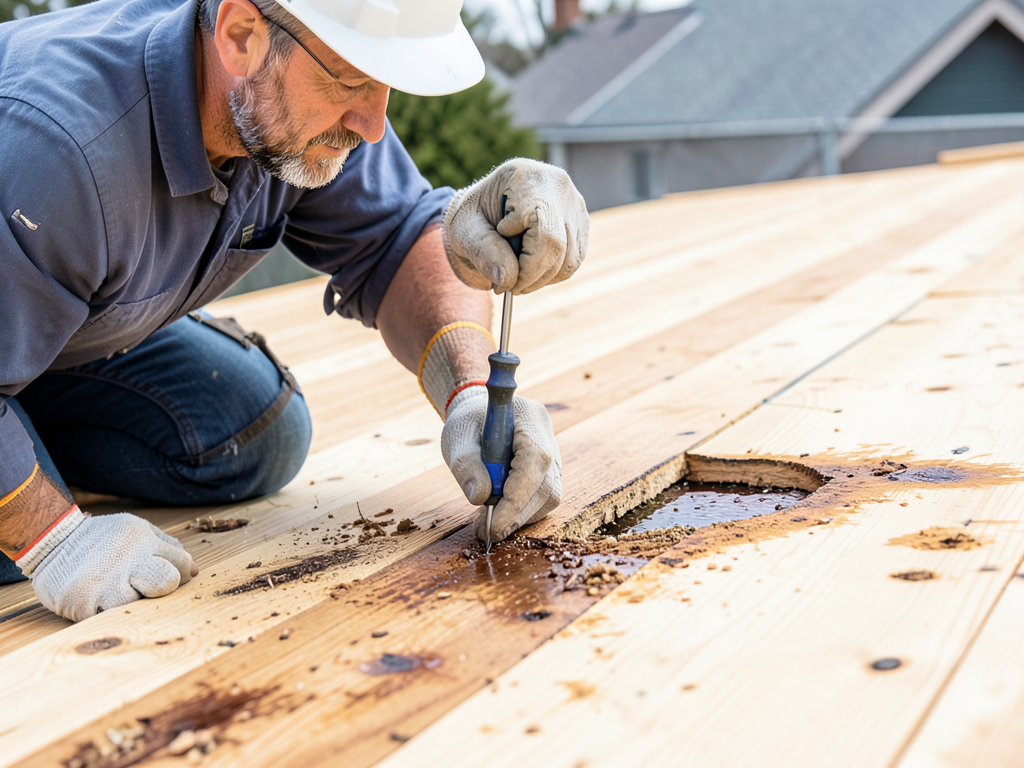
The Screwdriver Test: Professionals use a simple screwdriver to probe suspicious areas. If the tool penetrates the wood easily or feels spongy rather than solid the decking has deteriorated beyond safe limits.
Exterior Warning Signs (The Rooftop View)
While attic inspection reveals internal damage certain exterior signs suggest your decking may already be compromised. These indicators often appear after significant deterioration has occurred.
Spongy or bouncy feel when walking on shingles indicates soft spots where the decking has lost structural integrity. This sensation feels like walking on a trampoline rather than a solid surface. Each step creates visible movement in the roofing material above. The Best Shingles to Withstand the Charlotte Summer Heat and Humidity.
Depressions or dips in the roofline become visible from ground level especially when sunlight creates shadows. These low spots often align with rafters where moisture tends to accumulate or where original installation errors created weak points.
Granule loss and curling shingles serve as indirect indicators of underlying moisture problems. While these issues primarily affect the outer layer they often coincide with decking rot because the same moisture intrusion that damages shingles also affects the wood beneath.
Rusted flashing or chimney leaks create water entry points that directly soak the decking around roof penetrations. Charlotte’s frequent summer thunderstorms drive rain sideways under compromised flashing allowing water to pool against vertical surfaces.
How Charlotte’s Climate Accelerates Decking Rot
Charlotte’s unique climate creates perfect conditions for roof decking deterioration. The combination of high humidity intense summer heat and occasional severe storms overwhelms standard roofing systems faster than in many other regions.
Summer humidity levels regularly exceed 85% in Mecklenburg County creating constant moisture exposure for roof structures. This persistent dampness prevents wood from drying completely between rain events allowing fungal growth to establish and spread through the decking material.
Thunderstorms in the Piedmont region often bring wind-driven rain that forces water under shingles through tiny gaps around nails or at shingle edges. A single severe storm can deposit enough water to saturate sections of decking that appeared dry just hours earlier.
Temperature fluctuations cause expansion and contraction cycles that create micro-fractures in protective barriers. During a typical Charlotte summer roof surfaces can reach 150 degrees while nighttime temperatures drop to 70 degrees stressing sealants and creating entry points for moisture.
Poor attic ventilation compounds these problems. Many Charlotte homes particularly those built before 2000 lack adequate soffit and ridge ventilation. This creates heat and moisture traps that accelerate wood rot from the inside out.
The Risks of Ignoring a Rotten Roof
Delaying repairs on rotten decking transforms a manageable problem into a catastrophic failure. The structural risks compound rapidly once wood rot establishes itself in your roof system.
Structural failure becomes increasingly likely as rot progresses. Decking that feels slightly soft today can collapse under normal foot traffic within months. This creates immediate safety hazards for anyone accessing the attic or walking on the roof.
Interior ceiling damage extends far beyond the initial leak point. Water follows the path of least resistance traveling along rafters and through insulation before dripping into living spaces. What starts as a small attic stain can result in thousands of dollars in ceiling repairs and mold remediation.
Increased replacement costs follow a predictable pattern. Early detection might require replacing a few sheets of decking at $50-75 per sheet. Advanced rot often necessitates stripping the entire roof replacing all decking and installing new underlayment and shingles multiplying the original repair cost by five to ten times.
Insurance complications arise when damage appears gradual rather than sudden. Most homeowners policies cover sudden storm damage but exclude rot resulting from long-term neglect. This leaves homeowners responsible for the full replacement cost.
Professional Inspection and Repair: What to Expect
Professional roofers use specialized tools and techniques to assess decking condition accurately. This diagnostic process goes far beyond visual inspection to identify hidden problems. Specialized Slate and Tile Roofing Services for Historic Homes in Myers Park.
Moisture meters measure wood moisture content at multiple depths. Readings above 20% indicate active rot conditions while levels above 30% suggest advanced deterioration requiring immediate replacement.
Thermal imaging cameras detect temperature variations that reveal moisture patterns invisible to the naked eye. Wet areas appear cooler than surrounding dry wood allowing technicians to map the extent of damage without removing shingles.
Core sampling involves removing small sections of decking to examine internal wood condition. This destructive testing confirms whether surface appearance matches internal structural integrity.
Mecklenburg County building permits require structural repairs exceeding 100 square feet ensuring all decking replacement work meets current code requirements. This protects homeowners from substandard repairs that could fail during the next storm.
Repair approaches vary based on damage extent. Localized rot affecting individual sheets allows surgical replacement of damaged sections. Widespread deterioration requires complete deck replacement often necessitating temporary protective covering during the repair process.
Cost Factors and Insurance Considerations
Understanding the financial aspects helps homeowners make informed decisions about decking repairs. Several factors influence the total project cost in the Charlotte market.
Decking replacement costs typically range from $150 to $350 per square (100 square feet) in Mecklenburg County depending on material choice and accessibility. OSB remains the most economical option while premium plywood commands higher prices but offers better moisture resistance.
Storm damage caused by wind or hail often qualifies for insurance coverage under standard homeowners policies. However insurance adjusters look for sudden accidental damage rather than gradual deterioration. Proper documentation of the damage timeline becomes crucial for claim approval.
Roof age affects coverage eligibility. Homes over 20 years old may face coverage limitations or higher deductibles for structural repairs. Some insurers require proof of regular maintenance to honor claims on older roofs.
Permit fees in Mecklenburg County typically add $100-300 to repair projects depending on scope. These fees fund inspections that verify code compliance and protect homeowners from substandard workmanship. Expert Roof Inspections for Waterfront Homes in Cornelius and Davidson.
Emergency tarping services cost $200-500 for temporary protection while permanent repairs are scheduled. This immediate response prevents additional interior damage during storm seasons.
Prevention Strategies for Charlotte Homeowners
Preventing decking rot requires proactive maintenance and understanding of local environmental challenges. Several strategies significantly extend roof system lifespan in Charlotte’s demanding climate.
Annual professional inspections catch problems while they remain localized and inexpensive to repair. Spring inspections identify winter damage before summer storms test weakened areas.
Gutter maintenance prevents water backup that can seep under shingles at roof edges. Clean gutters at least twice yearly with additional cleaning after heavy pollen seasons or fall leaf drop.. Read more about Managing Heavy Rain Drainage for Sloped Lots and Walk-Out Basements in Lake Norman.
Attic ventilation improvements reduce moisture accumulation from household activities. Bath and kitchen exhaust fans should vent directly outdoors rather than into attic spaces.
Tree trimming prevents branches from rubbing against shingles and creating entry points for moisture. Maintain at least 10 feet of clearance between tree limbs and roof surfaces.. Read more about Why Your Ranch Style Home in Madison Park Needs Improved Soffit Intake for Better Cooling.
Post-storm inspections after severe weather identify damage that might not be visible from ground level. High winds can bend or lift shingles without completely removing them creating gaps for water intrusion.
Frequently Asked Questions
How long does roof decking typically last in Charlotte?
Properly maintained decking in Charlotte’s climate lasts 20-25 years on average. Harsh humidity and storm exposure reduce this to 15-20 years without regular maintenance. Homes built before 2000 often need decking replacement when re-roofing due to outdated materials and ventilation.
Can I repair just the damaged sections or must I replace the entire deck?
Localized damage affecting less than 20% of the total area allows spot repairs if surrounding decking remains solid. However widespread soft spots or multiple leak locations usually indicate systemic problems requiring complete replacement for lasting results.
What’s the difference between OSB and plywood for roof decking?
OSB costs less and provides consistent strength but absorbs water more readily than plywood. Plywood offers better moisture resistance and holds fasteners more securely but costs 15-20% more. Both meet current building codes when properly installed with adequate ventilation.
How can I tell if my decking needs replacement before scheduling an inspection?
Look for sagging rooflines soft spots when walking on the roof water stains on ceilings or visible mold in the attic. If you notice any of these signs professional inspection becomes urgent. Do not wait for leaks to appear inside your home.
Does homeowners insurance cover rotten roof decking?
Insurance typically covers sudden damage from covered perils like storms or fallen trees. Gradual deterioration from neglect or normal aging usually is not covered. Some policies offer optional coverage for roof replacement but pre-existing conditions often face exclusions or limited benefits.
- Safety First
Never walk on a roof you suspect has rotten decking. Use binoculars from the ground or hire a professional for attic inspection. Weak spots can collapse under body weight.
- Check the Attic
Inspect during daylight with a bright flashlight. Look for water stains mold growth or light showing through the decking. Press gently on suspicious areas to check for softness.
- Examine Exterior Signs
Look for sagging rooflines missing or curling shingles and rusted flashing. These exterior indicators often reveal internal decking problems before they become catastrophic.
- Document Findings
Take photos of any damage and note locations of soft spots or stains. This documentation helps professionals assess the scope of repairs needed and supports insurance claims if applicable.
Roof decking rot represents a serious threat to your home’s structural integrity and your family’s safety. The humid Charlotte climate accelerates deterioration making regular inspections crucial for early detection. Do not wait for water to drip through your ceiling or for a section of your roof to collapse underfoot.
Professional assessment using moisture meters and thermal imaging can identify problems while they remain manageable and affordable to repair. The cost of preventive maintenance pales compared to emergency replacement during storm season or the expense of interior water damage repairs.
Call (980) 352-5899 today to schedule your comprehensive roof inspection. Our experienced technicians will evaluate your decking condition identify any hidden problems and provide clear recommendations for protecting your home. Do not let small issues become major structural failures. Pick up the phone and call (980) 352-5899 before the next Charlotte thunderstorm tests your roof’s integrity. For more information, visit FEMA roof damage guidelines.
You may also find this helpful. What to Do if Your Roofer Discovers Termite or Carpenter Ant Damage During a Tear-Off.
{
“@context”: “https://schema.org”,
“@type”: “BlogPosting”,
“headline”: “The Hidden Signs Your Roof Decking Is Rotting (Even if Your Shingles Look Okay)”,
“description”: “Discover hidden signs of roof decking rot in Charlotte’s humid climate. Learn to spot warning signs before catastrophic failure occurs.”,
“wordCount”: 2181,
“datePublished”: “2026-04-29T08:25:00.000Z”,
“dateModified”: “2026-04-29T08:25:00.000Z”,
“inLanguage”: “en-US”,
“mainEntityOfPage”: {
“@type”: “WebPage”,
“@id”: “https://fivestarroofingcharlotte.com”
},
“publisher”: {
“@type”: “LocalBusiness”,
“name”: “Five Star Roofing Charlotte”,
“url”: “https://fivestarroofingcharlotte.com”
},
“author”: {
“@type”: “Organization”,
“name”: “Five Star Roofing Charlotte”,
“url”: “https://fivestarroofingcharlotte.com”
},
“image”: {
“@type”: “ImageObject”,
“url”: “https://fivestarroofingcharlotte.com/wp-content/uploads/2026/03/the-hidden-signs-your-roof-decking-is-rotting-even-1.png”
}
}
{
“@context”: “https://schema.org”,
“@type”: “RoofingContractor”,
“name”: “Five Star Roofing Charlotte”,
“url”: “https://fivestarroofingcharlotte.com”,
“address”: {
“@type”: “PostalAddress”,
“addressLocality”: “Charlotte”
},
“areaServed”: {
“@type”: “City”,
“name”: “Charlotte”
}
}
{
“@context”: “https://schema.org”,
“@type”: “FAQPage”,
“mainEntity”: [
{
“@type”: “Question”,
“name”: “What Is Roof Decking and Why Does It Rot?”,
“acceptedAnswer”: {
“@type”: “Answer”,
“text”: “Roof decking serves as the foundation layer between your roof’s structural trusses and the outer roofing materials. Most Charlotte homes use either oriented strand board (OSB) or plywood sheathing both of which are vulnerable to moisture damage when their protective barriers fail. Getting Your Charlotte Roof Repaired After a Hail Storm — A Local Guide to Insurance Claims.”
}
},
{
“@type”: “Question”,
“name”: “How long does roof decking typically last in Charlotte?”,
“acceptedAnswer”: {
“@type”: “Answer”,
“text”: “Properly maintained decking in Charlotte’s climate lasts 20-25 years on average. Harsh humidity and storm exposure reduce this to 15-20 years without regular maintenance. Homes built before 2000 often need decking replacement when re-roofing due to outdated materials and ventilation.”
}
},
{
“@type”: “Question”,
“name”: “Can I repair just the damaged sections or must I replace the entire deck?”,
“acceptedAnswer”: {
“@type”: “Answer”,
“text”: “Localized damage affecting less than 20% of the total area allows spot repairs if surrounding decking remains solid. However widespread soft spots or multiple leak locations usually indicate systemic problems requiring complete replacement for lasting results.”
}
},
{
“@type”: “Question”,
“name”: “What’s the difference between OSB and plywood for roof decking?”,
“acceptedAnswer”: {
“@type”: “Answer”,
“text”: “OSB costs less and provides consistent strength but absorbs water more readily than plywood. Plywood offers better moisture resistance and holds fasteners more securely but costs 15-20% more. Both meet current building codes when properly installed with adequate ventilation.”
}
},
{
“@type”: “Question”,
“name”: “How can I tell if my decking needs replacement before scheduling an inspection?”,
“acceptedAnswer”: {
“@type”: “Answer”,
“text”: “Look for sagging rooflines soft spots when walking on the roof water stains on ceilings or visible mold in the attic. If you notice any of these signs professional inspection becomes urgent. Do not wait for leaks to appear inside your home.”
}
},
{
“@type”: “Question”,
“name”: “Does homeowners insurance cover rotten roof decking?”,
“acceptedAnswer”: {
“@type”: “Answer”,
“text”: “Insurance typically covers sudden damage from covered perils like storms or fallen trees. Gradual deterioration from neglect or normal aging usually is not covered. Some policies offer optional coverage for roof replacement but pre-existing conditions often face exclusions or limited benefits.”
}
}
]
}
{
“@context”: “https://schema.org”,
“@type”: “HowTo”,
“name”: “How to Inspect Your Roof Decking”,
“step”: [
{
“@type”: “HowToStep”,
“position”: 1,
“name”: “Safety First”,
“text”: “Never walk on a roof you suspect has rotten decking. Use binoculars from the ground or hire a professional for attic inspection. Weak spots can collapse under body weight.”
},
{
“@type”: “HowToStep”,
“position”: 2,
“name”: “Check the Attic”,
“text”: “Inspect during daylight with a bright flashlight. Look for water stains mold growth or light showing through the decking. Press gently on suspicious areas to check for softness.”
},
{
“@type”: “HowToStep”,
“position”: 3,
“name”: “Examine Exterior Signs”,
“text”: “Look for sagging rooflines missing or curling shingles and rusted flashing. These exterior indicators often reveal internal decking problems before they become catastrophic.”
},
{
“@type”: “HowToStep”,
“position”: 4,
“name”: “Document Findings”,
“text”: “Take photos of any damage and note locations of soft spots or stains. This documentation helps professionals assess the scope of repairs needed and supports insurance claims if applicable.”
}
],
“image”: “https://fivestarroofingcharlotte.com/wp-content/uploads/2026/03/the-hidden-signs-your-roof-decking-is-rotting-even-1.png”
}
{
“@context”: “https://schema.org”,
“@type”: “BreadcrumbList”,
“itemListElement”: [
{
“@type”: “ListItem”,
“position”: 1,
“name”: “Home”,
“item”: “https://fivestarroofingcharlotte.com”
},
{
“@type”: “ListItem”,
“position”: 2,
“name”: “Blog”,
“item”: “https://fivestarroofingcharlotte.com/blog”
},
{
“@type”: “ListItem”,
“position”: 3,
“name”: “The Hidden Signs Your Roof Decking Is Rotting (Even if Your Shingles Look Okay)”
}
]
}
{
“@context”: “https://schema.org”,
“@type”: “Service”,
“serviceType”: “Roofing”,
“provider”: {
“@type”: “LocalBusiness”,
“name”: “Five Star Roofing Charlotte”,
“url”: “https://fivestarroofingcharlotte.com”
},
“areaServed”: {
“@type”: “City”,
“name”: “Charlotte”
},
“description”: “Discover hidden signs of roof decking rot in Charlotte’s humid climate. Learn to spot warning signs before catastrophic failure occurs.”
}