What to Do When a Tree Falls on Your Roof in Dilworth (And Who to Call First)
A tree crashing through your roof creates immediate danger and panic. The first 30 minutes determine whether you save your home from extensive water damage or face tens of thousands in repairs. This guide walks you through the exact steps to take when a tree falls on your Dilworth home, who to call first, and how to protect your property until help arrives.
Dilworth’s mature tree canopy creates its charm but also its risk. Large oaks and maples line East Boulevard and surrounding streets, and when storms hit, these trees become hazards. Understanding the immediate response process prevents further damage and protects your family’s safety.
Immediate Safety Steps After Tree Impact
Before doing anything else, assess immediate danger. A fallen tree compromises your roof’s structural integrity and may have damaged electrical systems, gas lines, or created sharp debris throughout your home.
Leave the house immediately if you smell gas, see sparks from electrical outlets, or notice large cracks in walls indicating structural failure. Call 911 if there’s any immediate threat to life. Once everyone is safe, you can begin damage control.
Document everything before touching anything. Take photos and videos of the damage from multiple angles. This documentation becomes crucial for insurance claims and helps contractors assess the scope of repairs needed.
Who to Call First: The Critical Priority Order
Many homeowners make the mistake of calling their insurance company first. While that seems logical, it creates delays that allow water damage to spread. Here’s the priority order that minimizes damage: Why More Huntersville Homeowners Are Switching to Standing Seam Metal Roofs.
- Emergency roofing contractor (24/7 response)
- Tree removal service (if tree is still on structure)
- Insurance company (after temporary protection is in place)
Call a roofing company that offers emergency tarping services first. They can arrive within 1-2 hours, assess structural damage, and install temporary protection to stop water intrusion. Most insurance companies require homeowners to mitigate further damage, and emergency tarping counts as mitigation.
Tree removal companies often have longer response times and may not coordinate with roofing contractors. Once the roof is temporarily protected, tree removal becomes safer and more efficient.
Emergency Roof Tarping Process
Professional emergency tarping involves more than throwing a blue tarp over the hole. The process requires specific techniques to withstand Charlotte’s weather conditions and prevent wind uplift. The Best Shingles to Withstand the Charlotte Summer Heat and Humidity.
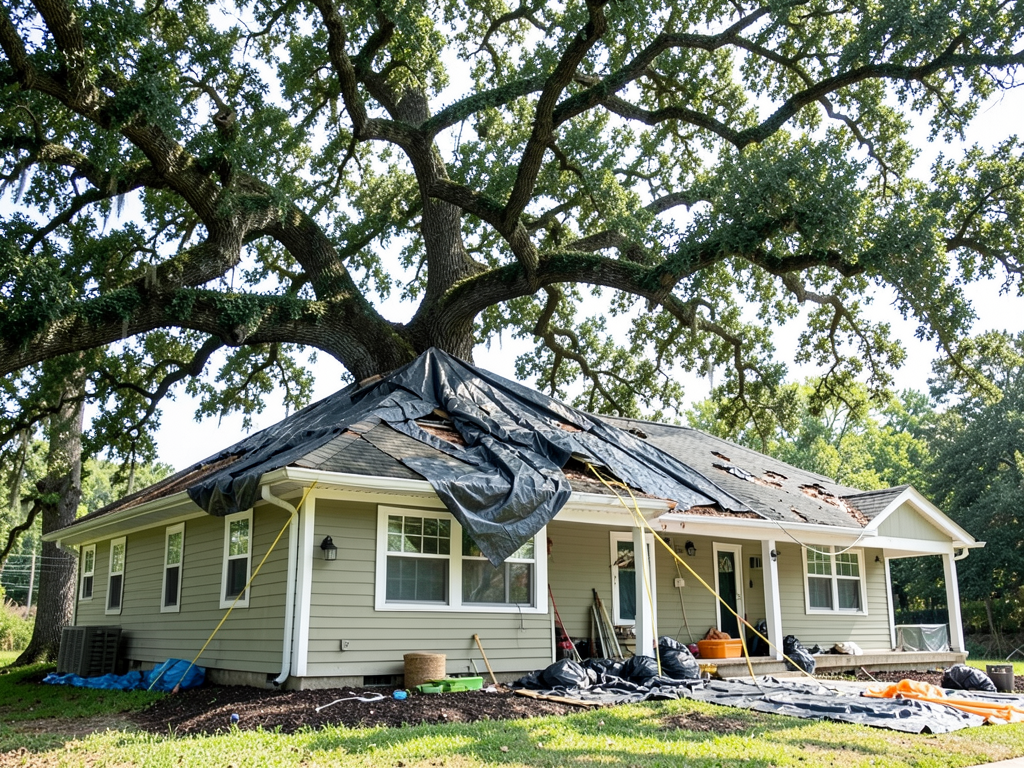
Technicians first assess the structural damage, checking for compromised rafters, decking, and load-bearing elements. They then install 2×4 wooden battens across the damaged area, securing the tarp with screws through the battens into sound decking. This creates a wind-resistant barrier that won’t blow away in the next storm.
The tarp extends at least 4 feet beyond the damaged area on all sides. Professionals use heavy-duty, UV-resistant tarps rated for at least 1,000 pounds of wind pressure. Standard blue tarps from hardware stores fail within hours in Charlotte’s wind conditions. Getting Your Charlotte Roof Repaired After a Hail Storm — A Local Guide to Insurance Claims.
Water damage continues even after the tree is removed. Tarps buy you 24-48 hours to arrange permanent repairs while preventing thousands in secondary damage to walls, flooring, and personal belongings.
Tree Removal Coordination and Timing
Tree removal requires coordination between roofing contractors and arborists. The tree must be removed carefully to avoid additional structural damage to already compromised areas.
Professional tree services use cranes for large trees on structures, costing $2,500-$5,000 depending on size and complexity. They section the tree piece by piece rather than pulling it off, which could cause more damage.
Most tree companies require proof of insurance coverage before beginning work on a structure. This protects them from liability if additional damage occurs during removal. Your roofing contractor can often coordinate this process, ensuring proper documentation and communication between all parties.
Tree removal typically takes 4-8 hours for a large oak on a structure. During this time, the roof remains exposed to weather, making the initial tarping even more critical.
Insurance Claims for Tree Damage in North Carolina
North Carolina law considers fallen trees on structures as covered peril under most homeowners policies, provided the tree damaged a covered structure. However, the claims process has specific requirements that many homeowners miss. North Carolina Department of Insurance.
Documentation requirements include photos of the fallen tree, damage to the structure, and any water intrusion. You must also document the tree’s origin – whether it was on your property or a neighbor’s. If the tree came from a neighbor’s property, their insurance typically covers the damage.
Insurance adjusters look for evidence of pre-existing damage or neglect. If the tree fell due to rot or disease, they may deny the claim if you couldn’t prove regular tree maintenance. Keep records of any tree inspections or trimming services. Expert Roof Inspections for Waterfront Homes in Cornelius and Davidson.
The claims process usually takes 3-5 business days for initial contact, with permanent repairs beginning 2-4 weeks after claim approval. This timeline makes emergency tarping essential for preventing further damage during the waiting period.
Structural Damage Assessment Beyond Shingles
Tree impacts create damage patterns that extend far beyond visible shingle damage. The force of impact can compromise structural elements that aren’t immediately apparent.
Roof decking damage often occurs in a radius 2-3 times larger than the visible impact zone. Pressure from the tree can crack plywood sheets, creating hidden water intrusion points. Technicians use moisture meters to detect these compromised areas.
Rafter and truss damage requires structural engineering assessment. A cracked rafter may not show visible signs but can fail under the next wind load. Building codes require engineered repair plans for any structural lumber replacement, following the North Carolina Residential Code Chapter 9 requirements.
Attic inspections reveal damage to insulation, wiring, and HVAC ducts. Water-soaked insulation loses its R-value and becomes a mold breeding ground within 24-48 hours. Proper assessment includes checking these hidden areas.
Charlotte Weather Considerations
Dilworth’s location in Mecklenburg County exposes homes to specific weather patterns that affect tree damage scenarios. Summer thunderstorms bring high winds that can topple already-weakened trees. Winter ice storms add weight that breaks branches or uproots trees entirely.
The area’s red clay soil becomes saturated during heavy rains, reducing tree root stability. Trees with shallow root systems in these conditions become particularly vulnerable during storms. This soil composition affects how trees fall and what damage patterns result.
Charlotte’s building codes require specific wind uplift ratings for roofing materials based on location within the county. Dilworth homes, being closer to the urban center, face different wind load requirements than homes in outlying areas. This affects repair specifications and material choices.
Cost Factors for Emergency Tree Damage Repairs
Emergency tree damage repairs involve multiple cost components that vary based on damage extent and required services. Understanding these factors helps you anticipate expenses and insurance coverage.
Emergency tarping services typically cost $500-$1,500 depending on roof size and complexity. This includes materials, labor, and the initial assessment. The tarping fee is often covered by insurance as damage mitigation.
Tree removal costs range from $1,000 for small trees to $6,000+ for large oaks on structures. Crane services add significant cost but are necessary for safe removal without additional damage.
Roof repair costs depend on decking replacement needs, shingle type, and structural repairs. A typical tree damage repair involving decking replacement and shingle installation might range from $3,000 to $15,000, with most falling in the $5,000-$8,000 range.
Water damage mitigation adds costs for drying, mold prevention, and interior repairs. This can range from $1,000 to $10,000+ depending on affected areas and response time.
Preventing Future Tree Damage
After experiencing tree damage, homeowners often seek ways to prevent future incidents. Several strategies reduce risk without removing all trees from your property.
Regular tree inspections by certified arborists identify disease, rot, or structural weakness before storms cause failures. They can recommend pruning, cabling, or removal of high-risk trees. Most arborists charge $100-$300 for basic inspections.
Maintaining proper tree distance from structures helps prevent damage. Large trees should be at least 15-20 feet from your home’s perimeter. This allows for growth without branches overhanging the roof.
Pruning dead branches and thinning canopy density reduces wind resistance during storms. This makes trees less likely to topple or drop large limbs. Professional pruning costs $300-$1,000 depending on tree size and complexity.
Installing lightning protection systems on valuable trees can prevent strike damage that weakens trees over time. These systems cost $1,500-$3,000 but can save thousands in potential damage.
Choosing the Right Emergency Contractor
Not all roofing contractors handle emergency tree damage effectively. Look for specific qualifications and capabilities that ensure proper response and repair.
24/7 availability is non-negotiable for emergency services. Companies that only work 8-5 cannot help when trees fall at 2 AM during storms. Verify actual emergency response capabilities, not just claims of availability.
Experience with insurance claims processing matters. Contractors who regularly handle tree damage understand documentation requirements and can help navigate the claims process. They know what adjusters look for and how to present damage effectively.
Proper licensing and insurance protect you from liability. North Carolina requires roofing contractors to carry general liability and workers’ compensation insurance. Verify these credentials before allowing any work on your property.
Local knowledge proves invaluable. Contractors familiar with Dilworth’s tree canopy, building styles, and weather patterns understand the specific challenges and solutions needed for your situation.
Frequently Asked Questions
How long can I leave a tree on my roof before damage becomes severe?
Water damage begins within 30-60 minutes of exposure, depending on rainfall intensity. The longer the tree remains, the more extensive and expensive the damage becomes. Emergency tarping should happen within 2-4 hours of discovery.
Will my insurance cover tree removal costs?
Most policies cover tree removal if the tree damages a covered structure. However, they typically limit coverage to $500-$1,000 for removal costs. The repair costs are usually covered separately from removal costs.
Can I remove the tree myself to save money?
DIY tree removal on a structure is extremely dangerous and can cause additional damage. Professional arborists use specialized equipment and techniques to remove trees safely. The cost of professional removal is far less than potential additional structural damage from improper removal. Specialized Slate and Tile Roofing Services for Historic Homes in Myers Park.
How do I know if structural damage extends beyond what I can see?
Professional assessment using moisture meters, visual inspection of attic spaces, and sometimes thermal imaging reveals hidden damage. Signs like ceiling cracks, wall separation, or doors that won’t close properly indicate potential structural issues requiring immediate attention.
What if the tree was healthy and just fell due to wind?
Healthy trees that fall due to covered perils like wind or ice are typically covered by insurance. The key factor is whether the tree damaged a covered structure. Healthy tree status actually strengthens your claim, as it shows the fall was due to covered weather events rather than neglect.
Call (980) 352-5899 for 24/7 Emergency Tree Damage Response
Tree damage requires immediate professional response to prevent escalating costs and protect your family’s safety. Our emergency teams are standing by to assess damage, install protective tarping, and begin the repair process within hours of your call.
Don’t wait for insurance approval to begin damage control. Every hour allows water to spread deeper into your home’s structure. Call (980) 352-5899 now to speak with our emergency dispatcher and get a crew en route to your Dilworth home.
We coordinate with tree removal services, document damage for insurance claims, and provide temporary protection that meets building code requirements. Our experience with Charlotte’s specific weather patterns and building requirements ensures proper repairs that protect your home long-term.
Pick up the phone and call (980) 352-5899 before the next storm hits. Emergency response could save you thousands in secondary damage and get your home back to normal faster. For more information, visit International Society of Arboriculture.
You may also find this helpful. Preserving the Character of Your Elizabeth Home with Period-Correct Roofing Materials.
{
“@context”: “https://schema.org”,
“@type”: “BlogPosting”,
“headline”: “What to Do When a Tree Falls on Your Roof in Dilworth (And Who to Call First)”,
“description”: “Emergency tree damage roof repair in Dilworth. 24/7 response, insurance claims help, and structural assessment for fallen trees on Charlotte homes.”,
“wordCount”: 2009,
“datePublished”: “2026-02-26T13:32:00.000Z”,
“dateModified”: “2026-02-26T13:32:00.000Z”,
“inLanguage”: “en-US”,
“mainEntityOfPage”: {
“@type”: “WebPage”,
“@id”: “https://fivestarroofingcharlotte.com”
},
“publisher”: {
“@type”: “LocalBusiness”,
“name”: “Five Star Roofing Charlotte”,
“url”: “https://fivestarroofingcharlotte.com”
},
“author”: {
“@type”: “Organization”,
“name”: “Five Star Roofing Charlotte”,
“url”: “https://fivestarroofingcharlotte.com”
},
“image”: {
“@type”: “ImageObject”,
“url”: “https://fivestarroofingcharlotte.com/wp-content/uploads/2026/03/what-to-do-when-a-tree-falls-on-your-roof-in-dilwo-1.png”
}
}
{
“@context”: “https://schema.org”,
“@type”: “RoofingContractor”,
“name”: “Five Star Roofing Charlotte”,
“url”: “https://fivestarroofingcharlotte.com”,
“address”: {
“@type”: “PostalAddress”,
“addressLocality”: “Charlotte”
},
“areaServed”: {
“@type”: “City”,
“name”: “Charlotte”
}
}
{
“@context”: “https://schema.org”,
“@type”: “FAQPage”,
“mainEntity”: [
{
“@type”: “Question”,
“name”: “How long can I leave a tree on my roof before damage becomes severe?”,
“acceptedAnswer”: {
“@type”: “Answer”,
“text”: “Water damage begins within 30-60 minutes of exposure, depending on rainfall intensity. The longer the tree remains, the more extensive and expensive the damage becomes. Emergency tarping should happen within 2-4 hours of discovery.”
}
},
{
“@type”: “Question”,
“name”: “Will my insurance cover tree removal costs?”,
“acceptedAnswer”: {
“@type”: “Answer”,
“text”: “Most policies cover tree removal if the tree damages a covered structure. However, they typically limit coverage to $500-$1,000 for removal costs. The repair costs are usually covered separately from removal costs.”
}
},
{
“@type”: “Question”,
“name”: “Can I remove the tree myself to save money?”,
“acceptedAnswer”: {
“@type”: “Answer”,
“text”: “DIY tree removal on a structure is extremely dangerous and can cause additional damage. Professional arborists use specialized equipment and techniques to remove trees safely. The cost of professional removal is far less than potential additional structural damage from improper removal. Specialized Slate and Tile Roofing Services for Historic Homes in Myers Park.”
}
},
{
“@type”: “Question”,
“name”: “How do I know if structural damage extends beyond what I can see?”,
“acceptedAnswer”: {
“@type”: “Answer”,
“text”: “Professional assessment using moisture meters, visual inspection of attic spaces, and sometimes thermal imaging reveals hidden damage. Signs like ceiling cracks, wall separation, or doors that won’t close properly indicate potential structural issues requiring immediate attention.”
}
},
{
“@type”: “Question”,
“name”: “What if the tree was healthy and just fell due to wind?”,
“acceptedAnswer”: {
“@type”: “Answer”,
“text”: “Healthy trees that fall due to covered perils like wind or ice are typically covered by insurance. The key factor is whether the tree damaged a covered structure. Healthy tree status actually strengthens your claim, as it shows the fall was due to covered weather events rather than neglect.”
}
}
]
}
{
“@context”: “https://schema.org”,
“@type”: “BreadcrumbList”,
“itemListElement”: [
{
“@type”: “ListItem”,
“position”: 1,
“name”: “Home”,
“item”: “https://fivestarroofingcharlotte.com”
},
{
“@type”: “ListItem”,
“position”: 2,
“name”: “Blog”,
“item”: “https://fivestarroofingcharlotte.com/blog”
},
{
“@type”: “ListItem”,
“position”: 3,
“name”: “What to Do When a Tree Falls on Your Roof in Dilworth (And Who to Call First)”
}
]
}
{
“@context”: “https://schema.org”,
“@type”: “Service”,
“serviceType”: “Roofing”,
“provider”: {
“@type”: “LocalBusiness”,
“name”: “Five Star Roofing Charlotte”,
“url”: “https://fivestarroofingcharlotte.com”
},
“areaServed”: {
“@type”: “City”,
“name”: “Charlotte”
},
“description”: “Emergency tree damage roof repair in Dilworth. 24/7 response, insurance claims help, and structural assessment for fallen trees on Charlotte homes.”
}