How to Stop Roof Algae from Taking Over Your Shady Mountain Island Lake Home
Your Mountain Island Lake home deserves better than those ugly black streaks marching across your roof. Those streaks are not dirt or mold. They are Gloeocapsa magma, a hardy cyanobacteria that thrives in our North Carolina humidity and feeds on the limestone filler in asphalt shingles. The shady canopy over your waterfront property creates the perfect breeding ground for this stubborn invader. The Best Shingles to Withstand the Charlotte Summer Heat and Humidity.
The good news. You can stop it without damaging your roof or voiding your warranty. The solution is not pressure washing. That will only make things worse by stripping away protective granules and forcing water under your shingles. The answer is soft washing, a low-pressure chemical treatment that kills the algae at its roots and keeps it from coming back.
Call (980) 352-5899 today to schedule your inspection. We will show you exactly what is growing on your roof and how to get rid of it safely.
What Makes Mountain Island Lake Homes So Vulnerable to Roof Algae
Mountain Island Lake sits in a unique microclimate where the water surface creates higher humidity levels than surrounding areas. Your home likely sits under mature tree cover that provides shade but also drops organic debris onto your roof. This combination of moisture, shade, and food source creates an ideal environment for Gloeocapsa magma to establish itself and spread.
The algae forms those characteristic black streaks as it grows and produces a dark outer coating to protect itself from UV rays. Once it takes hold, it can double in coverage area every few months during warm weather. The darker streaks absorb more heat, which can raise your attic temperatures and increase cooling costs.
Local soil conditions around Mountain Island Lake also play a role. The area’s clay-heavy soil retains moisture and can splash onto lower roof sections during heavy rains, bringing additional organic material that feeds algae growth. Homes near the lake often experience this problem more severely than properties just a few miles inland.
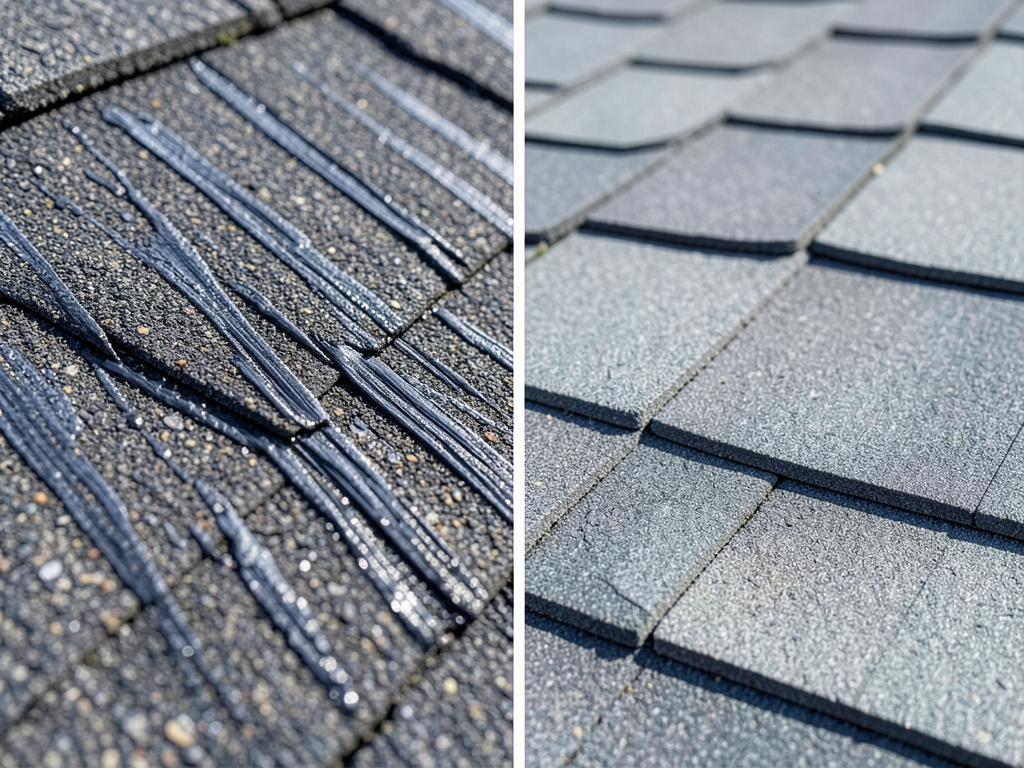
A close-up photo showing the dark, streaky appearance of Gloeocapsa magma on asphalt shingles, with a comparison to clean shingles on the same roof.
The Soft Wash Process That Actually Works
Professional roof cleaning is not about blasting away the stains with high pressure. That approach damages shingles and creates more problems than it solves. The soft wash method uses specialized equipment to apply cleaning solutions at pressures similar to a garden hose, typically under 100 PSI. Specialized Slate and Tile Roofing Services for Historic Homes in Myers Park.
The process starts with protecting your property. Technicians cover plants and landscaping with tarps, then pre-wet surrounding vegetation to prevent chemical damage. The cleaning solution, usually a blend of sodium hypochlorite and biodegradable surfactants, is applied from the roof ridge down to the eaves.
The chemicals need time to work. Most solutions require 15 to 20 minutes of dwell time to penetrate the algae’s protective coating and kill the organisms at the cellular level. During this time, the solution also breaks down the dark pigmentation that causes the black streaks.
After the dwell period, a gentle rinse with low pressure washes away the dead algae and cleaning solution. The roof may look worse temporarily as the dead material washes off, but this is actually a sign the treatment is working. Within a few days, your roof returns to its original color without the black streaks.
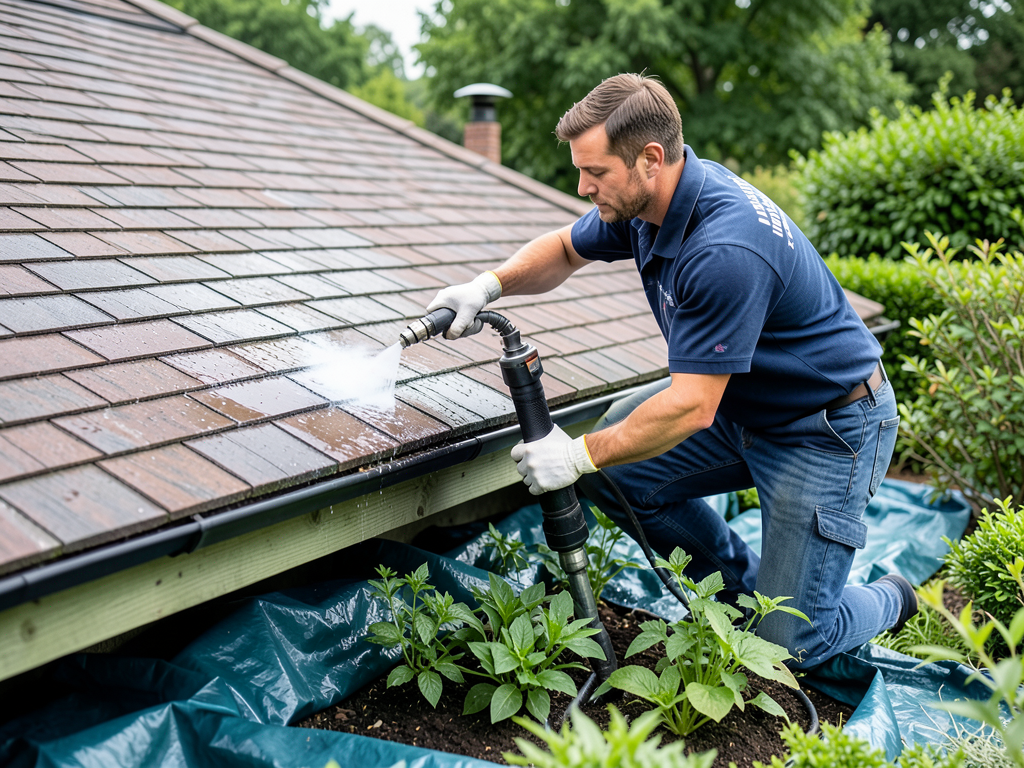
A technician applying soft wash solution to a roof using low-pressure equipment, with plants and landscaping protected by tarps below.
Why Pressure Washing Will Void Your Warranty
High-pressure washing might seem like the fastest way to clean a dirty roof, but it creates serious problems. Asphalt shingles are designed with protective granules that shield the asphalt from UV damage. These granules are what give shingles their color and fire resistance.
When high-pressure water hits a roof at 1,500 to 3,000 PSI, it blasts away those protective granules. This not only removes the algae but also strips away the very material that protects your shingles from premature aging. The loss of granules accelerates deterioration and can void your manufacturer’s warranty.. Read more about The Pros and Cons of Installing Zinc or Copper Strips to Prevent Roof Algae in Shady Neighborhoods.
Water forced under shingles at high pressure can also damage the roof deck and create pathways for leaks. The pressure can lift shingle edges, break seals, and force water into areas where it should never go. This hidden damage often leads to expensive repairs that could have been avoided.
The Asphalt Roofing Manufacturers Association (ARMA) specifically warns against using high-pressure washing on asphalt shingles. Their guidelines recommend soft washing or chemical treatments as the only safe methods for cleaning algae and other organic growth from roofing materials.
ARMA Guidelines for Roof Cleaning recommend soft washing as the safest method for asphalt shingles.
Cost Factors for Roof Algae Removal in Charlotte
Professional roof cleaning costs in the Charlotte area typically range from $0.25 to $0.50 per square foot of roof area. A standard 2,000 square foot home might cost between $400 and $800 for complete algae removal, depending on several factors. Getting Your Charlotte Roof Repaired After a Hail Storm — A Local Guide to Insurance Claims.
Roof pitch significantly affects pricing. Steeper roofs require more safety equipment and take longer to clean, increasing labor costs. A 12:12 pitch roof might cost 30% more than a 4:12 pitch roof of the same size. Homes with multiple stories also face higher costs due to increased setup time and safety requirements.
The severity of the algae infestation impacts pricing as well. Light streaking on a small section costs less than widespread coverage that requires more cleaning solution and time. Homes that have never been cleaned before often need a more intensive first treatment to fully eliminate established algae colonies.
Additional services like gutter cleaning, downspout flushing, or applying preventative treatments add to the base cost. Some companies offer package deals that combine roof cleaning with other exterior services at a discounted rate. Always get a detailed written estimate that breaks down all charges before work begins.
| Factor | Impact on Cost | Typical Range |
|---|---|---|
| Roof Size | Primary cost driver | $0.25 – $0.50 per sq ft |
| Roof Pitch | Steeper = higher cost | 30% premium for 12:12 pitch |
| Algae Severity | More coverage = more time | $50 – $200 additional |
| Story Height | Multi-story = safety costs | 15% – 25% premium |
Preventing Algae from Coming Back
After investing in professional cleaning, you want to keep your roof looking good for as long as possible. Several preventative measures can extend the time between cleanings and protect your investment. The most effective approach combines multiple strategies.
Zinc or copper strips installed near the roof ridge release metal ions during rain that inhibit algae growth. These ions flow down the roof surface with rainwater, creating a protective barrier. The strips work best when installed during new roof installation but can be added to existing roofs with proper flashing techniques.
Trimming tree branches that overhang your roof reduces shade and allows more sunlight to reach the surface. This increased UV exposure makes conditions less favorable for algae growth. Removing organic debris like leaves and pine needles also eliminates food sources that feed algae colonies.
Consider upgrading to algae-resistant shingles when it is time for a new roof. These shingles contain copper or zinc granules that provide long-term protection against Gloeocapsa magma and other organic growth. While they cost slightly more upfront, they can save money on cleaning and maintenance over the roof’s lifetime.
Regular maintenance checks help catch algae problems early. A quick visual inspection from the ground every few months can identify new growth before it becomes widespread. Early intervention with spot treatments is much less expensive than waiting until the entire roof needs cleaning.
Zinc strips installed near the roof ridge showing how they release ions during rainfall to prevent algae growth on the shingles below.
Environmental and Safety Considerations
Professional roof cleaning companies must balance effective algae removal with environmental responsibility. Modern soft wash solutions use biodegradable surfactants that break down harmlessly after application. The sodium hypochlorite concentration in these solutions is typically 1-3%, much lower than household bleach.
Proper plant protection is essential. Reputable companies pre-wet landscaping and use tarps to prevent chemical damage. The low-pressure application means minimal runoff compared to pressure washing, and the biodegradable nature of the solutions reduces environmental impact.
Worker safety is another critical consideration. Roof cleaning involves working at heights, often on steep slopes. Professional technicians use fall protection equipment, non-slip footwear, and proper ladder safety techniques. Never attempt roof cleaning yourself unless you have proper safety training and equipment.
The chemicals used in soft washing are safe for pets and people once dry. Most solutions dry within a few hours, and the active ingredients break down quickly when exposed to sunlight and air. However, it is best to keep pets and children away from the work area during application and rinsing.
Frequently Asked Questions
How long does roof algae removal take?
Most residential roof cleaning jobs take between 2 to 4 hours, depending on the size and complexity of your roof. The actual cleaning process is relatively quick, but setup and protection of landscaping adds to the total time.
Will the algae come back after cleaning?
Yes, algae can return over time, especially in shady, humid environments like Mountain Island Lake. Most homeowners see clean roofs for 2 to 3 years after professional cleaning. Preventative measures like zinc strips can extend this period significantly. Why More Huntersville Homeowners Are Switching to Standing Seam Metal Roofs.
Is soft washing safe for all roof types?
Soft washing is safe for asphalt shingles, tile, and metal roofs. However, the specific cleaning solutions and techniques vary by material. Always hire a company with experience cleaning your particular roof type to avoid damage.
Does roof cleaning affect my home insurance?
Clean roofs can actually help with insurance claims by preventing damage that could lead to leaks. Some insurance companies may require documentation of regular maintenance. Professional cleaning companies can provide before and after photos for your records.
Can I clean my roof myself?
We strongly recommend against DIY roof cleaning. The combination of heights, chemical handling, and potential for roof damage makes this a job for professionals. Improper cleaning can void warranties and create safety hazards.
Take Action Before the Problem Gets Worse
Roof algae is not just an aesthetic issue. It is a living organism that continues to grow and spread until treated. The longer you wait, the more established the colonies become and the more difficult they are to eliminate. In our humid North Carolina climate, algae can spread rapidly during warm months.
Ignoring the problem leads to higher cooling costs as dark streaks absorb more heat. It can also reduce your home’s curb appeal and potentially affect property values. In some neighborhoods, HOA regulations may even require roof cleaning to maintain community standards.
The solution is straightforward. Professional soft washing kills the algae at its source and restores your roof’s appearance without causing damage. The process is quick, affordable, and provides immediate results that last for years with proper maintenance.
Call (980) 352-5899 today to schedule your free inspection. We will evaluate your roof’s condition, identify the type of growth present, and provide a detailed plan for safe, effective removal. Your Mountain Island Lake home deserves to look its best, and we have the expertise to make it happen. Expert Roof Inspections for Waterfront Homes in Cornelius and Davidson.
Don’t let another season pass with those black streaks taking over your roof. Pick up the phone and call (980) 352-5899 before the next storm hits. Your neighbors will notice the difference, and so will you every time you pull into your driveway.
You may also find this helpful. Comparing GAF and Owens Corning Shingles for Your Charlotte Home Replacement.
{
“@context”: “https://schema.org”,
“@type”: “BlogPosting”,
“headline”: “How to Stop Roof Algae from Taking Over Your Shady Mountain Island Lake Home”,
“description”: “Stop black streaks on your Mountain Island Lake roof with expert soft-washing. Learn why algae thrives in Charlotte’s humidity and how to protect your shingles.”,
“wordCount”: 1965,
“datePublished”: “2026-04-12T11:12:00.000Z”,
“dateModified”: “2026-04-12T11:12:00.000Z”,
“inLanguage”: “en-US”,
“mainEntityOfPage”: {
“@type”: “WebPage”,
“@id”: “https://fivestarroofingcharlotte.com”
},
“publisher”: {
“@type”: “LocalBusiness”,
“name”: “Five Star Roofing Charlotte”,
“url”: “https://fivestarroofingcharlotte.com”
},
“author”: {
“@type”: “Organization”,
“name”: “Five Star Roofing Charlotte”,
“url”: “https://fivestarroofingcharlotte.com”
},
“image”: {
“@type”: “ImageObject”,
“url”: “https://fivestarroofingcharlotte.com/wp-content/uploads/2026/03/how-to-stop-roof-algae-from-taking-over-your-shady-1.png”
}
}
{
“@context”: “https://schema.org”,
“@type”: “RoofingContractor”,
“name”: “Five Star Roofing Charlotte”,
“url”: “https://fivestarroofingcharlotte.com”,
“address”: {
“@type”: “PostalAddress”,
“addressLocality”: “Charlotte”
},
“areaServed”: {
“@type”: “City”,
“name”: “Charlotte”
}
}
{
“@context”: “https://schema.org”,
“@type”: “FAQPage”,
“mainEntity”: [
{
“@type”: “Question”,
“name”: “How long does roof algae removal take?”,
“acceptedAnswer”: {
“@type”: “Answer”,
“text”: “Most residential roof cleaning jobs take between 2 to 4 hours, depending on the size and complexity of your roof. The actual cleaning process is relatively quick, but setup and protection of landscaping adds to the total time.”
}
},
{
“@type”: “Question”,
“name”: “Will the algae come back after cleaning?”,
“acceptedAnswer”: {
“@type”: “Answer”,
“text”: “Yes, algae can return over time, especially in shady, humid environments like Mountain Island Lake. Most homeowners see clean roofs for 2 to 3 years after professional cleaning. Preventative measures like zinc strips can extend this period significantly. Why More Huntersville Homeowners Are Switching to Standing Seam Metal Roofs.”
}
},
{
“@type”: “Question”,
“name”: “Is soft washing safe for all roof types?”,
“acceptedAnswer”: {
“@type”: “Answer”,
“text”: “Soft washing is safe for asphalt shingles, tile, and metal roofs. However, the specific cleaning solutions and techniques vary by material. Always hire a company with experience cleaning your particular roof type to avoid damage.”
}
},
{
“@type”: “Question”,
“name”: “Does roof cleaning affect my home insurance?”,
“acceptedAnswer”: {
“@type”: “Answer”,
“text”: “Clean roofs can actually help with insurance claims by preventing damage that could lead to leaks. Some insurance companies may require documentation of regular maintenance. Professional cleaning companies can provide before and after photos for your records.”
}
},
{
“@type”: “Question”,
“name”: “Can I clean my roof myself?”,
“acceptedAnswer”: {
“@type”: “Answer”,
“text”: “We strongly recommend against DIY roof cleaning. The combination of heights, chemical handling, and potential for roof damage makes this a job for professionals. Improper cleaning can void warranties and create safety hazards.”
}
}
]
}
{
“@context”: “https://schema.org”,
“@type”: “BreadcrumbList”,
“itemListElement”: [
{
“@type”: “ListItem”,
“position”: 1,
“name”: “Home”,
“item”: “https://fivestarroofingcharlotte.com”
},
{
“@type”: “ListItem”,
“position”: 2,
“name”: “Blog”,
“item”: “https://fivestarroofingcharlotte.com/blog”
},
{
“@type”: “ListItem”,
“position”: 3,
“name”: “How to Stop Roof Algae from Taking Over Your Shady Mountain Island Lake Home”
}
]
}
{
“@context”: “https://schema.org”,
“@type”: “Service”,
“serviceType”: “Roofing”,
“provider”: {
“@type”: “LocalBusiness”,
“name”: “Five Star Roofing Charlotte”,
“url”: “https://fivestarroofingcharlotte.com”
},
“areaServed”: {
“@type”: “City”,
“name”: “Charlotte”
},
“description”: “Stop black streaks on your Mountain Island Lake roof with expert soft-washing. Learn why algae thrives in Charlotte’s humidity and how to protect your shingles.”
}